Tag: hard water treatment

  • Pro Products Res Care Water Softener Cleaner review

    Pro Products Res Care Water Softener Cleaner review

    This post contains affiliate links. As an Amazon Associate, Filtered Water Wise earns from qualifying purchases. Affiliate disclosure

    How we review: this review is based on manufacturer specifications, published certifications and verified buyer feedback. We have not tested this product hands-on. How we review

    Have you noticed iron stains, reduced water softener performance, or a shorter-than-expected resin life in your system?

    Check price on Amazon

    Quick Look at Pro Products Res Care Water Softener Cleaner, All-Purpose Whole House Water Softener System Liquid Cleaning Solution Maintains Resin, 1-Gal Bottle

    This product is a concentrated liquid cleaner formulated specifically to clean and maintain the resin bed in residential water softeners. You can use it to flush iron, manganese, and other metallic and organic contaminants from the resin and brine tank so your system performs closer to how it did when new.

    What this product is meant to do

    You’ll use Res Care to remove iron and mineral buildup that blocks resin pores and reduces ion exchange efficiency. The manufacturer designed it so you can pour the liquid directly into the brine well or salt tank for straightforward treatments, typically a half-cup per treatment for most residential units.

    Key Features and Benefits

    Below are the most important features you’ll want to know about and how they translate into benefits for your system and household.

    Concentrated liquid formula

    The liquid concentration makes dosing simple and predictable. You can pour it directly into the brine well or salt tank without complex mixing, which helps you maintain your resin with minimal fuss.

    Cleans iron, manganese, and metallic/organic contaminants

    The formula targets iron and manganese particles and organic fouling that coat resin beads. When these deposits are removed, your resin can exchange ions more effectively and regenerate more efficiently.

    Easy dosing for most residential softeners

    A half-cup (approximately 4 fl oz) treats most residential systems, so one gallon provides many treatments. That dosing convenience is great if you prefer to do routine maintenance yourself.

    NSF Certified to NSF/ANSI/CAN 60

    This certification means the formulation is evaluated for safety as a water-treatment chemical, which can give you added confidence when using it in systems that affect drinking water.

    Check price on Amazon

    How Pro Products Res Care Works

    Knowing the mechanism helps you decide when and how to use it.

    What the cleaner targets

    The cleaner works by penetrating resin surfaces to break up and dissolve iron and mineral deposits that have clogged resin pores. You’ll notice improved regeneration and decreased hardness problems after treatment cycles.

    How to apply it

    You’ll pour the required dose into the brine well or salt tank per label instructions. The cleaner is designed to be used just before a regeneration cycle so the cleaning action is drawn into the resin during the normal service pattern.

    Usage Instructions and Dosage

    Follow these instructions to get consistent results and avoid misuse.

    Typical dosing and frequency

    For most residential water softeners, a half-cup (about 4 fl oz) per treatment is recommended. If you treat monthly, one gallon gives you roughly 32 treatments (128 fl oz per gallon / 4 fl oz per treatment = 32). For heavy iron conditions you may need more frequent treatment or additional measures—follow label guidance and consider professional testing.

    Step-by-step application

    You’ll typically:

    1. Open the brine well or salt tank access.
    2. Pour the prescribed amount (half-cup) into the brine well or salt tank.
    3. Initiate a manual regeneration or allow the system to go through its normal timed regeneration so the cleaner reaches the resin.
    4. Run faucets to purge the system if recommended on the label, and follow any wait times listed on the product directions.

    When to apply

    Apply after shock treatments for iron or when you notice performance decline, iron staining, increased hardness, or more frequent regeneration cycles. For preventive maintenance, monthly or quarterly use varies depending on water chemistry and iron levels.

    Table: At-a-Glance Product Breakdown

    This table helps you quickly compare the main specs and practical details.

    Attribute Detail
    Product name Pro Products Res Care Water Softener Cleaner, All-Purpose Whole House Water Softener System Liquid Cleaning Solution Maintains Resin, 1-Gal Bottle
    Form Concentrated liquid
    Bottle size 1 gallon (128 fl oz)
    Typical dose 1/2 cup (approx. 4 fl oz) per residential treatment
    Treatments per bottle ~32 treatments (128 fl oz / 4 fl oz)
    Main targets Iron, manganese, metallic/organic contaminants
    Application point Brine well or salt tank
    Certification NSF Certified to NSF/ANSI/CAN 60
    Intended use Maintain resin bed, improve regeneration, reduce iron/mineral buildup
    Safety note Follow label directions and safety precautions

    Performance Expectations

    Here’s what you can reasonably expect when you use this cleaner properly.

    Short-term improvements

    After the initial treatments you should notice fewer iron staining issues on fixtures, better clarity of water, and more consistent soft water output. Regeneration cycles may become more effective as resin pores reopen.

    Long-term benefits

    Regular maintenance with the product can extend the effective life of your resin bed by preventing chronic fouling. That can translate into savings on resin replacement and possibly lower salt use over time because the system regenerates more efficiently.

    Safety and Handling

    You’ll want to treat the product with standard chemical safety practices to protect yourself and your family.

    Personal protective measures

    The label will recommend wearing gloves and eye protection during handling. Use in a well-ventilated area and avoid direct skin contact. If you spill product onto skin, wash with plenty of water and remove contaminated clothing.

    Storage and disposal

    Store the bottle upright in a cool, dry place away from children and pets. Keep it sealed and avoid storing near food, feed, or open flames. Dispose of empty containers according to local regulations.

    What not to mix it with

    Don’t mix the cleaner with bleach, strong acids, or other household chemicals unless label instructions explicitly allow it. Mixing chemicals can produce hazardous gases or reduce effectiveness.

    Compatibility and System Types

    Understand whether this product will fit your system and needs.

    Compatible systems

    Pro Products Res Care is intended for resin-based water softeners that use a brine tank for regeneration. If your system uses a different media (e.g., catalytic carbon, KDF, or special iron media) check the label or consult the manufacturer before use.

    When to avoid use

    If your water softener vendor or system manual advises against adding third-party chemicals, follow their guidance. Also avoid use in systems that specifically call for alternate cleaning agents or that have specialty media incompatible with the cleaner.

    Troubleshooting Common Problems

    If you use the cleaner and still have issues, these tips can help you diagnose and correct the problem.

    Persistent iron staining after treatment

    If stains remain after several treatments, you may be dealing with high dissolved iron, iron bacteria, or rust in the plumbing. Consider having your water professionally tested for dissolved vs. particulate iron. In some cases, a dedicated iron removal system (oxidation + filtration) or shock chlorination may be necessary.

    No noticeable performance improvement

    If you don’t see better regeneration or softer water, verify correct dosing and confirm that the cleaner actually reached the resin bed during regeneration. Also check for mechanical problems like a clogged injector, malfunctioning valve, or exhausted resin that may require replacement.

    Salt bridging or mushing persists

    Res Care won’t fix salt bridging or salt mushing in the brine tank. If you have hardened salt, break it up and remove the affected salt, then resume cleaner use as part of normal maintenance.

    Maintenance Schedule Suggestions

    A consistent schedule will help you keep your system healthy and your water soft.

    Light iron or preventive maintenance

    If your water has minimal iron and you want preventive protection, treating every 3 months will keep resin pores clearer and reduce long-term fouling.

    Moderate iron or seasonal increases

    For moderate iron levels or when you notice seasonal changes (spring runoff or increased sediment), monthly treatment is a reasonable approach to keep performance consistent.

    Heavy iron or iron bacteria

    When iron is high or iron bacteria are present, monthly might not be enough. You’ll often need a combination of specialized iron treatment, shock chlorination (for iron bacteria), or professional assistance in addition to regular cleaning.

    Pros and Cons

    These concise lists give you a balanced view of what to expect.

    Pros

    • Easy to apply directly into the brine well or salt tank.
    • Concentrated formula yields many treatments per bottle.
    • Targets iron, manganese, and organic fouling on resin.
    • NSF/ANSI/CAN 60 certification for peace of mind around drinking water.
    • Helps improve regeneration and extend resin life.

    Cons

    • May not be enough on its own for very high iron loads or iron bacteria.
    • Some systems or media types may require manufacturer-approved cleaners.
    • You must follow dosing and regeneration timing to get full benefit.

    Cost Efficiency and Value

    You’ll want to think about how this fits into the total cost of ownership for your softener.

    Treatments per gallon and how that scales

    One gallon yields about 32 standard residential treatments. If you treat monthly, one bottle should last you roughly 2.5 years. If you treat monthly in a high-iron situation you might use more than the standard dose or increase frequency, so plan accordingly.

    How it can save you money

    By maintaining resin efficiency you may see reduced salt usage, fewer premature resin replacements, and fewer service calls. Those savings can offset the cost of the cleaner over time.

    Comparing Pro Products Res Care to Alternatives

    When you compare cleaners, look at format, dosing, target contaminants, and certifications.

    Liquid vs powder vs specialty cleaners

    Liquid cleaners like Res Care are simple to dose into brine wells. Powders or packets may require mixing. Specialty cleaners might be formulated for iron bacteria or specific media. You’ll choose based on your system type and the contaminants in your water.

    Certification matters

    Not all cleaners are NSF certified. Because Res Care is NSF/ANSI/CAN 60 certified, it’s been assessed for safety in water treatment applications. That can be a deciding factor if you’re cautious about chemicals in your potable water system.

    Frequently Asked Questions (FAQs)

    Here are commonly asked questions you’ll likely have when evaluating or using this product.

    Can you pour Res Care directly into the brine well?

    Yes, the product is designed to be poured directly into the brine well or salt tank. Follow label directions for exact dosing and regeneration timing.

    How often should you use it?

    For preventive maintenance use quarterly; for moderate iron or seasonal issues use monthly. Heavy iron situations may require more frequent use plus additional iron-specific treatments. Always adhere to label instructions.

    Will this remove iron from my entire plumbing system?

    It will clean resin and reduce the source of iron staining from softened water, but it won’t remove rust in old pipes or iron deposits downstream of the softener. You may need additional plumbing cleaning or replacements in those cases.

    Is it safe for drinking water?

    The product is NSF Certified to NSF/ANSI/CAN 60, indicating it meets safety standards for water-treatment chemicals. Still follow label directions and recommended contact/regeneration times to ensure safe use.

    How many treatments are in a gallon?

    Approximately 32 standard treatments, based on a half-cup (4 fl oz) per treatment and 128 fluid ounces per gallon.

    Realistic Expectations and Final Considerations

    You’ll get the most value by pairing the product with good system knowledge and routine checks.

    Understand your water chemistry

    Before relying on any single product, test your water for hardness, iron levels (dissolved and particulate), and for iron bacteria if you suspect it. This will inform treatment frequency and whether complementary equipment is needed.

    Keep records of maintenance

    Track when you apply cleaner, how many treatments you use, and any change in softener performance. That log will help you optimize dosing and determine if the resin needs professional cleaning or replacement.

    Know when to call a pro

    If iron levels remain unacceptably high after multiple treatments, or if you detect iron bacteria or mechanical issues (valve failure, resin breakdown), call a water treatment professional. The cleaner is a strong maintenance tool, but it isn’t a substitute for mechanical fixes or media replacement when those are needed.

    Final Recommendation

    If you want an easy-to-use, NSF-certified liquid cleaner to maintain resin beds and reduce iron and mineral fouling, Pro Products Res Care Water Softener Cleaner, All-Purpose Whole House Water Softener System Liquid Cleaning Solution Maintains Resin, 1-gal bottle is a solid option. You’ll appreciate the simple dosing, the concentrated formula that yields many treatments, and the certification that supports its use in potable water systems. Use it regularly as part of your maintenance routine, follow label directions, and combine it with appropriate water testing and mechanical maintenance for the best long-term results.

    Check price on Amazon

  • Aquasure Harmony Series 48,000 Grains Water Softener review

    Aquasure Harmony Series 48,000 Grains Water Softener review

    This post contains affiliate links. As an Amazon Associate, Filtered Water Wise earns from qualifying purchases. Affiliate disclosure

    How we review: this review is based on manufacturer specifications, published certifications and verified buyer feedback. We have not tested this product hands-on. How we review

    Are you trying to decide whether the Aquasure Harmony Series 48 is the right softener for your home?

    Check price on Amazon

    Product snapshot

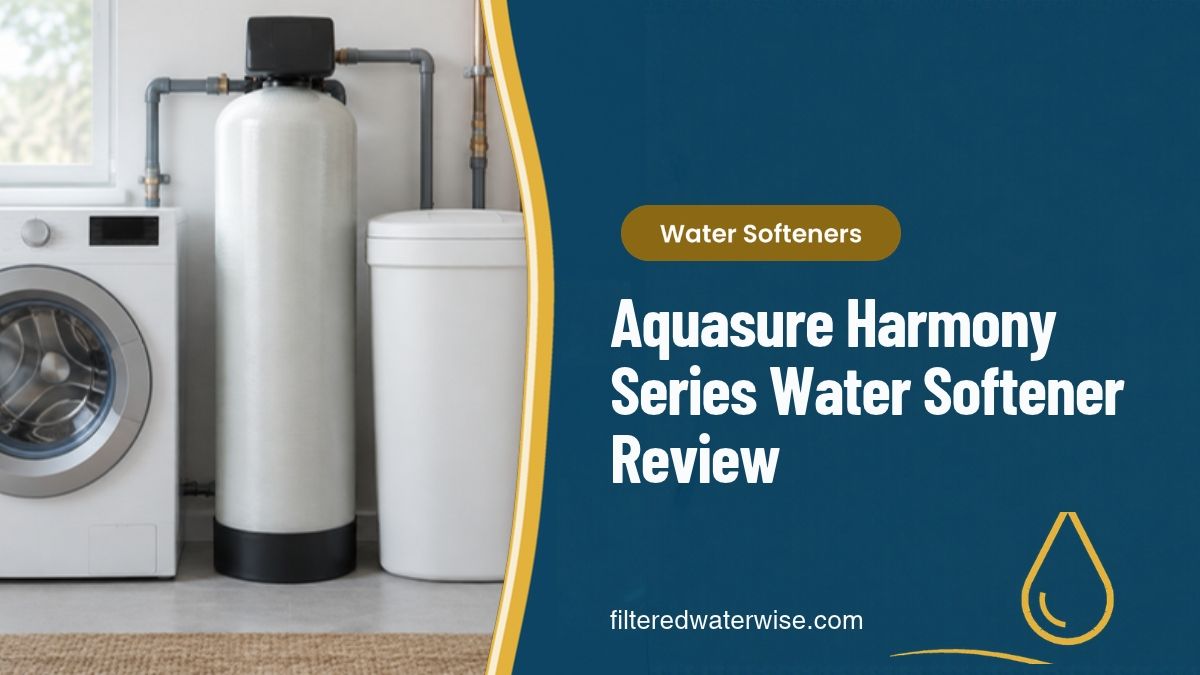
    You’re looking at a whole-house water softener rated to treat 48,000 grains of hardness, designed to serve homes with 3–4 bathrooms. The system includes a high-efficiency digital metered control head and a triple-purpose pre-filter (sediment/carbon/zinc) that aims to reduce chlorine, odors, and a wide range of particulates before the water hits the resin. It’s built with a corrosion-resistant, fiberglass-lined polyethylene tank and comes prefilled with premium-grade resin to make setup easier.

    Why this matters to you

    Hard water can damage your skin, hair, and appliances over time, and this unit is positioned to give you softened water at every outlet while protecting plumbing and equipment. You’ll likely notice better lathering of soaps, cleaner dishes, less scale on fixtures, and potentially longer appliance lifespan.

    Quick specifications table

    You’ll find the most important details summarized here so you can quickly compare or reference them when you’re deciding.

    Feature Detail
    Model Aquasure Harmony Series 48,000 Grains Whole House Water Softener
    Capacity 48,000 grains
    Recommended home size 3–4 bathrooms
    Control head High-efficiency digital metered, backlit display, programmable
    Prefilter Triple purpose: sediment / carbon / zinc
    Tank Fiberglass-lined polyethylene
    Resin Prefilled premium-grade resin
    Bypass valve Durable included bypass
    Warranty & support 30-day money-back, 5-year extended manufacturer warranty, lifetime US-based tech support if activated within 60 days
    Typical benefits Scale reduction, softer skin/hair, appliance protection, chlorine and VOC reduction before resin

    Check price on Amazon

    Key features in plain language

    You’ll want to understand the parts of the system and what each one does for your daily life. This section breaks the main features into simple, useful takeaways.

    • High-efficiency digital metered control head: It regulates regeneration automatically based on your actual water usage so you don’t waste salt or water on unnecessary regenerations. The backlit display helps you program and monitor settings easily.
    • 48,000 grain capacity: That’s a common mid-to-high capacity for family homes and is intended to support 3–4 bathroom households before needing regeneration as determined by usage and hardness.
    • Triple-purpose prefilter: This filter removes sediment, chlorine, VOCs, and other contaminants that might otherwise reduce resin life or leave taste and odor issues.
    • Fiberglass-lined polyethylene tank & durable bypass: These materials resist corrosion and provide a long-lasting structure for the resin and the plumbing connections.

    How these features affect you

    In practice, you’ll spend less time fiddling with settings and less money on repairs caused by mineral buildup. The prefilter improves water quality before softening and reduces wear on the resin, and the robust tank materials reduce the risk of tank failure or rust.

    How the system works (simple explanation)

    You don’t need a deep technical background to get how this unit operates day to day. The water flows through the prefilter first, then through the resin-filled tank to remove hardness, and the control head manages regeneration cycles when needed.

    • Incoming water: Sediment, chlorine, and other contaminants are reduced by the prefilter.
    • Softening: Hard minerals (calcium and magnesium) are exchanged onto the resin beads, softening the water.
    • Regeneration: The metered control head tracks your water use and initiates a brine regeneration cycle when the system has treated the programmed amount of hardness.

    What this means for your routine

    You’ll get softened water at all taps without manual timing. The metered head regenerates only when necessary, saving salt and water compared to timer-based systems.

    Sizing and capacity — how to tell if 48,000 grains is enough for you

    You should base your decision on three things: the number of people in your home, how much water your household uses daily, and the hardness of your incoming water (grains per gallon, or gpg). Use the simple formula below to estimate whether this unit fits your needs.

    • Step 1: Find your water hardness (gpg) from a recent test or your utility.
    • Step 2: Estimate daily water use: a common estimate is 75 gallons per person per day (you can use more or less based on your habits).
    • Step 3: Multiply: household daily gallons × hardness (gpg) = grains used per day.
    • Step 4: Divide: 48,000 grains ÷ grains used per day = approximate days between regenerations.

    Example: If you have 4 people, 75 gpd each, and 10 gpg hardness:

    • Daily grains = 4 × 75 × 10 = 3,000 grains per day.
    • Days between regenerations = 48,000 ÷ 3,000 = 16 days.

    Why this calculation helps you

    You’ll know whether the 48,000-grain capacity gives you a comfortable regeneration interval (many households prefer a week to two-week interval). If your water is harder or your family uses more water, you might regenerate more often or consider a larger system.

    Installation overview and what to expect

    If you decide to install it yourself, you’ll appreciate knowing the general steps and what tools or conditions you’ll need. Many people opt to hire a plumber, but skilled DIYers can handle the task with basic plumbing tools.

    • Location: Install near the main water supply line with a nearby drain for the brine and space for a salt/well tank.
    • Tools & materials: You’ll typically need wrenches, pipe cutters, Teflon tape, fittings for your pipe type, and a level.
    • Steps: Shut off water, cut into the main line, install bypass valve and control head, connect brine tank, program control head, sanitize and start the system.

    Time and difficulty

    Plan for several hours to complete the installation if you’re experienced; allow more time if you’re new to plumbing. If you’re not comfortable with cutting into your main water line or connecting to a drain, hiring a licensed pro is a safer choice.

    The control head: what you’ll use the most

    You’ll interact with the digital metered control head daily or weekly to check status and occasionally change settings. It’s backlit and fully programmable so you can set regeneration parameters, view time-to-next-regeneration, and monitor salt usage indicators.

    • Metered regeneration: The head tracks actual water use and regenerates as needed, which is more efficient than timer-based models.
    • Backlit display: Useful when checking status in basements or dimly lit utility rooms.
    • Customizable auto-flush intervals: You can tailor intervals to your water quality and use patterns.

    Why you’ll appreciate it

    You’ll save on salt and water because the system only regenerates when necessary, and you can fine-tune behavior as you learn how your household consumes water.

    The prefilter and resin — two layers of protection

    The included triple-purpose prefilter reduces chlorine, sediment, and VOCs before water reaches the resin, which both improves water taste and helps preserve resin life. The resin itself is premium-grade and prefilled, so you don’t have to load media during setup.

    • Prefilter benefits: Removes particles that can foul resin, reduces chemicals and tastes, and improves overall water quality.
    • Resin performance: Exchanges sodium for calcium and magnesium to soften water; being prefilled reduces installation steps.

    How that impacts maintenance and longevity

    You’ll likely experience longer resin life and better tasting water straight out of the softener because the prefilter handles nuisances that would otherwise shorten the resin’s effective life. You’ll still need to monitor and replace the prefilter per the manufacturer’s recommendations.

    Maintenance checklist and tips

    Keeping the unit in good shape is mostly straightforward. Regular maintenance helps ensure performance, saves money, and prevents problems.

    • Check salt levels in the brine tank monthly and top up as needed using recommended softener salt (evaporated pellets are commonly recommended).
    • Inspect the prefilter and replace it according to usage and local water quality—often every 3–6 months for heavy sediment or annually for lighter loads.
    • Clean the brine tank annually or if you see bridging/crusting of salt.
    • Keep the control head clean and verify settings after power outages.
    • Use the system bypass during plumbing work to protect the softener.

    Common maintenance mistakes to avoid

    Don’t let the brine tank run completely empty for long periods, and avoid using household rock salt that may contain higher insoluble content unless manufacturer guidance allows it. Always follow the user manual for recommended salt type and maintenance intervals.

    Performance and what you can expect in daily life

    When the system is installed and programmed correctly, you’ll notice immediate differences such as improved soap lather, fewer water spots, and less scale on fixtures and heating elements. Appliances that use water will tend to run more efficiently and may require fewer repairs related to scale.

    • Personal benefits: Softer skin and hair, easier cleaning, and less detergent needed for laundry and dishwashing.
    • Appliance benefits: Reduced scale formation inside water heaters, dishwashers, and washing machines, which can prolong their useful life.

    What it won’t do

    Don’t expect this softener to remove all bacteria or eliminate all chemical contaminants—its prefilter reduces many contaminants, but softeners are primarily designed to address hardness and some prefilter-targeted issues. If you need comprehensive contaminant removal (e.g., lead, nitrates, microbial organisms), additional treatment systems may be needed.

    Salt usage and operating costs

    Your ongoing costs will primarily be salt and occasional prefilter/resin-related parts and possibly water for regeneration. Because this is a metered, high-efficiency system, it tends to use less salt and water than older timer-based softeners.

    • Typical salt usage: Will vary based on hardness and regeneration settings; many high-efficiency systems use roughly 4–8 lbs of salt per regeneration as a general guideline.
    • Frequency: Metered regeneration ensures you regenerate only when necessary, which typically lowers long-term salt use.

    How to keep costs down

    Program the control head efficiently, maintain the prefilter to protect resin so it doesn’t require more frequent regeneration, and use high-quality softener salt to reduce waste and bridging.

    Troubleshooting common issues

    You’ll occasionally need to address simple hiccups. This section gives practical steps for common problems you might encounter.

    • Soft water not present: Check bypass valve position, verify salt level, inspect prefilter and resin condition, and confirm the control head is properly programmed.
    • Frequent regenerations: Verify hardness setting and check for leaks or abnormal water use. Ensure the control head meter is functioning correctly.
    • Low water pressure: Inspect the prefilter for clogging and ensure bypass isn’t partially closed. Confirm proper installation and check household plumbing for separate restrictions.

    When to call support

    If the digital control head shows errors you don’t understand, if you suspect the resin is damaged, or if you encounter persistent leaks, use the lifetime US-based tech support or hire a professional plumber. You’ll also want to contact the manufacturer for warranty-covered issues.

    Pros and cons

    You’ll find value in knowing the strengths and potential limitations before you buy. Here’s a balanced look.

    Pros:

    • Efficient metered control head reduces unnecessary regenerations.
    • Prefilter reduces chlorine, VOCs, sediment, and improves taste/odor.
    • Good capacity (48,000 grains) for medium-to-large households.
    • Robust tank materials and durable bypass valve.
    • Prefilled resin simplifies setup.
    • Attractive warranty and support when activated.

    Cons:

    • Whole-house softeners add sodium to water (if using salt-based regeneration) — you’ll want to consider this if someone in your household is on a sodium-restricted diet and consult a medical professional.
    • Prefilter media will need periodic replacement; that’s an additional ongoing cost.
    • Installation can be moderately complex for a DIYer; some homeowners prefer professional installation.

    Weighing the tradeoffs

    You’ll get strong performance and feature value for typical family usage, but consider water chemistry and health preferences before committing to a salt-based softener.

    Who should consider this model

    This unit is well-suited if you have a multi-bathroom home (3–4 bathrooms), notice scale buildup, or have moderate to high hardness. You’ll appreciate the metered control head if you want efficiency and lower operating costs over time.

    • Good fit: Families wanting whole-house soft water, homeowners seeking appliance protection, and those who want programmable digital control.
    • Not ideal if: You require a salt-free solution for medical reasons or have very low water hardness and don’t need a large capacity system.

    Purchase considerations

    Test your water before buying to confirm hardness and assess whether additional filtration (e.g., for lead or microbes) is needed beyond the prefilter included with this system.

    Comparison with typical alternatives

    If you’re comparing this unit to other systems you’re considering, focus on control head type (metered vs timer), capacity, prefilter quality, and warranty/support. Metered digital heads tend to save salt and water compared to timer heads. A 48,000-grain capacity is a common middle-ground choice; if you have much higher hardness or a larger household, consider higher capacities.

    Why this model stands out

    The triple-purpose prefilter is a notable convenience because it reduces contaminants that would otherwise affect taste or resin life, and the included prefilled resin reduces startup hassle compared to units that require you to load resin.

    Warranty, support, and return policy

    You’ll want to register the product to get the full benefits. Aquasure offers a 30-day money-back period and a 5-year extended manufacturer warranty, and you receive lifetime free US-based tech support if you activate within 60 days.

    Why registration is worth doing

    Registering ensures you get the extended warranty and access to technical support, which can be very helpful during installation and long-term operation.

    Buying and setup tips

    These practical tips help you avoid common pitfalls and get the best performance from your purchase.

    • Test your water before purchasing to verify hardness and to determine if additional filtration is needed.
    • Reserve space for the unit and brine tank near the main water line and drainage.
    • Use recommended softener salt (evaporated pellets) for best performance and lower insoluble residue.
    • If you’re not experienced with plumbing, budget for professional installation; it often pays off by preventing leaks and ensuring proper configuration.
    • Activate your product online within 60 days to obtain full warranty and lifetime tech support.

    Frequently asked questions (FAQ)

    You’ll often have similar questions when evaluating or using this softener. Here are answers to common ones.

    • Q: How often will the system regenerate? A: Frequency depends on your household water usage and incoming hardness. The metered control head regenerates based on actual water use, which typically results in fewer regenerations than timer-based systems.
    • Q: Do I need to replace the resin? A: Resin usually lasts many years if protected by proper prefiltration and maintained correctly. Replace resin only if testing shows it no longer removes hardness or if it has been fouled by contaminants.
    • Q: Does this remove chlorine and sediments? A: The included prefilter is designed to reduce chlorine, VOCs, sediment, and certain tastes and odors before water reaches the resin. It’s not a comprehensive solution for all contaminants, so additional filters may be needed for particular contaminants.
    • Q: Is a water softener safe for drinking water? A: Salt-based softeners replace hardness minerals with sodium (or potassium, if configured). The softened water is generally safe to drink for most people, but those on sodium-restricted diets should consult their physician.

    Final verdict — what you’ll gain

    If you want reliable whole-house soft water and appreciate programmable, efficient operation, the Aquasure Harmony Series 48,000 Grains model offers a compelling balance of capacity, convenience, and filtration. You’ll likely notice immediate home comfort improvements and long-term appliance protection when the system is installed and maintained properly.

    Final considerations before buying

    Confirm your hardness level, measure the space and plumbing setup for installation, and plan for ongoing maintenance costs like salt and prefilter replacement. Activate registration promptly to secure warranty and support benefits. With proper sizing and installation, you can expect tangible improvements in day-to-day water quality and reduced scale-related hassles.

    Check price on Amazon