Tag: water purification

  • Waterdrop Gravity-fed Water Filter System Review

    Waterdrop Gravity-fed Water Filter System Review

    This post contains affiliate links. As an Amazon Associate, Filtered Water Wise earns from qualifying purchases. Affiliate disclosure

    How we review: this review is based on manufacturer specifications, published certifications and verified buyer feedback. We have not tested this product hands-on. How we review

    Looking for a reliable and efficient water filter system that meets all your needs? Look no further than the Waterdrop Gravity-fed Water Filter System. With its large capacity of 2.25 gallons, this system can provide pure water for a family of four, both indoors and outdoors. Certified against NSF/ANSI 42 for the reduction of chlorine, taste, and odor, this filter system ensures that you and your family are drinking clean and refreshing water. With its durable and stylish 304 food-grade stainless-steel housing and comprehensive accessories set, such as the non-slip stand and metallic water level spigot, you’ll have everything you need right out of the box. Plus, the efficient coconut activated carbon filter can effectively reduce heavy metals, sediment, and other impurities, improving both the taste and odor of your water. With a longer filter lifespan and easy installation, the Waterdrop Gravity-fed Water Filter System is the economical and sustainable solution to your water filtration needs.

    Check price on Amazon

    Why Consider This Product?

    If you’re looking for a reliable and efficient water filter system, the Waterdrop Gravity-fed Water Filter System is definitely worth considering. With its large capacity of 2.25 gallons, this system can meet the water demands of a family of four both indoors and outdoors. It has been certified by NSF/ANSI 372, ensuring its quality and safety. Additionally, the black carbon filter has also been certified against NSF/ANSI42 for the reduction of chlorine, taste, and odor. These certifications add credibility and guarantee that you will be getting clean and pure water.

    The Waterdrop Gravity-fed Water Filter System also includes comprehensive accessories that ensure safety and style. The housing is made of 304 food-grade stainless steel, which not only gives it a sleek finish but also ensures durability and a rugged structure. The metallic water level spigot fits the chamber perfectly, eliminating the risk of leaks. A non-slip stand is also included to provide an improved user experience. The best part is that these accessories come with the system, so you don’t have to spend any extra money buying additional accessories.

    Features and Benefits

    Large Capacity

    With a capacity of 2.25 gallons, the Waterdrop Gravity-fed Water Filter System is ideal for families of four. It can meet the water demands of both indoor and outdoor use, ensuring that you have clean and pure water whenever you need it.

    Certified Quality

    This water filter system has passed the authoritative NSF/ANSI 372 certification, guaranteeing its quality and safety. The black carbon filter is also certified against NSF/ANSI42 for the reduction of chlorine, taste, and odor. These certifications ensure that you are getting a reliable and effective filtration system.

    Durable and Stylish Design

    The housing of the Waterdrop Gravity-fed Water Filter System is made of 304 food-grade stainless steel, which not only ensures durability but also adds a sleek and stylish touch to your kitchen or any other space where you choose to install it. The metallic water level spigot fits perfectly without any leaks, and the non-slip stand enhances the overall user experience.

    Efficient Filtration

    The filter media used in the King Tank is natural coconut activated carbon, which effectively reduces chlorine and improves the taste of the water. It also provides fluoride reduction and chlorine reduction. This filter can effectively reduce heavy metals, sediment, rust, soil, and other impurities, significantly improving the odor and taste of your drinking water.

    Long Filter Lifespan

    The two fluoride filters (white) and the two carbon filters (black) included in the system can effectively filter up to 1,000 gallons and 6,000 gallons of water, respectively. This means that you can save up to 53,000 plastic bottles (500ml) over the span of 3.5 years. This not only helps the environment by reducing plastic waste but also provides an economical and sustainable solution to water filtration.

    Check price on Amazon

    Product Quality

    The Waterdrop Gravity-fed Water Filter System is made with the highest quality materials. The housing is constructed from 304 food-grade stainless steel, ensuring durability and a rugged structure. The filters are made of natural coconut activated carbon, known for its effective filtration capabilities. The system has also passed authoritative certifications, including NSF/ANSI 372 and NSF/ANSI42, further confirming its quality and safety.

    What It’s Used For

    Clean and Pure Drinking Water

    The primary use of the Waterdrop Gravity-fed Water Filter System is to provide clean and pure drinking water. With its efficient filtration capabilities, it effectively reduces chlorine, heavy metals, sediment, rust, soil, and other impurities, leaving you with great-tasting water that is free from contaminants.

    Indoor and Outdoor Water Supply

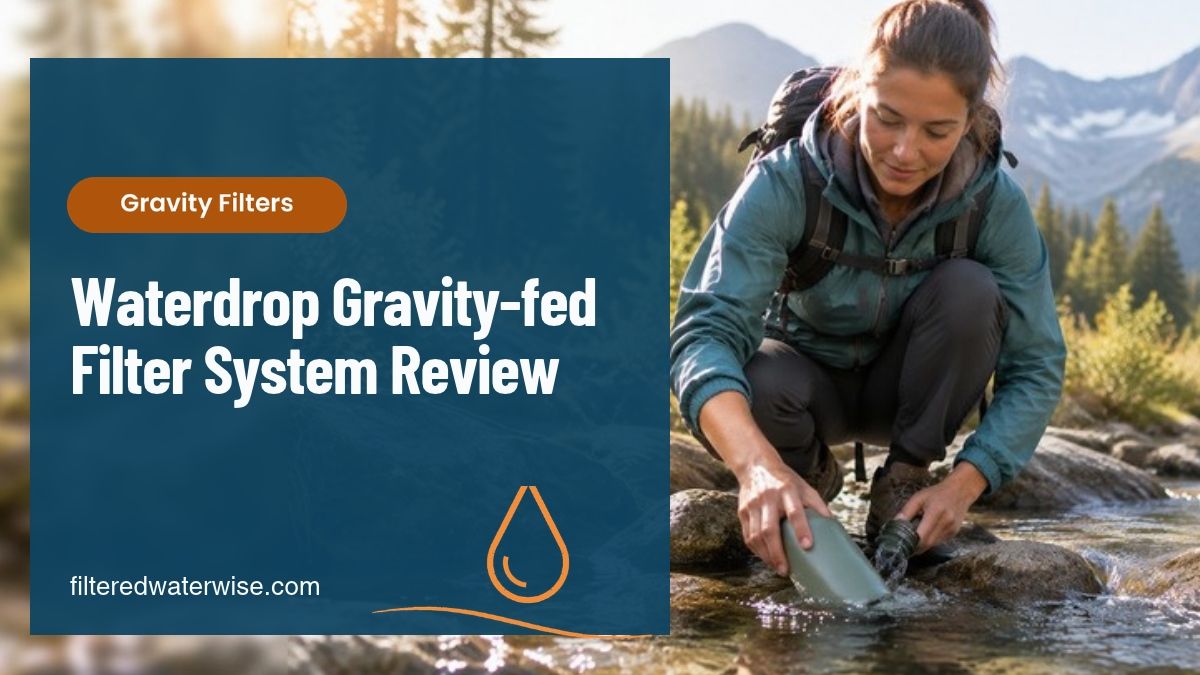
    With its large capacity and durable design, the Waterdrop Gravity-fed Water Filter System can be used both indoors and outdoors. Whether you need clean drinking water in your kitchen or a water supply for outdoor activities, this system has got you covered.

    Emergency Situations

    Since the Waterdrop Gravity-fed Water Filter System does not require electricity to work, it can be a reliable source of clean drinking water during emergencies such as floods or snowstorms. You can simply install the system and enjoy clean and pure water without worrying about power outages.

    Economical and Sustainable Solution

    By using the Waterdrop Gravity-fed Water Filter System, you can significantly reduce your plastic waste. The long lifespan of the filters, combined with the large capacity of the system, results in saving up to 53,000 plastic bottles (500ml) over 3.5 years. This makes it an economical and sustainable solution for water filtration.

    Check price on Amazon

    Product Specifications

    Specification Description
    Capacity 2.25 Gallons
    Material 304 Food-grade Stainless Steel
    Certifications NSF/ANSI 372 and NSF/ANSI42
    Filter Lifespan 1,000 gallons for fluoride filters, 6,000 gallons for carbon filters
    Compatibility Compatible with most faucets, may cause splashing if not fully compatible
    Installation Easy to set up and install with no prior plumbing experience required
    Power Source No electricity required

    Who Needs This

    The Waterdrop Gravity-fed Water Filter System is perfect for anyone who wants clean and pure drinking water, be it for a single individual or a family of four. Its large capacity and efficient filtration capabilities make it suitable for indoor and outdoor use. Additionally, those who are looking for an economical and sustainable solution to water filtration will also benefit from this system.

    Check price on Amazon

    Pros and Cons

    Pros:

    • Large capacity meets the water demands of a family of four
    • Certified quality for reliable and safe water filtration
    • Durable and stylish design with stainless-steel housing
    • Efficient filtration removes chlorine, heavy metals, sediment, and other impurities
    • Long filter lifespan saves up to 53,000 plastic bottles
    • Easy to set up and install without plumbing experience
    • No electricity required for operation

    Cons:

    • Splashing may occur if not fully compatible with certain faucets

    FAQs

    1. What certifications does the Waterdrop Gravity-fed Water Filter System have? The system has passed the authoritative NSF/ANSI 372 certification, ensuring its quality and safety. The black carbon filter is also certified against NSF/ANSI42 for the reduction of chlorine, taste, and odor.

    2. How long do the filters last? The two fluoride filters (white) can effectively filter up to 1,000 gallons of water, while the two carbon filters (black) can filter up to 6,000 gallons. This provides a long lifespan and saves you money on replacements.

    3. Can the system be used during emergencies? Yes, the Waterdrop Gravity-fed Water Filter System requires no electricity to work, making it a reliable source of clean drinking water during emergencies such as floods or snowstorms.

    4. Is the system compatible with all faucets? The system is compatible with most faucets. However, if a faucet is not fully compatible, splashing may occur. This does not affect the product’s performance.

    Check price on Amazon

    Overall Value

    With its large capacity, efficient filtration, and durable design, it provides clean and pure drinking water for a family of four. The long filter lifespan saves you money and reduces plastic waste, making it an economical and sustainable solution to water filtration.

    Tips and Tricks For Best Results

    • Before using the system for the first time, flush the black carbon filter for one minute and the fluoride filter for 20 seconds.
    • Make sure the faucet is compatible with the system to prevent splashing.
    • Regularly check and replace filters according to the recommended lifespan for optimal filtration performance.

    Final Thoughts

    Product Summary

    The Waterdrop Gravity-fed Water Filter System is a reliable and efficient solution for providing clean and pure drinking water. With its large capacity, certified quality, efficient filtration, and durable design, it meets the water demands of a family of four while ensuring the removal of chlorine, heavy metals, sediment, and other impurities.

    Final Recommendation

    If you are looking for a high-quality water filter system that offers convenience, efficiency, and sustainability, the Waterdrop Gravity-fed Water Filter System is an excellent choice. It provides an economical solution to water filtration, reduces plastic waste, and guarantees clean and pure drinking water for you and your family.

    Check price on Amazon

  • Why Do I Still Have Hard Water With A Water Softener?

    Why Do I Still Have Hard Water With A Water Softener?

    Filtered Water Wise is reader-supported. Some articles contain affiliate links, and as an Amazon Associate we earn from qualifying purchases. Affiliate disclosure

    Are you frustrated with the lingering presence of hard water despite investing in a water softener? You’re not alone. It can be disheartening to discover that your water softener may not be delivering the expected results. But fear not, as this article aims to shed light on the possible reasons behind this phenomenon. With a friendly tone and helpful insights, we’ll explore the potential culprits that could be preventing your water softener from truly achieving its intended purpose. So, let’s dive in and uncover why you may still have hard water despite using a water softener.

    Understanding Water Softeners

    Water softeners are devices used to remove minerals, such as calcium and magnesium, from hard water. The process of water softening involves exchanging these minerals with sodium or potassium ions, resulting in softened water. But how exactly do water softeners work? Let’s delve into the topic.

    How Do Water Softeners Work?

    Water softeners work through a process called ion exchange. The main component of a water softener is a resin bed, which contains small beads coated with sodium or potassium ions. As hard water passes through the resin bed, the calcium and magnesium ions are attracted to the resin beads and are exchanged for sodium or potassium ions. This exchange effectively softens the water, making it free from the minerals that cause hardness.

    What Are the Components of a Water Softener?

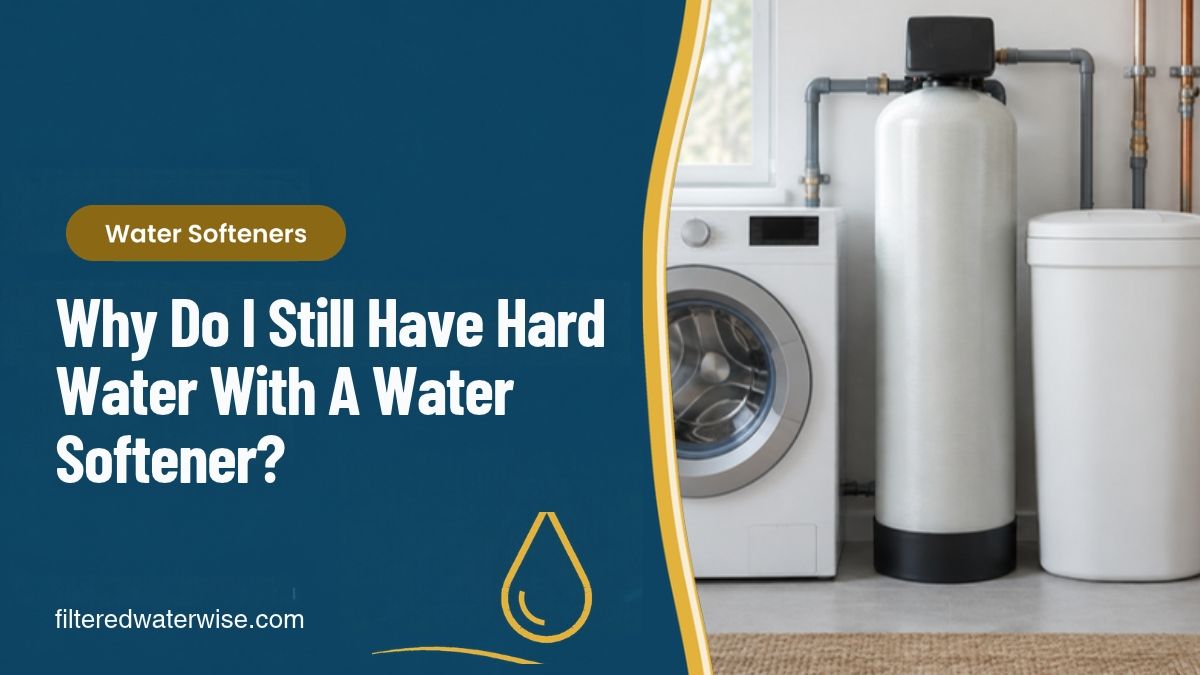
    A typical water softener system consists of several components. These include a resin tank, brine tank, control valve, and bypass valve. The resin tank is where the ion exchange process takes place, while the brine tank holds the salt used to regenerate the resin. The control valve regulates the flow of water through the system, and the bypass valve allows water to be diverted around the softener if needed.

    What Are the Benefits of Using a Water Softener?

    Using a water softener offers numerous benefits. Firstly, softened water can prevent scale buildup in pipes, appliances, and fixtures. This helps to prolong their lifespan and improve efficiency. Softened water also reduces soap scum and improves the effectiveness of soaps and detergents, leading to cleaner and brighter clothes, dishes, and surfaces. Additionally, soft water can leave your skin and hair feeling smoother and more hydrated after bathing or showering.

    What Is Hard Water?

    Hard water refers to water that contains a high concentration of dissolved minerals, primarily calcium and magnesium. This hardness can create various issues, such as mineral deposits on fixtures and appliances, reduced soap lathering and cleaning efficiency, and dry skin and hair. Hard water can also cause scaling in pipes, leading to reduced water flow and efficiency in heating systems.

    Potential Causes for Hard Water Despite Using a Water Softener

    So, why do you still have hard water even though you are using a water softener? Several factors may contribute to this issue. Let’s explore some potential causes:

    Incorrect Sizing of the Water Softener

    One possible cause is that your water softener is not properly sized for your household’s needs. If the water softener is too small, it may not be able to adequately remove the minerals from the water, resulting in continued hardness issues.

    Improper Installation

    Another factor to consider is the installation of the water softener. If the system is not installed correctly, it may not be functioning optimally, leading to inefficient removal of minerals from the water.

    Malfunctioning Components in the Water Softener

    Sometimes, the softener may have malfunctioning or worn-out components, such as the control valve or resin bed. These faulty parts can hinder the effectiveness of the water softener, allowing minerals to remain in the water.

    Insufficient Regeneration

    The regeneration process is essential for maintaining the efficiency of a water softener. If the system is not regenerating properly, it may not be able to effectively remove the minerals from the resin bed, resulting in hard water.

    Water Source has High Mineral Content

    Lastly, it is possible that the water source itself has an unusually high mineral content. In such cases, the water softener may struggle to remove all the minerals, leading to residual hardness.

    Determining the Cause

    To address the issue of hard water despite using a water softener, it is crucial to determine the cause. Here are some steps you can take to identify the underlying problem:

    Check the Water Softener’s Sizing

    Start by evaluating whether your water softener is properly sized for your household’s water usage. Consult the manufacturer’s guidelines or seek professional advice if necessary. If the softener is undersized, consider upgrading to a larger unit.

    Inspect the Installation

    Inspect the water softener system’s installation to ensure it was done correctly. Look out for any obvious errors or misconnections that may be impairing the system’s functionality. If unsure, consult with a professional plumber or water treatment specialist.

    Examine the Water Softener Components

    Carefully examine the various components of the water softener for any signs of damage or malfunctioning. This includes inspecting the control valve, resin bed, brine tank, and bypass valve. Replace or repair any faulty parts as needed.

    Evaluate the Regeneration Process

    Monitor the regeneration process of your water softener. Ensure it is set to regenerate at appropriate intervals and that the regeneration cycle is functioning correctly. Adjust the frequency if necessary to ensure effective mineral removal.

    Test the Mineral Content of the Water Source

    Have your water source tested to determine the exact mineral content. This will help you assess whether the hardness issue originates from the high mineral content of the source water or if there are other contributing factors.

    Solutions to Address the Issue

    Once you have identified the cause of your hard water problem, you can take appropriate measures to resolve it. Here are some possible solutions:

    Resizing the Water Softener

    If the cause of the hard water is an undersized water softener, consider upgrading to a larger unit that can accommodate your household’s needs. This will ensure more effective mineral removal and provide you with softened water consistently.

    Correcting Installation Errors

    Address any installation errors by seeking professional assistance. A trained plumber or water treatment specialist can identify and rectify any issues, ensuring the system operates optimally.

    Repairing or Replacing Malfunctioning Components

    Replace or repair any malfunctioning components in the water softener system. Faulty parts like the control valve or resin bed can be replaced, restoring the efficiency of the softener.

    Adjusting the Regeneration Frequency

    Experiment with adjusting the regeneration frequency of your water softener. Increasing or decreasing the frequency may help optimize the mineral removal process, improving overall water softening effectiveness.

    Considering Alternate Water Softening Methods

    If all else fails or the issues persist, consider exploring alternative water softening methods, such as salt-free systems or electronic water conditioners. These alternative approaches can provide effective water softening without the use of salt or chemicals.

    Consulting a Professional

    If you are experiencing persistent hard water despite your efforts, it may be time to consult a professional. Here are some steps to consider:

    Seeking Advice from a Water Treatment Specialist

    Reach out to a water treatment specialist who can assess your specific situation and provide expert guidance on resolving your hard water issues. They can evaluate your water quality, identify the underlying causes, and recommend appropriate solutions.

    Getting a Water Analysis Done

    Consider getting a comprehensive water analysis done to determine the precise mineral content and identify any additional contaminants. This analysis can provide valuable insights into your water quality and guide you in finding the most suitable treatment options.

    Exploring Advanced Treatment Options

    For complex water issues or specific requirements, advanced treatment options may be necessary. These can include specialized filters, reverse osmosis systems, or other advanced technologies that target specific contaminants and provide tailored solutions.

    Common Misconceptions about Water Softeners

    It’s important to dispel some common misconceptions about water softeners. Here are a few:

    Water Softeners Eliminate All Minerals

    Contrary to popular belief, water softeners do not remove all minerals from the water. While they effectively remove calcium and magnesium, small amounts of other minerals may still be present.

    Water Softeners Remove All Scale and Staining

    Although water softeners significantly reduce scale buildup and staining, they may not eliminate it entirely. Existing scale may require additional cleaning, and in certain cases, other water treatment methods may be necessary to address specific staining issues.

    Water Softeners Change the Taste of Water

    Water softeners do not alter the taste of water significantly. While some individuals may notice a difference, the impact on taste is generally minimal. Softened water remains safe and enjoyable to drink.

    Prevention and Maintenance Tips

    To ensure optimal performance and longevity of your water softener, consider the following prevention and maintenance tips:

    Regularly Maintain and Clean the Water Softener

    Follow the manufacturer’s guidelines for regular maintenance and cleaning. This may include flushing the resin bed, cleaning the brine tank, and inspecting and lubricating moving parts.

    Consider Using a Water Filter

    Pairing your water softener with a water filter can help remove additional impurities, such as sediment or chlorine. This combined approach ensures cleaner and better-tasting water.

    Use Water Softener Salt Properly

    Choose the right type of salt recommended by your water softener manufacturer. Follow guidelines on salt usage and avoid using excessive amounts, as this can affect the system’s efficiency.

    Monitor Water Softener Performance Regularly

    Keep an eye on the performance of your water softener. Check for any signs of reduced effectiveness, unusual noises, or changes in water quality. Regular monitoring allows you to detect and address issues promptly.

    Additional Factors to Consider

    In addition to the main causes and solutions discussed, there are several other factors to consider when dealing with water softeners and hard water:

    Water Softener Age and Condition

    The age and overall condition of your water softener can impact its performance. Older systems may have worn-out components that compromise their efficiency, while newer models tend to be more advanced in their technology and effectiveness.

    Water Usage Patterns and Needs

    Assess your household’s water usage patterns and needs to ensure your water softener is appropriately sized. Consider factors such as the number of occupants, daily water consumption, and specific requirements for different appliances or fixtures.

    Quality of Water Treatment Products

    Not all water treatment products are created equal. Choose reputable brands and quality products when purchasing water softeners, replacement parts, salt, and other related items. This ensures better performance and longevity of the system.

    Environmental Factors Affecting Water Hardness

    Keep in mind that external environmental factors can influence water hardness. Changes in the water source, such as seasonal variations or nearby construction activities, may impact the mineral content. Stay aware of these factors to understand any changes in water quality.

    Conclusion

    Identifying the cause for hard water despite using a water softener is the first step towards finding a solution. Through careful evaluation of the system’s sizing, installation, performance, and the water source itself, you can determine any underlying issues that may be contributing to hardness. From there, appropriate actions can be taken such as resizing the softener, repairing components, or exploring alternative treatment methods. Remember to consult with professionals for expert advice, undertake regular maintenance, and monitor your water softener’s performance to ensure optimal results. With the right measures in place, you can enjoy the benefits of consistently softened water and tackle hard water challenges effectively.