Tag: Water

  • Should We Drink Hard Or Soft Water?

    Should We Drink Hard Or Soft Water?

    Filtered Water Wise is reader-supported. Some articles contain affiliate links, and as an Amazon Associate we earn from qualifying purchases. Affiliate disclosure

    When it comes to our health and hydration, there’s an age-old question that often goes unnoticed – should we drink hard or soft water? Both types have their own unique qualities and benefits, but choosing the right one for our bodies is key. In this article, we’ll explore the differences between hard and soft water, and help you make an informed decision about which one deserves a place in your glass. So, let’s quench our curiosity and find out which water is truly the thirst-quencher you’ve been searching for!

    What is hard water?

    Definition of hard water

    Hard water refers to water that contains high levels of dissolved minerals, particularly calcium and magnesium. These minerals are present in the form of ions and can be traced back to the geology of the region’s water sources. The hardness of water is measured in terms of the concentration of these minerals, usually expressed as milligrams per liter (mg/L) or parts per million (ppm).

    Causes of hardness in water

    The primary cause of hardness in water is the presence of dissolved minerals such as calcium and magnesium. These minerals originate from natural deposits in rocks and soil, and as water passes through these sources, it picks up and carries the minerals along with it. The amount of hardness in water can vary depending on the specific geological composition of the area.

    Consequences of drinking hard water

    Drinking hard water itself is generally harmless and safe for consumption. However, there are some consequences associated with consuming hard water in the long term. One of the main drawbacks is the taste, as hard water can often have a distinct mineral-like taste that some individuals may find unpleasant. Additionally, hard water can have negative effects on plumbing systems, appliances, and even our health.

    What is soft water?

    Definition of soft water

    Soft water is the opposite of hard water in that it contains low levels of dissolved minerals, specifically calcium and magnesium. Soft water typically feels smoother and has a more neutral taste compared to hard water. To achieve soft water, the mineral content must be reduced or removed through a process known as water softening.

    How soft water is produced

    There are various methods to produce soft water, but the most common approach is through water softeners. Water softeners are devices that use ion exchange to remove the minerals responsible for water hardness. The process involves replacing the calcium and magnesium ions with sodium or potassium ions, resulting in softened water.

    Benefits of drinking soft water

    Drinking soft water offers several advantages. Firstly, it eliminates the mineral-like taste often associated with hard water, providing a more refreshing and neutral flavor. Soft water is also gentler on plumbing systems and appliances, as it reduces the buildup of mineral deposits and prolongs their lifespan. Additionally, soft water can have positive effects on our health, particularly in relation to skin and hair conditions.

    Comparison of hard and soft water

    Mineral content

    The key difference between hard and soft water lies in their mineral content. Hard water contains elevated levels of calcium and magnesium, while soft water has minimal to no presence of these minerals. This variation in mineral content can significantly affect the taste and overall properties of the water.

    Effect on taste

    The high mineral content in hard water often imparts a distinct taste that can be described as “earthy” or “mineral-like.” On the other hand, soft water lacks this taste, offering a more neutral and refreshing flavor. Many people prefer the taste of soft water, especially when consuming it on its own or as a base for beverages and cooking.

    Impact on plumbing

    The minerals present in hard water tend to form limescale or mineral deposits over time, which can clog pipes, faucets, and other plumbing fixtures. This buildup can restrict water flow, reduce efficiency, and ultimately lead to costly repairs or replacements. Soft water, being free of these minerals, helps prevent the buildup of limescale, ensuring better plumbing performance and longevity.

    Health considerations

    While the minerals in hard water are not harmful to consume, they can have implications for certain individuals with specific health conditions or dietary needs. For example, individuals on a low-sodium or low-mineral diet may benefit from consuming soft water, as it contains lower sodium content. Additionally, soft water can be advantageous for individuals with certain skin and hair conditions, as it is less likely to cause dryness or irritation.

    Health effects of hard water

    Calcium and magnesium intake

    Drinking hard water can contribute to the intake of essential minerals like calcium and magnesium. While these minerals are beneficial in moderate amounts, excessive intake from hard water may not be necessary for individuals with a well-balanced diet. It is important to consider overall dietary intake and consult with a healthcare professional regarding specific mineral requirements.

    Kidney stone formation

    Some studies suggest a potential link between the consumption of hard water and an increased risk of kidney stone formation. The minerals in hard water, particularly calcium, can contribute to the formation of kidney stones in susceptible individuals. However, it is important to note that the overall risk depends on various factors, including genetics, diet, and hydration levels.

    Skin and hair problems

    The minerals in hard water can have adverse effects on the skin and hair. The high mineral content can lead to dryness, irritation, and even contribute to conditions like eczema or psoriasis. This is particularly noticeable when individuals wash their skin or hair with hard water on a regular basis. Soft water, with its reduced mineral content, can alleviate these concerns and promote healthier skin and hair.

    Gastrointestinal issues

    Drinking hard water may cause gastrointestinal issues for some individuals. The high mineral content in hard water can potentially impact digestion and lead to stomach discomfort, bloating, or even constipation. While these effects are not experienced by everyone, those with sensitive digestive systems may find relief by switching to soft water.

    Health benefits of soft water

    Mineral-free water

    One of the primary health benefits of soft water is its reduced mineral content. Soft water largely eliminates the presence of minerals like calcium and magnesium, ensuring a lower intake of these substances. This can be advantageous for individuals with specific dietary restrictions, such as those on a low-mineral or low-sodium diet.

    Improved hydration

    Soft water is often preferred for its ability to hydrate more effectively. With its neutral taste and lack of minerals, soft water is generally easier to drink in larger quantities. This encourages proper hydration, which is essential for maintaining overall health, supporting bodily functions, and promoting optimal well-being.

    Reduced risk of kidney stones

    The lower mineral content in soft water can potentially reduce the risk of kidney stone formation in individuals prone to this condition. By limiting the intake of calcium and other minerals, soft water assists in maintaining a balance between mineral intake from various sources, including the diet.

    Skin and hair benefits

    Soft water is particularly beneficial for maintaining healthy skin and hair. The reduced mineral content prevents the drying and irritation that can occur when washing with hard water. Soft water allows hair to retain its natural moisture, resulting in softer, shinier hair. Similarly, it helps maintain the skin’s natural moisture barrier, leaving it feeling smoother and less prone to dryness or irritation.

    Environmental considerations

    Impact on water appliances and pipes

    Hard water can have a detrimental impact on water appliances and pipes due to the mineral deposits or limescale buildup it causes. Over time, this buildup can reduce the efficiency and lifespan of appliances such as washing machines, dishwashers, and water heaters. Soft water, with its reduced mineral content, helps prevent this buildup, resulting in better appliance performance and longevity.

    Use in cleaning

    Hard water can pose challenges when it comes to cleaning. The minerals in hard water can react with soaps and detergents, reducing their effectiveness and leaving behind soap scum or residue. Soft water, on the other hand, does not have this issue and allows for more efficient cleaning. It enables soaps and detergents to lather better, resulting in cleaner and brighter dishes, clothes, and surfaces.

    Eco-friendly options

    While water softeners are commonly used to produce soft water, there are eco-friendly alternatives available. These options aim to reduce the environmental impact associated with water softening processes that involve the use of salt or chemicals. Examples include magnetic water conditioners or citric acid-based water softeners. These alternatives offer a more sustainable approach to achieving soft water.

    Practical considerations

    Cost of water softening

    One practical consideration when choosing between hard and soft water is the cost associated with water softening. Installing a water softening system can require an initial investment, including the purchase of the unit and any necessary installation fees. Additionally, there may be ongoing costs for maintenance, such as replenishing salt or other softening agents. It is advisable to weigh the financial implications against the potential benefits and determine the most practical solution for your household.

    Availability of resources

    The availability of resources plays a role in the decision between hard and soft water. Certain regions may have naturally soft water sources, making water softening processes unnecessary. On the other hand, areas with naturally hard water may require more extensive water softening solutions to achieve desirable water quality. Considering the local water source and its characteristics can help determine the most appropriate approach.

    Personal preferences

    Personal preferences also come into play when deciding between hard and soft water. Some individuals may have a preference for the taste of hard water, appreciating its unique mineral flavor. Others may prioritize the potential health benefits and convenience associated with soft water. Considering individual preferences and priorities is essential to finding the most satisfactory solution for drinking water.

    Water treatment options

    Water softeners

    Water softeners are the most common and popular method of converting hard water into soft water. These devices utilize ion exchange to remove calcium and magnesium ions and replace them with sodium or potassium ions. Water softeners can be installed at the point of entry (whole-house system) or at specific points, such as the kitchen faucet (point-of-use system), depending on individual needs and budget.

    Reverse osmosis

    Reverse osmosis is another water treatment method that can effectively purify water by removing impurities, including minerals responsible for water hardness. In this process, water is forced through a semi-permeable membrane, which filters out the dissolved minerals and other contaminants. Reverse osmosis systems can provide both softened and purified water, but they require careful maintenance and can be more expensive.

    Distillation

    Distillation involves boiling water and collecting the resulting steam, which is then condensed back into liquid form. This process effectively removes impurities and minerals, producing soft and purified water. Distillation units can be installed as standalone systems or incorporated into larger home water filtration setups. However, distillation requires energy to heat the water and can be time-consuming for regular use.

    Choosing the right option

    Choosing the right water treatment option depends on various factors, including water quality, budget, and household needs. Water softeners are often the preferred choice for addressing water hardness specifically. If broader purification is desired or if other contaminants are a concern, reverse osmosis or distillation may be better suited. Consulting with a water treatment professional can provide valuable guidance in selecting the most appropriate option.

    Conclusion

    Balancing health and practicality

    When deciding between hard and soft water, it is essential to strike a balance between health considerations and practicality. While hard water can provide beneficial minerals in moderation, its impact on taste, plumbing, and some health aspects must be considered. Soft water, on the other hand, offers a more neutral taste, benefits for plumbing, and potential advantages for certain health conditions.

    Considering individual needs

    Ultimately, the choice between hard and soft water should be based on individual needs, preferences, and the specific characteristics of the local water supply. Personal factors such as dietary restrictions, taste preferences, and existing health conditions should be taken into account. Consulting with professionals and considering the long-term implications can help make an informed decision regarding the most suitable option for drinking water.
  • Which Is Better Purified Or Filtered Water?

    Which Is Better Purified Or Filtered Water?

    Filtered Water Wise is reader-supported. Some articles contain affiliate links, and as an Amazon Associate we earn from qualifying purchases. Affiliate disclosure

    Imagine standing in the beverage aisle of your local grocery store, faced with endless options of bottled water. You want to make the best choice for your health, but you find yourself hesitating between purified and filtered water. Which one should you go for? In this article, we will explore the benefits and differences of purified and filtered water, helping you make an informed decision that quenches your thirst while nourishing your body.

    Definition of purified water

    Purified water refers to water that has undergone a process to remove impurities and contaminants, resulting in a higher level of purity. This process typically involves removing substances such as bacteria, viruses, minerals, chemicals, and other impurities that may be present in tap water. Purified water is commonly used for drinking, cooking, and various other applications where high-quality water is required.

    Methods of purifying water

    There are several methods used to purify water, each with its own advantages and disadvantages. Some common methods include:

    1. Distillation: This process involves boiling water and then collecting the condensed steam, leaving behind impurities. Distillation is effective at removing most contaminants but can be time-consuming and requires specialized equipment.

    2. Reverse Osmosis: Reverse osmosis uses a semi-permeable membrane to remove impurities from water. It is effective at removing a wide range of contaminants, including bacteria, viruses, and minerals. However, it can be costly and may also remove beneficial minerals.

    3. Ion Exchange: This method involves passing water through resin beads that exchange ions, effectively removing minerals and other impurities. Ion exchange is commonly used to soften water but may not remove all types of contaminants.

    Benefits of purified water

    Choosing purified water can offer a range of benefits, including:

    1. Removal of a wider range of contaminants: Purified water undergoes rigorous purification processes, ensuring the removal of various impurities, including bacteria, viruses, chemicals, and minerals.

    2. Elimination of harmful bacteria and viruses: Purified water treatments, such as distillation and reverse osmosis, effectively remove harmful microorganisms, ensuring safer drinking water.

    3. Enhanced taste and odor: Purified water often has a clean, refreshing taste due to the removal of chemicals and impurities that can affect the flavor and smell of tap water.

    Definition of filtered water

    Filtered water refers to water that has been passed through a filter to remove impurities. Unlike purified water, filtration focuses on removing larger particles and contaminants, while allowing beneficial minerals to remain in the water. Filters capture sediment, chlorine, and other substances that can affect the taste and quality of water.

    Methods of filtering water

    Various methods can be used to filter water, depending on the specific needs and preferences. Some common methods include:

    1. Carbon filtration: This method involves passing water through activated carbon filters, which effectively remove chlorine, sediment, and organic compounds. Carbon filters can greatly improve taste and odor.

    2. Ceramic filters: Ceramic filters consist of small pores that trap contaminants as water passes through. They can effectively remove bacteria and sediment, providing cleaner water.

    3. UV filters: Ultraviolet (UV) filters use UV light to kill bacteria, viruses, and other microorganisms by damaging their DNA. This method can be effective at purifying water but may not remove other types of contaminants.

    Benefits of filtered water

    Filtered water provides several benefits, including:

    1. Maintenance of essential minerals: Unlike the purification process, filtration does not remove beneficial minerals naturally present in water. These minerals, such as calcium and magnesium, contribute to the overall health benefits provided by water.

    2. Improved taste and odor: Filtration can greatly enhance the taste and smell of tap water by removing chlorine, sediment, and other impurities that may affect its quality.

    3. Easier and cheaper to obtain: Compared to purifying water, obtaining filtered water is often more convenient and cost-effective. Filtered water can be obtained through various methods, such as using water filter pitchers, faucet-mounted filters, or refrigerator filters.

    Differences between purified and filtered water

    When comparing purified and filtered water, there are several key differences to consider:

    Method of removing impurities

    Purified water uses processes like distillation and reverse osmosis to remove impurities, while filtered water relies on physical filtration methods like activated carbon or ceramic filters.

    Types of contaminants removed

    Purified water removal processes are designed to eliminate a wide range of contaminants, including bacteria, viruses, chemicals, and minerals. Filtered water mainly focuses on removing particles, sediment, chlorine, and organic compounds.

    Effect on taste and odor

    Purified water processes often result in cleaner and fresher-tasting water, as chemicals and impurities that can affect taste and odor are removed. Filtered water also improves taste and odor by removing chlorine and other substances, but some minerals may still be present, providing a slightly different taste.

    Cost of purification/filtration systems

    Purification systems, such as distillation or reverse osmosis, can be more expensive to install and maintain compared to filtration systems. Filters used for water filtration are generally more affordable, but they require regular replacement to maintain effectiveness.

    Advantages of purified water

    Opting for purified water offers several advantages:

    1. Removes a wider range of contaminants: Purification methods like distillation and reverse osmosis are highly effective at eliminating a broad spectrum of impurities.

    2. Can eliminate harmful bacteria and viruses: Purified water treatments ensure the removal of potentially harmful microorganisms, providing safer and healthier drinking water.

    3. Enhances taste and odor: By eliminating chemicals and impurities, purified water often has a cleaner and more refreshing taste compared to tap water.

    Disadvantages of purified water

    Despite its benefits, purified water has some potential drawbacks:

    1. May remove beneficial minerals: Purification methods like distillation and reverse osmosis can eliminate minerals that are naturally present in water. While these minerals can be obtained from other sources, some individuals prefer drinking water that retains them.

    2. Requires specialized equipment: Purification systems may require specific equipment installations, such as distillers or reverse osmosis units. These systems can be expensive to purchase and maintain.

    3. May be more expensive: Due to the complexity of the purification processes and the cost of specialized equipment, purified water can be more expensive compared to tap water or filtered alternatives.

    Advantages of filtered water

    Choosing filtered water provides several advantages:

    1. Maintains essential minerals: Unlike purification methods, filtration does not remove beneficial minerals present in water. These minerals contribute to overall health and can be retained through filtration.

    2. Improves taste and odor: Filtered water goes through physical filtration processes that remove chlorine, sediment, and other impurities, ensuring a better taste and odor.

    3. Easier and cheaper to obtain: Filtered water is more accessible, with various options like water filter pitchers, faucet-mounted filters, or fridge filters. These options are often more cost-effective compared to purification systems.

    Disadvantages of filtered water

    However, filtered water does have its limitations and potential drawbacks:

    1. May not remove all contaminants: While effective at removing sediment, chlorine, and certain particles, filters may not eliminate all types of contaminants present in tap water. It is essential to choose the appropriate filter for the contaminants you are concerned about.

    2. Possibility of bacterial growth: If not properly maintained, filters can become a breeding ground for bacteria. Regular maintenance and replacement are necessary to ensure the continued effectiveness and safety of filtered water.

    3. Filters need regular maintenance: Filters require periodic replacement to maintain their efficiency. This ongoing maintenance adds to the overall cost and convenience considerations.

    Considerations for choosing between purified and filtered water

    When deciding between purified and filtered water, several factors should be taken into consideration:

    Quality of tap water

    Assessing the quality of your tap water is crucial. If your tap water has high levels of contaminants or if you are unsure about the quality, a more comprehensive purification method may be necessary. However, if your tap water is relatively clean and safe to drink, a filtration system may be sufficient.

    Specific contaminants present

    Identifying the specific contaminants you wish to remove is essential in determining the appropriate method. Certain purification processes may be more effective at removing particular contaminants, while filtration methods may target others. Understanding the contaminants present in your water will help in making an informed decision.

    Budget and cost

    Consider your budget and cost considerations. Purification systems often come with a higher initial investment and ongoing maintenance costs. Filtered water solutions, on the other hand, are generally more affordable and accessible, with a range of options available for different budgets.

    Conclusion

    Ultimately, the choice between purified and filtered water depends on personal preference, specific needs, and the quality of your tap water. Both options offer benefits, and consulting with a water specialist can provide valuable insights tailored to your circumstances.

    Understanding the differences between these methods, as well as the advantages and disadvantages they present, will empower you to make an informed decision about the water you consume. Whether you opt for purified water or filtered water, the goal remains the same – to ensure access to safe and high-quality drinking water for you and your loved ones.

  • Is It Healthy To Drink Water Softener Water?

    Is It Healthy To Drink Water Softener Water?

    Filtered Water Wise is reader-supported. Some articles contain affiliate links, and as an Amazon Associate we earn from qualifying purchases. Affiliate disclosure

    Are you curious about the health implications of drinking water softener water? Water softeners are commonly used to reduce the level of minerals in hard water, making it more suitable for household use. However, when it comes to drinking this treated water, there seems to be some debate. In this article, we will explore the potential effects of consuming water softened by a water softener and provide you with all the necessary information to make an informed decision for your health. Stay tuned!

    Understanding Water Softeners

    What are water softeners?

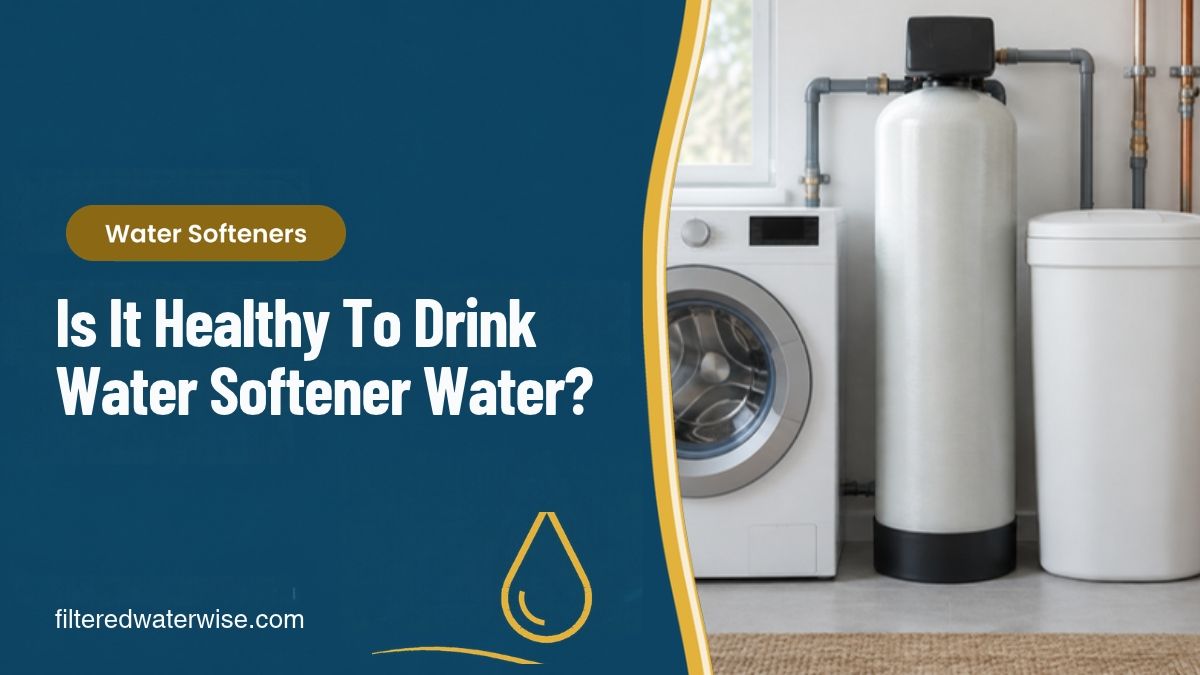
    Water softeners are devices designed to remove or reduce the minerals that cause water hardness, such as calcium and magnesium. Hard water can cause several issues in households, including limescale buildup, reduced efficiency of appliances, and dry skin and hair. Water softeners help to address these problems by replacing the calcium and magnesium ions present in the water with sodium ions.

    Types of water softeners

    There are primarily two types of water softeners: salt-based and salt-free. Salt-based water softeners use an ion exchange process to remove minerals from the water. These systems require the periodic addition of salt to regenerate the resin bed. On the other hand, salt-free water softeners, also known as descalers or water conditioners, do not remove the minerals but rather change their structure to prevent limescale buildup.

    How water softeners work

    Salt-based water softeners work through a process called ion exchange. The resin bed within the water softener contains small beads or zeolite crystals that are negatively charged and coated with positively charged sodium ions. As hard water flows through the resin bed, the calcium and magnesium ions are attracted to the resin beads and replaced by the sodium ions. The softened water is then directed into the household plumbing system. The salt in the water softener is used during the regeneration process to clean and recharge the resin bed, ensuring its continued effectiveness.

    Purpose of Water Softeners

    Why do we need water softeners?

    Water softeners are necessary because hard water can cause several problems in households. The minerals present in hard water can lead to limescale buildup in pipes and appliances, reducing their efficiency and lifespan. Hard water can also cause issues with soap and detergent effectiveness, leading to increased consumption. By removing or reducing the minerals that cause hardness, water softeners help to mitigate these problems, making daily tasks such as cleaning, bathing, and laundry more efficient.

    Importance of softened water in households

    Softened water offers numerous benefits in households. It helps to prolong the lifespan of appliances such as water heaters, dishwashers, and washing machines by preventing limescale buildup. Soft water also improves the effectiveness of soaps and detergents, allowing for better cleaning results and reducing the amount of product needed. Additionally, softened water can leave hair and skin feeling softer and healthier, as it does not contain the minerals that can cause dryness and irritation.

    Benefits of using water softeners

    Using water softeners provides several advantages. One of the main benefits is the prevention of limescale buildup in pipes and appliances. This not only extends their lifespan but also helps to maintain their efficiency, resulting in potential energy savings. Softened water also allows for cleaner and spot-free dishes and laundry, reducing the need for additional rinsing or rewashing. Another advantage is the improved effectiveness of personal care products, leading to softer hair and smoother skin. Overall, the use of water softeners can enhance the overall quality of life in households.

    The Composition of Water Post Softening

    What happens to water during the softening process

    During the softening process, water undergoes an ion exchange where the calcium and magnesium ions present in hard water are replaced by sodium ions. The resin beads within the water softener attract and retain the calcium and magnesium ions, effectively removing them from the water. As a result, the water that passes through the softener system emerges with reduced levels of these minerals, resulting in softened water.

    Elements added or removed by a water softener

    A water softener primarily removes calcium and magnesium ions from hard water, which are the main minerals responsible for water hardness. These minerals are replaced by sodium ions during the ion exchange process. While the water softening process removes minerals that cause hardness, it does not remove other contaminants such as bacteria, viruses, or chemical pollutants. It is important to note that the extent of mineral removal depends on the specific water softener system and its settings.

    Mineral Counts in Softened and Hard Water

    Understanding mineral content in water

    Water contains various minerals that can vary depending on the source and location. Common minerals found in water include calcium, magnesium, potassium, and sodium. These minerals are essential for the body to function properly and contribute to overall health. However, excessive levels of certain minerals, such as calcium and magnesium, can lead to water hardness and the associated issues.

    How a water softener affects mineral counts

    Water softeners reduce the mineral counts of calcium and magnesium in the water by replacing them with sodium ions. This results in a decrease in water hardness and the associated problems. However, it is important to note that the sodium content of the water increases as a result of the softening process. The extent of mineral reduction depends on the hardness of the incoming water and the efficiency of the water softener system.

    Comparative mineral content in hard water and softened water

    Hard water typically contains higher levels of calcium and magnesium compared to softened water. These minerals contribute to the water hardness and can cause limescale buildup. Conversely, softened water has reduced levels of calcium and magnesium, making it less likely to cause such issues. However, it is worth noting that the sodium content of softened water is increased due to the ion exchange process. The exact mineral content in hard water and softened water can vary depending on the specific source and the water softener system in use.

    Water Softeners and Sodium Levels

    How water softeners add sodium

    Water softeners add sodium to the water through the ion exchange process. The resin beads within the softener contain sodium ions, which replace the calcium and magnesium ions in hard water. As a result, the sodium content of the water increases. The amount of sodium added depends on the hardness of the incoming water and the efficiency of the water softener system.

    Normal sodium levels in softened water

    The sodium levels in softened water can vary depending on the specific water softener system and its settings. However, it is generally agreed upon that the increase in sodium content is relatively small and does not pose significant health risks for the majority of the population. The American Heart Association states that most water softeners contribute only a minimal amount of sodium to the diet, with an average intake of less than 10 milligrams per 8-ounce glass.

    Can water softeners lead to excessive sodium intake?

    For individuals on a low sodium diet or those with specific health conditions, the increased sodium content in softened water may be a concern. It is recommended that individuals consult with their healthcare provider to determine if the sodium levels from softened water pose a risk to their health. In such cases, alternative water treatment methods, such as reverse osmosis or activated carbon filtration, may be considered to reduce the sodium content further.

    Potential Health Impacts of Drinking Softened Water

    Effects of long term consumption of softened water

    The long-term consumption of softened water has been a topic of discussion regarding potential health impacts. Some studies suggest that the increased sodium intake from drinking softened water may pose risks for individuals with certain health conditions, such as heart disease or kidney problems. However, it is important to note that the sodium levels in softened water are generally considered safe for the general population, and the overall impact on health is still under debate.

    Risks associated with consuming high levels of sodium

    High levels of sodium intake have been linked to various health concerns, including the development of high blood pressure, heart disease, and kidney problems. While the sodium content in softened water is generally low, individuals with existing health conditions or those on a low sodium diet should monitor their sodium intake from multiple sources, including water, to ensure they stay within their recommended limits. It is always advisable to consult with healthcare professionals for personalized recommendations based on specific health needs.

    Water Softeners and Specific Health Issues

    Softened water and heart disease

    There is ongoing debate surrounding the potential association between consuming softened water and heart disease. While the increased sodium intake from softened water may contribute to high blood pressure in some individuals, the impact on overall heart health is not fully understood. It is important for individuals with heart disease or hypertension to consider their overall sodium intake, including that from softened water, and consult with healthcare professionals for personalized advice.

    Impact on kidney function

    Individuals with kidney problems may need to be cautious when consuming softened water. The increased sodium levels in softened water may pose a risk for individuals with compromised kidney function, as the kidneys play a crucial role in maintaining healthy sodium balance in the body. These individuals should consult with their healthcare provider to determine the appropriate sodium intake recommendations and consider alternative water treatment methods if necessary.

    Concerns for individuals on low sodium diets

    Individuals on low sodium diets should be aware of the sodium content in water, including softened water. While the sodium levels in softened water are generally considered to be relatively low, it is important to consider sodium intake from all sources, including food and other beverages. For those with strict sodium restrictions, alternative water treatment methods that further reduce sodium content, such as reverse osmosis or activated carbon filtration, may be more suitable.

    Alternatives to Water Softeners

    Methods of water purification

    There are various methods of water purification that can be used as alternatives to water softeners. These methods include reverse osmosis, distillation, activated carbon filtration, and UV sterilization. Reverse osmosis and distillation systems remove minerals and contaminants, including sodium, from the water. Activated carbon filtration can help reduce certain impurities, while UV sterilization effectively kills bacteria and viruses. Each method has its own advantages and considerations, and the choice depends on individual needs and preferences.

    Alternatives for people with high sodium intake concerns

    For individuals with high sodium intake concerns, alternative water treatment methods can be considered. Reverse osmosis systems are particularly effective in removing minerals and sodium from the water. Activated carbon filtration can also help reduce sodium levels to some extent. It is important to carefully evaluate different alternatives and choose a method that best suits the specific needs and circumstances.

    Water filter systems vs water softeners

    Water filter systems and water softeners serve different purposes and address different water quality issues. Water filter systems are designed to remove impurities, contaminants, and certain minerals, depending on the type of filtration used. They can provide clean and filtered water for consumption and other purposes. On the other hand, water softeners focus specifically on water hardness by removing or reducing the minerals that cause hardness. The choice between a water filter system and a water softener depends on the specific water quality concerns and goals of the individual or household.

    The Advice of Health Experts on Drinking Softened Water

    What doctors say about softened water

    Many doctors and healthcare professionals acknowledge the benefits of water softeners in mitigating the issues associated with hard water. They recommend using water softeners to improve the efficiency of appliances, minimize limescale buildup, and enhance the effectiveness of cleaning products. However, for individuals with certain health conditions or on low sodium diets, healthcare professionals may advise considering alternative water treatment methods to further reduce sodium intake.

    Recommendations from dieticians

    Dieticians often emphasize the importance of maintaining a balanced diet and considering overall sodium intake from various sources, including water. While the sodium levels in softened water are generally considered safe for the majority of the population, individuals with specific dietary needs or health concerns should consult with dieticians to determine the most suitable sodium intake recommendations and explore alternative water treatment options if necessary.

    Views of scientific researchers

    Scientific research on the health impacts of drinking softened water is ongoing. Some studies have suggested potential associations between increased sodium intake from softened water and certain health concerns, such as heart disease and kidney problems. However, the overall consensus is that the sodium levels in softened water are relatively low and not a significant health risk for the majority of the population. Further research is needed to understand the long-term effects of consuming softened water on specific health outcomes.

    Making Informed Decisions About Water Softeners

    Factors to consider when deciding to use a water softener

    When considering the use of a water softener, several factors should be taken into account. These include the hardness of the incoming water, the presence of other contaminants, personal health conditions and concerns, dietary restrictions, and the overall goals and preferences of the individual or household. It is important to evaluate the benefits and potential risks associated with water softeners and consider alternative water treatment methods if necessary.

    Understanding the quality of your raw water supply

    Before implementing a water softener or any other water treatment system, it is essential to understand the quality of the raw water supply. This can be achieved through water testing to determine the levels of minerals, contaminants, and other parameters. Knowing the specific composition of the incoming water can help in selecting the most appropriate water treatment solution and optimizing its settings.

    Maintaining balance: The benefits and risks of softened water

    Maintaining a balance between the benefits and potential risks of using softened water is key when making decisions about water treatment. Water softeners provide numerous advantages, including the prevention of limescale buildup and improved efficiency of appliances. However, for individuals with certain health conditions or concerns about sodium intake, careful consideration of alternative water treatment methods or additional filtration systems may be necessary. Consulting with healthcare professionals, dieticians, and water treatment experts can help in making informed decisions that align with individual needs and priorities.

    In conclusion, water softeners play a crucial role in addressing the issues caused by hard water in households. By removing or reducing the minerals responsible for water hardness, they provide several benefits, including improved appliance efficiency, cleaner dishes and laundry, and healthier hair and skin. While the sodium content in softened water may be a concern for individuals with specific health conditions or on low sodium diets, the overall impact on health is still under debate. It is important to consider individual circumstances, consult with healthcare professionals, and explore alternative water treatment methods to make informed decisions about using water softeners.