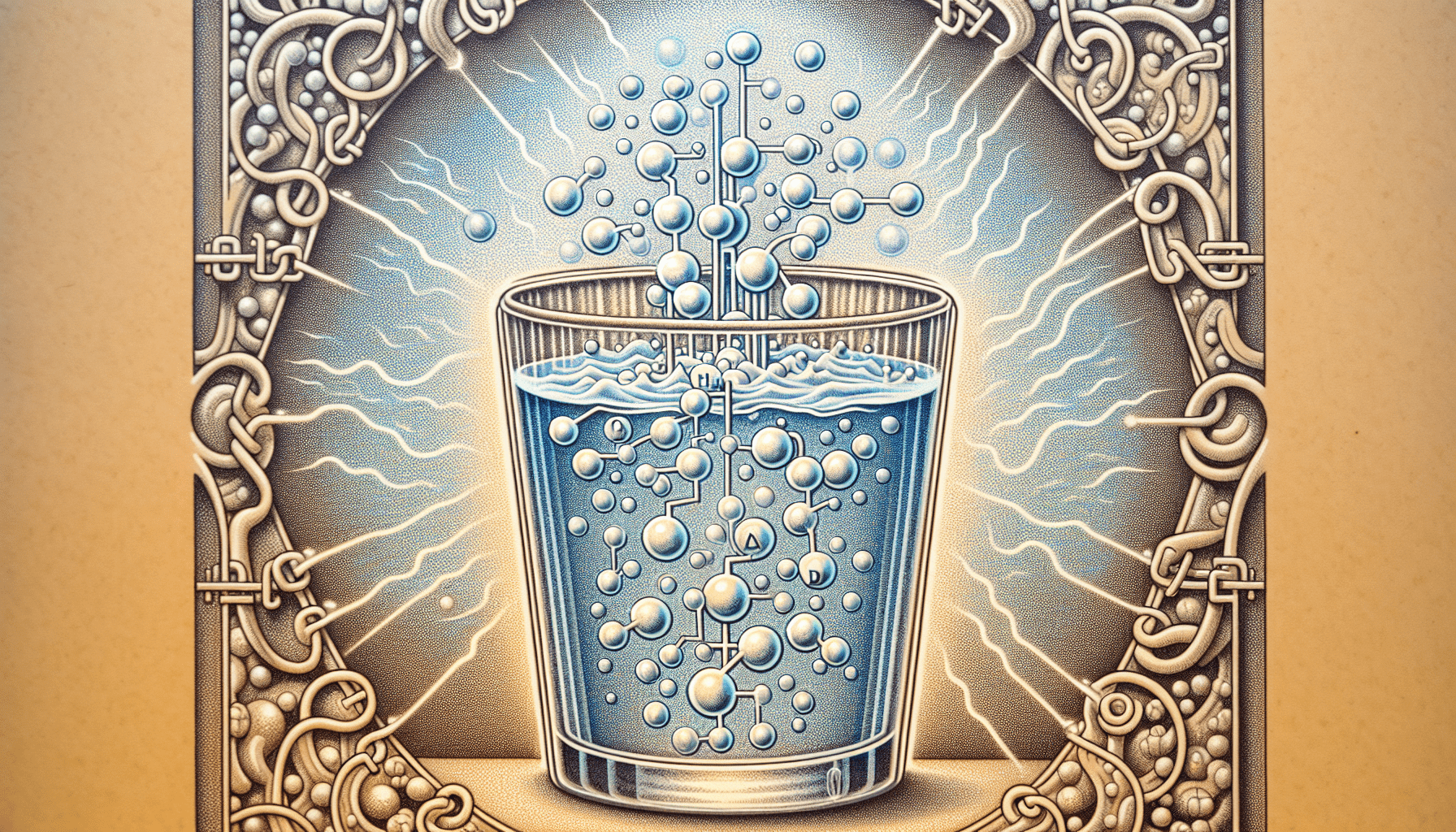
Imagine enjoying a glass of crisp, refreshing water, only to discover that it’s laden with a high sodium content. While softened water is great for many household purposes, excess sodium can be a concern for those with dietary restrictions or underlying health conditions. So, how do you remove sodium from softened water? In this article, we’ll explore some effective methods that can help you eliminate sodium from your water supply, ensuring you can quench your thirst without worrying about unnecessary salt intake.

Boiling method
Boiling the water
The boiling method is a simple and effective way to remove sodium from softened water. To do this, you will need to bring the water to a rolling boil. Boiling the water causes the sodium ions to separate from the water molecules and form sodium vapor, which then evaporates into the air. This process leaves behind sodium-free water that is safe for consumption.
Cooling and transferring the water
After boiling the water, it is important to allow it to cool before transferring it to another container. This is to ensure that the water reaches a safe temperature for handling and consumption. Once the water has cooled, you can carefully pour it into a separate container, leaving behind any remaining sodium particles or residue.
Leaving behind sodium ions
The boiling process effectively removes sodium ions from the softened water. As the water reaches its boiling point, the sodium ions dissociate from the water molecules and form sodium vapor. This vapor is then released into the air, leaving behind sodium-free water. It is important to note that although boiling can remove sodium, this method may not be suitable for removing other impurities or contaminants from the water.
Reverse osmosis
Understanding reverse osmosis
Reverse osmosis is a water purification technique that is commonly used to remove sodium from softened water. It works by using pressure to force water molecules through a semipermeable membrane, while blocking the passage of larger ions and molecules, including sodium ions. This process effectively removes sodium and other impurities from the water, resulting in purified and sodium-free water.
Using a reverse osmosis system
To remove sodium from softened water using reverse osmosis, you will need to install a reverse osmosis system. This system typically consists of a pre-filter to remove larger particles and sediment, a semipermeable membrane to filter out the sodium ions, and a post-filter to ensure the removal of any remaining impurities. The softened water is then forced through the membrane under pressure, allowing only pure water molecules to pass through while leaving the sodium ions behind.
Removing sodium through the membrane
During the reverse osmosis process, the semipermeable membrane acts as a barrier that only allows water molecules to pass through, while trapping sodium ions and other contaminants. Pressure is applied to the softened water, pushing it against the membrane and forcing the water molecules through the tiny pores of the membrane. The sodium ions, being larger in size, are unable to pass through the membrane and are effectively removed from the water. The result is purified water that is free from sodium and other impurities.
Distillation
Heating the water
Distillation is another method commonly used to remove sodium from softened water. The process involves heating the water to its boiling point and then collecting the condensed vapor. To do this, you will need a distillation apparatus, which typically consists of a boiling chamber, a condenser, and a collection container. The water is heated in the boiling chamber, causing it to evaporate and create water vapor.
Condensing the water vapor
As the water vapor rises, it enters the condenser, where it is cooled and converted back into liquid form. The condenser consists of a coil or a system of pipes that facilitate the cooling process. As the water vapor condenses, sodium ions and other impurities are left behind, ensuring that the collected liquid is free from sodium.
Discarding the sodium residue
Once the water vapor has condensed into liquid form, it is important to separate it from any remaining sodium residue. This can be done by carefully pouring the condensed liquid into a separate container, leaving behind any sodium particles or residue in the original apparatus. The collected liquid is now sodium-free and ready for consumption or other uses.
Ion-exchange resin
Introducing the ion-exchange process
Ion-exchange resin is a popular method for removing sodium from softened water. It works by replacing sodium ions with other ions, typically hydrogen or potassium ions. The water passes through a bed of ion-exchange resin, which consists of tiny beads coated with the desired ions. As the water flows through the resin bed, sodium ions in the water are attracted to the beads and are replaced by the hydrogen or potassium ions, effectively removing sodium from the water.
Replacing sodium ions with other ions
The ion-exchange process involves a chemical exchange between the sodium ions in the water and the hydrogen or potassium ions on the resin beads. As the water comes into contact with the resin, the sodium ions are attracted to the bead surface due to their positive charge. At the same time, the hydrogen or potassium ions on the resin are released into the water, replacing the sodium ions. This exchange process continues until the resin beads are saturated with sodium ions and need to be regenerated.
Regenerating the resin
Once the ion-exchange resin is saturated with sodium ions, it needs to be regenerated to restore its ability to remove sodium from the water. This can be done by flushing the resin bed with a sodium chloride (salt) solution. The sodium ions in the salt solution displace the accumulated calcium and magnesium ions on the resin, effectively regenerating it. After regeneration, the resin is ready to remove sodium ions from the softened water once again.
Nanofiltration
Exploring nanofiltration
Nanofiltration is a filtration process that is effective in removing sodium ions from softened water. It involves the use of a nanofiltration system, which utilizes specialized membranes that have smaller pores than those used in reverse osmosis. These membranes allow water molecules, along with certain dissolved substances, to pass through while blocking the passage of larger ions and molecules, including sodium ions.
Utilizing a nanofiltration system
To remove sodium from softened water using nanofiltration, you will need to set up a nanofiltration system. This system includes a pre-filter to remove larger particles, a nanofiltration membrane, and a post-filter to ensure the removal of any remaining impurities. The softened water is passed through the nanofiltration membrane, which effectively separates the sodium ions from the water molecules, resulting in sodium-free water.
Separating sodium ions from water
During the nanofiltration process, the specialized membranes act as barriers, allowing only water molecules and certain dissolved substances to pass through. The smaller pores of the nanofiltration membrane effectively block the larger sodium ions, separating them from the water. As a result, the collected water is free from sodium and other impurities, providing a highly purified and softened water source.
Electrodialysis
Understanding electrodialysis
Electrodialysis is a water treatment process that utilizes ion-exchange membranes to remove sodium ions from softened water. It involves the use of an electrodialysis system, which consists of a series of alternating anion-selective and cation-selective ion-exchange membranes. By passing the softened water through this system, sodium ions can be selectively removed, leaving behind sodium-free water.
Setting up an electrodialysis system
To remove sodium from softened water using electrodialysis, you will need to set up an electrodialysis system. This system typically includes a power source, a stack of ion-exchange membranes, and compartments for the softened water and a solution with a similar ionic composition to the water. The ion-exchange membranes within the stack selectively allow the passage of either negatively charged anions or positively charged cations, effectively removing sodium ions from the softened water.
Passing water through ion-exchange membranes
During the electrodialysis process, the softened water is passed through the ion-exchange membranes in the electrodialysis system. The anion-selective membranes allow the passage of negatively charged anions, while blocking the passage of positively charged cations, including sodium ions. Conversely, the cation-selective membranes allow the passage of positively charged cations, while blocking the passage of negatively charged anions. This selective passage of ions through the membranes effectively removes sodium ions from the water, resulting in sodium-free water.
Membrane filtration
Examining membrane filtration
Membrane filtration is a water treatment method that utilizes specialized membranes to remove sodium ions from softened water. These membranes have microscopic pores that allow for the separation of ions and molecules based on their size and charge. By passing the softened water through these membranes, sodium ions can be effectively strained out, leaving behind sodium-free water.
Employing a membrane filtration system
To remove sodium from softened water using membrane filtration, you will need to employ a membrane filtration system. This system typically consists of a series of membranes with varying pore sizes and charge characteristics. The softened water is passed through these membranes, with each membrane filtering out larger particles, including sodium ions. The end result is purified water that is free from sodium and other impurities.
Straining out sodium ions
During the membrane filtration process, the microscopic pores of the membranes act as filters, allowing only particles below a certain size to pass through. The larger sodium ions are effectively strained out as they are unable to pass through the pores of the membranes. This process ensures that the collected water is clean, pure, and free from sodium, providing a reliable source of softened water.
Chemical precipitation
Introduction to chemical precipitation
Chemical precipitation is a method for removing sodium from softened water that involves the addition of a precipitating agent. The precipitating agent reacts with the sodium ions in the water, forming insoluble compounds that can be separated and removed. This process effectively removes the sodium ions, leaving behind sodium-free water that is safe for consumption.
Adding a precipitating agent
To remove sodium from softened water using chemical precipitation, you will need to add a precipitating agent. Common precipitating agents include calcium hydroxide, lime, or calcium carbonate. When added to the water, these agents react with the sodium ions, forming insoluble compounds such as calcium carbonate or calcium hydroxide. These compounds can then be separated and removed, ensuring that the resulting water is free from sodium.
Separating and removing sodium
Once the precipitating agent has reacted with the sodium ions, the resulting insoluble compounds need to be separated from the water. This can be done through a process called sedimentation, where the water is allowed to sit undisturbed, allowing the insoluble compounds to settle at the bottom. The clear supernatant water can then be carefully decanted or filtered, leaving behind the sodium-free water. It is important to note that chemical precipitation may require additional steps or processes to ensure complete removal of the sodium and other impurities.

Activated carbon filtration
Utilizing activated carbon filters
Activated carbon filtration is a method commonly used to remove sodium from softened water. Activated carbon filters are known for their ability to adsorb a wide range of impurities, including sodium ions. These filters contain activated carbon, which has a large surface area and a porous structure that can effectively trap sodium ions on its surface.
Absorbing sodium on carbon surfaces
To remove sodium from softened water using activated carbon filtration, the water is passed through activated carbon filters. As the water flows through the filters, sodium ions are attracted to the carbon surfaces and get adsorbed, or trapped, onto the carbon. This adsorption process effectively removes sodium ions from the water, leaving behind sodium-free water that is safe for consumption.
Replacing filters when saturated
Over time, the activated carbon filters will become saturated with adsorbed sodium ions and other impurities. When this happens, the filters will no longer be effective in removing sodium from the water. It is important to regularly monitor the condition of the filters and replace them when they reach their saturation point. By replacing the filters, you ensure the continued removal of sodium ions from the softened water, providing you with a constant supply of sodium-free water.
Solar evaporation
Harnessing solar energy
Solar evaporation is a natural process that can be used to remove sodium from softened water. It takes advantage of the heat energy from the sun to evaporate water and leave behind sodium crystals. This method is particularly useful in regions with high solar radiation, where it provides an environmentally friendly and cost-effective way to obtain sodium-free water.
Evaporating water to remove sodium
To remove sodium from softened water using solar evaporation, you will need to expose the water to direct sunlight. The heat from the sun causes the water to evaporate, leaving behind the sodium ions, which crystallize and settle at the bottom. Over time, the remaining water evaporates, and the sodium crystals can be collected and removed, resulting in sodium-free water.
Collecting remaining sodium crystals
After the water has completely evaporated, you will be left with sodium crystals at the bottom of the container. These crystals can be carefully collected and removed, ensuring that the water is free from sodium. It is important to note that solar evaporation requires careful management, as factors such as temperature, humidity, and solar radiation levels can impact the efficiency of the process. Nonetheless, when properly executed, solar evaporation can provide a sustainable method for obtaining sodium-free water.
In conclusion, there are several methods available to remove sodium from softened water, each with its own advantages and considerations. Whether you choose to utilize the boiling method, reverse osmosis, distillation, ion-exchange resin, nanofiltration, electrodialysis, membrane filtration, chemical precipitation, activated carbon filtration, or solar evaporation, it is important to select a method that aligns with your specific needs and preferences. By effectively removing sodium from softened water, you can enjoy the benefits of clean, pure, and sodium-free water for drinking, cooking, and various other purposes.