


?Are you trying to soften hard water in your freshwater aquarium and wondering whether the API WATER SOFTENER PILLOW Aquarium Canister Filter Filtration Pouch 1-Count Bag will make maintenance easier and healthier for your fish?

Product Overview
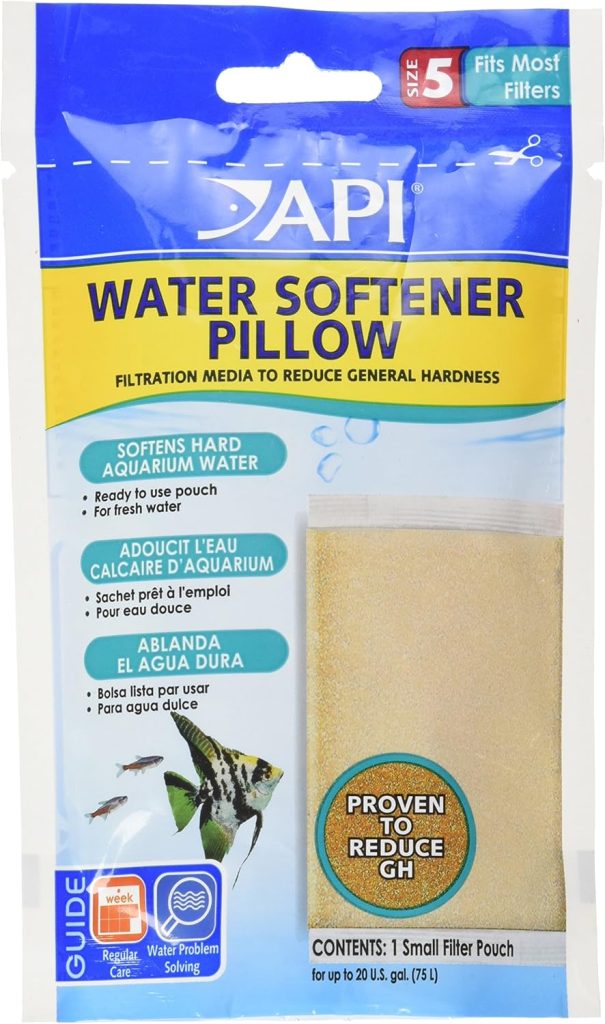
You get one pre-dosed pouch designed to fit inside most canister filters used for freshwater aquariums. The API WATER SOFTENER PILLOW Aquarium Canister Filter Filtration Pouch 1-Count Bag is formulated to reduce general hardness by lowering calcium and magnesium, making water softer and often more suitable for species that prefer softer conditions.
What the Manufacturer Says
The pouch is described as easy-to-use and pre-dosed, which means you don’t have to measure resin yourself or risk spills when adding it to your filter. It’s intended for use when you’re starting an aquarium or performing maintenance and testing indicates your water hardness is above the level you want for your fish or plants.
What’s in the Box
You receive one sealed filtration pouch ready to go into a canister filter; there are no additional accessories included. Because it’s pre-dosed, you won’t need to buy separate resin pellets unless you plan to regenerate or replace the pouch later.
How It Works
The API WATER SOFTENER PILLOW uses ion-exchange resin inside a mesh pouch to selectively remove hardness ions—primarily calcium (Ca2+) and magnesium (Mg2+)—from the water. As hard water passes through the resin, those hardness ions are captured and replaced by sodium ions, effectively reducing general hardness (GH).
Why That Matters
Many freshwater fish and plants thrive in lower general hardness levels, and sudden changes can stress livestock. By lowering calcium and magnesium concentrations, the pouch helps you move water chemistry toward the softer range, which can make it easier to establish and maintain habitats for species that require softer water. You should be aware that the ion-exchange process exchanges hardness ions for sodium, so you should monitor sodium levels if you’re treating large volumes repeatedly.
Key Features and Benefits
You’ll appreciate that the pouch is pre-dosed, simple to place inside a canister filter, and designed for freshwater aquariums. It aims to make water softening approachable without specialized equipment like reverse osmosis units.
Softening Performance
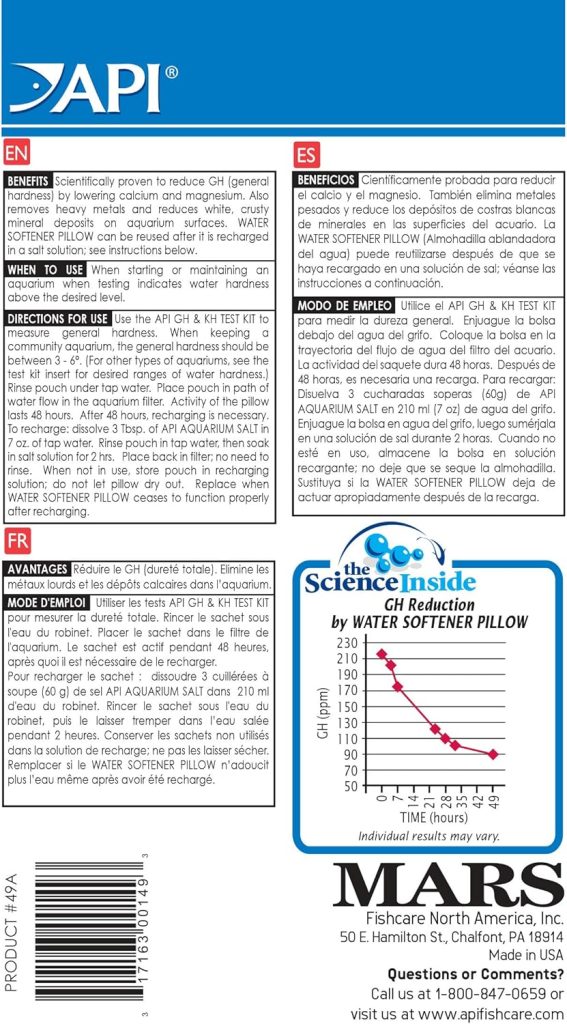
Performance will vary with the initial hardness of your source water, aquarium volume, and flow rate through the pouch. In practical terms, you should expect the pouch to noticeably reduce GH in staged tests and typical home setups, but you’ll need to measure results with a GH test kit to quantify the change and determine when the resin is exhausted.
Compatibility and Fit
The pouch is made to fit most canister filters on the market for freshwater aquariums, but you should verify that the physical dimensions of the pouch will fit the media basket or chamber in your particular filter model. If your filter has a narrow media tray or nonstandard shape, the pouch may require adjustment or alternative placement.
Reusability and Recharge Process
The product is reusable after it’s recharged, which can extend its value compared with one-time-use cartridges. Recharging typically involves regenerating the ion-exchange resin with a concentrated sodium chloride (table salt) solution, followed by thorough rinsing before returning the pouch to the filter. Because regeneration details and safe salt concentrations can vary, follow the manufacturer’s instructions or contact API for exact recharge guidelines and safety tips.
Quick Specs Table
Below is a concise breakdown to help you compare features at a glance.
| Feature | Details |
|---|---|
| Product name | API WATER SOFTENER PILLOW Aquarium Canister Filter Filtration Pouch 1-Count Bag |
| Count | 1 pouch |
| Primary function | Softens hard water by reducing calcium and magnesium (reduces general hardness) |
| Fit | Pre-dosed pouch fits most canister filters for freshwater aquariums |
| Use case | Start-up or maintenance when hardness is above desired levels |
| Reusable | Yes — can be recharged (manufacturer suggests regeneration) |
| Target aquarium type | Freshwater only |
| Not recommended for | Saltwater aquariums, unregulated use without testing, or places where sodium increase is a concern |
| Replacement indicator | Monitor GH with test kit; regenerate or replace when hardness reduction declines |

Installation Guide
Setting up the pouch is straightforward but you’ll want to be mindful of flow and placement to get consistent softening results. Proper installation helps ensure water contacts the resin adequately while avoiding channeling that can reduce effectiveness.
Step-by-Step Setup
- Test your aquarium water for general hardness (GH) and record the baseline. You’ll want this number to see how effective the pouch is and to know when to recharge.
- Turn off and partially disassemble your canister filter according to the filter manufacturer’s instructions. You’re looking for the media basket or any area intended for chemical filtration.
- Place the API WATER SOFTENER PILLOW inside the media compartment where flow is moderate but consistent; avoid placing it directly against pump outlets that could compress the pouch.
- Reassemble the filter and restart your system, checking for leaks and ensuring water flows normally through the media chamber.
- Test GH after a day and then periodically; initial changes may take several hours to a couple of days depending on flow and hardness levels.
Testing and Monitoring Hardness
You need a reliable GH test kit to track progress and determine when the pouch needs recharging or replacing. Consistent monitoring prevents overcorrection and helps you react before fish experience stress.
How Often to Test
Test weekly after installation until you understand how quickly the pouch affects your tank; after that, monthly checks are often adequate unless you’re changing water sources or stocking sensitive species. If you see GH creeping back up, it’s time to recharge or replace the pouch.
Target GH Values
What’s “ideal” depends on the species you keep: some tropical fish and many planted setups prefer soft to moderately soft water, while other community fish are tolerant of higher hardness. Use species-specific guides to set a target GH and tweak the frequency of recharge or the number of pouches accordingly.
Performance Over Time
Your pouch’s effective lifespan and the interval between recharges will depend heavily on the starting hardness of your water and how much water the pouch is treating. Heavy hardness and large aquarium volumes will exhaust the resin faster than softer source water and smaller tanks.
Signs the Pouch Is Exhausted
The most reliable sign is an increase in GH measured with a test kit. You might also notice reduced water-softening results during regular maintenance checks. Since visual changes in the resin aren’t always obvious, you should rely primarily on test measurements rather than appearance.
Recharging the Pouch — Practical Guidance
The pouch can be regenerated, which usually means flushing the resin with a strong solution of sodium chloride to replace captured calcium and magnesium with sodium ions again. Because product labeling and chemical care vary, you should follow official instructions or contact API support for manufacturer-recommended salt concentrations and soak times.
Typical Recharge Steps (General Guidance)
- Remove the pouch and place it in a clean container.
- Prepare a regeneration solution using non-iodized sodium chloride (table salt). Common practice among hobbyists is to use a concentrated salt solution, but you should confirm a safe concentration before proceeding.
- Fully submerge the pouch in the salt solution and soak for the recommended time — often several hours to overnight in common practice — allowing the resin to exchange trapped hardness ions.
- After soaking, rinse the pouch thoroughly in fresh water until no salty residue remains and you cannot taste salt in the rinse water. Rinsing well is essential to avoid adding excess sodium to the aquarium.
- Return the pouch to the filter and monitor GH carefully for any unexpected changes in sodium or hardness.
Note: Because regeneration involves salt and potential handling risks, you should wear gloves if you have sensitive skin and ensure all salt is removed before reintroducing to your aquarium.
Pros and Cons
A balanced look at strengths and trade-offs will help you decide if this product fits your routine and setup.
Pros
- You get an easy, pre-dosed solution that slips into many existing canister filters without complex setup.
- It directly targets general hardness by capturing calcium and magnesium, which is useful when specific species require softer water.
- Reusability via recharging can be more economical than single-use cartridges if you’re comfortable regenerating resin.
Cons
- The ion-exchange process exchanges hardness ions for sodium, which can raise sodium concentration in your tank if you treat large volumes repeatedly.
- Recharge instructions and safe handling require attention; improper recharging or insufficient rinsing could harm livestock.
- Fit is “most” canister filters but not guaranteed — measure your media basket to be sure.
Comparison with Alternatives
It helps to know how this pouch stacks up against other water-softening options so you can match method to your needs and budget.
Reverse Osmosis (RO) and Deionized (DI) Units
RO/DI systems produce very low-mineral water by removing nearly all dissolved solids and salts, giving you complete control over reconstituting hardness and mineral profile. Compared with the pouch, RO/DI systems are more expensive, require more space and maintenance, and produce wastewater, but they offer precise control and are ideal for highly sensitive species or reef systems where water purity is critical.
Chemical Water Softeners and Conditioners
Liquid or powdered water conditioners can chemically bind hardness or temporarily alter water parameters. They are fast and easy to dose but may need frequent reapplication and offer less predictable long-term stability than an ion-exchange resin for continuous softening. Some chemicals may also add other ions or alter pH, so read labels carefully.
Peat and Natural Methods
Peat moss, driftwood, and some botanicals can soften water and lower pH slowly through tannins and humic substances. These natural methods work well for modest adjustments and add aesthetic benefits, but they’re slower and less predictable in precise hardness control compared to the API WATER SOFTENER PILLOW.
Whole-House Water Softeners
These treat water for your entire home by exchanging calcium and magnesium for sodium or potassium, reducing hardness at the source. If you already have a softener, the aquarium pouch may be unnecessary. Keep in mind that whole-house softeners often raise sodium levels permanently and may not be ideal for aquaria without additional blending or RO treatment.
Maintenance Tips
Keeping the pouch in top condition and ensuring your aquarium stays within target parameters takes a few routine steps.
Routine Care
- Test GH regularly and keep records of readings to detect trends.
- Rinse the pouch lightly during regular maintenance if debris accumulates, but avoid abrasive handling that could rupture the mesh.
- Recharge according to your observed decline in performance rather than on a strict calendar schedule; that way you avoid unnecessary handling.
Handling and Storage
If you store a pouch between cycles, keep it sealed in a clean, dry container to prevent contamination. If you drain and store it wet, make sure it’s clean to avoid bacterial growth or odors.
Troubleshooting Common Issues
If you run into unexpected results, these troubleshooting tips should help.
Little or No Hardness Reduction
First, confirm that the pouch is seated where water flow will pass through it rather than around it. Check flow rate and ensure the filter isn’t bypassing the media chamber. Also confirm you’re testing correctly and that the source water hardness is within the product’s capacity to treat.
Increased Sodium Concerns
If you worry about sodium buildup after repeated regeneration cycles, consider partial water changes with low-sodium source water or switch to an RO/DI system to dilute and control sodium levels. You can also reduce reliance on ion-exchange softening by combining complementary methods like peat or controlled source water mixing.
Mesh Damage or Leaks
If the pouch’s mesh tears or leaks, remove it immediately and replace with a new pouch or transfer the resin to a secure container. Loose resin beads can clog pumps or cause unintended mechanical issues.
Safety and Precautions
Take basic precautions when handling chemical media and regeneration solutions to protect yourself and your aquarium inhabitants.
Handling Regeneration Solutions
Use gloves and eye protection if you’re preparing or handling concentrated salt solutions for regeneration. Avoid ingesting solutions and keep them away from children and pets. Always rinse regenerated media thoroughly to remove salt residues before returning it to the aquarium.
Livestock and Plant Safety
Do not use the pouch in saltwater aquaria. Some sensitive freshwater species may react poorly to rapid changes in GH or to increased sodium levels, so acclimate livestock to changes gradually and monitor behavior and water chemistry closely.
Cost and Value
You’ll want to weigh initial purchase cost, potential savings from recharging, and your water chemistry needs. For many hobbyists, the pre-dosed pouch saves time and effort and offers a middle ground between chemical additives and more costly filtration upgrades.
Is It Worth It for You?
If you have moderately hard source water and you keep species that prefer softer conditions, the pouch can be a cost-effective and convenient tool. If your water is extremely hard or you require very precise control, an RO/DI system or whole-house solution may be more appropriate.
Final Recommendations
If you’re looking for a relatively affordable, user-friendly way to soften freshwater aquarium water within a canister filter, the API WATER SOFTENER PILLOW Aquarium Canister Filter Filtration Pouch 1-Count Bag is a practical option. Make sure you test your water regularly, follow safe recharging and rinsing procedures, and adjust your approach based on the needs of your specific aquarium inhabitants.
Frequently Asked Questions (FAQ)
Each answer below gives practical guidance so you can use the pouch safely and effectively.
Q: Can I use this pouch in a saltwater aquarium?
No, you should not use the pouch in saltwater aquaria. It’s formulated for freshwater use, and the ion-exchange process will introduce sodium ions that are not appropriate for marine systems.
Q: How often should I recharge or replace the pouch?
There’s no fixed interval because it depends on the initial hardness of your water and the aquarium volume. Start by testing GH weekly after installation and recharge when you observe hardness creeping back toward your starting level. Some users recharge every few weeks; others can go months depending on local conditions.
Q: Will the pouch change my pH?
The primary effect is on general hardness (calcium and magnesium). While softening can indirectly affect buffering capacity (carbonate hardness, KH) and pH stability, the pouch’s main function is not pH adjustment. Monitor both GH and pH during use and make gradual adjustments if necessary.
Q: Is recharging difficult?
Recharging typically requires soaking the resin in a salt solution and rinsing thoroughly afterward. It’s not complicated, but it must be done carefully to avoid leaving salt that could stress your aquarium. If you’re uncomfortable with the process, you can replace the pouch instead of regenerating it.
Q: Can I use multiple pouches for larger tanks?
Yes, you can scale by adding more pouches or recharging more frequently for larger volumes or very hard source water. Monitor GH to determine the number of pouches needed to achieve the desired softening effect.
Q: Will this remove chlorine or other chemicals?
No, the pouch specifically targets hardness ions (calcium and magnesium) via ion exchange. Continue to use a water conditioner to neutralize chlorine and chloramine during water changes and follow your usual filtration setup for ammonia, nitrite, nitrate, and other contaminants.
Q: How do I tell if the pouch is damaged or leaking resin?
If you notice resin beads or unusual particulate in your filter or aquarium, remove the pouch and inspect the mesh for tears. If the pouch is damaged, replace it immediately to prevent beads from entering pumps or impellers.
Closing Thoughts
You’re looking for control over aquarium hardness without complex equipment, and the API WATER SOFTENER PILLOW Aquarium Canister Filter Filtration Pouch 1-Count Bag gives you a manageable, rechargeable option that integrates with many canister filters. Use a reliable GH test kit, follow safe regeneration and rinsing habits, and keep a close eye on sensitive livestock to get the best results from the pouch.
Disclosure: As an Amazon Associate, I earn from qualifying purchases.