


Looking for a shower filter that actually makes your water feel and smell better while protecting your skin and hair?
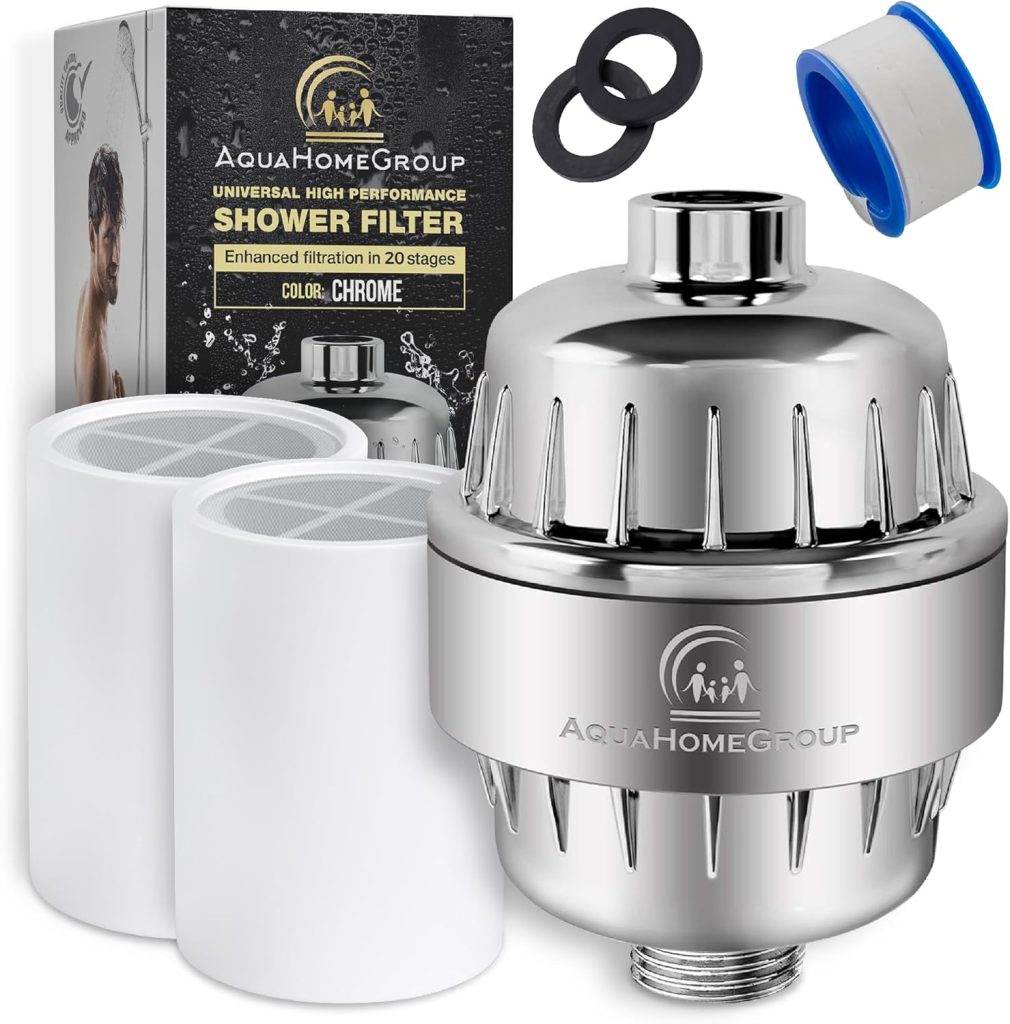

First impressions of AquaHomeGroup 20 Stage Shower Head Filter with Vitamin C E A for Hard Water – High Output Filter to Remove Chlorine and Fluoride – 2 Cartridges Included – Consistent Flow Showerhead Filters
You’ll notice right away that the unit looks like a solid, thoughtfully designed shower filter that matches both modern and traditional showerheads. The product presents itself as a high-output, multi-stage filtration system aimed at reducing common hard-water issues while adding antioxidant vitamins to the water.
Unboxing and what’s included
When you open the box, you get one shower head filter body with a pre-installed cartridge and one replacement cartridge — so you’re prepared for the first cartridge swap. The package is meant to be all-in-one, including the fittings and instructions you need to attach the filter to wall-mounted, handheld, rainfall, or combo showerheads.
Key features and specifications
This product emphasizes “premium care” by combining multiple filtration media to target chlorine, fluoride, heavy metals, rust and sediment while also delivering vitamin-enriched water. It’s pitched as a hard-water softener and skin-friendly solution, claiming benefits for softer skin, stronger nails, and shinier hair.
What the manufacturer claims
The manufacturer states the filter uses 20 stages of filtration and includes vitamin C, vitamin E and vitamin A components to neutralize chemicals and reduce odors. They also claim consistent flow and reduced scale buildup, plus compatibility with a wide range of shower fixtures so you don’t end up replacing your existing showerhead.
Filtration media and how the 20 stages are likely organized
You should expect a layered approach: coarse sediment screens, activated carbon for chlorine and organic compounds, media designed to reduce heavy metals and oxidizing agents, mineral-balancing beads, and vitamin-enriched layers. These combined media aim to both physically remove particulates and chemically neutralize chlorine and some contaminants.
Typical components in multi-stage filters
While exact proprietary formulas can vary, most 20-stage designs mix activated carbon, KDF or calcium sulfite for chlorine reduction, ion-exchange resin for hardness reduction, ceramic or mineral balls for pH balance and anti-scale effects, and vitamin or antioxidant layers for odor and chemical neutralization. These are placed sequentially to increase contact time and filter efficiency.
Feature breakdown table
Below is a table to help you quickly grasp the main specs and claims. Keep in mind some numbers may depend on your local water quality and water pressure.
| Feature | Details |
|---|---|
| Product name | AquaHomeGroup 20 Stage Shower Head Filter with Vitamin C E A for Hard Water |
| Filtration stages | 20-stage multi-media filtration (manufacturer claim) |
| Key media | Vitamin C, Vitamin E, Vitamin A layers; activated carbon; mineral/ceramic beads; anti-scale media; ion-exchange components (typical) |
| Removes (claimed) | Chlorine, fluoride, heavy metals, rust, sediment, odors |
| Included cartridges | 1 pre-installed cartridge + 1 replacement cartridge |
| Compatibility | Wall-mounted, handheld, rainfall, combo showerheads |
| Flow | Consistent flow (high output design) |
| Intended benefits | Softer skin, shinier hair, stronger nails, reduced dandruff and irritation |
| Maintenance | Cartridge replacement recommended (frequency depends on usage and water quality) |
| Installation | Tool-free in most setups; universal fittings included |
| Good for | Hard water areas, sensitive skin, families with kids and pets |

Installation and compatibility
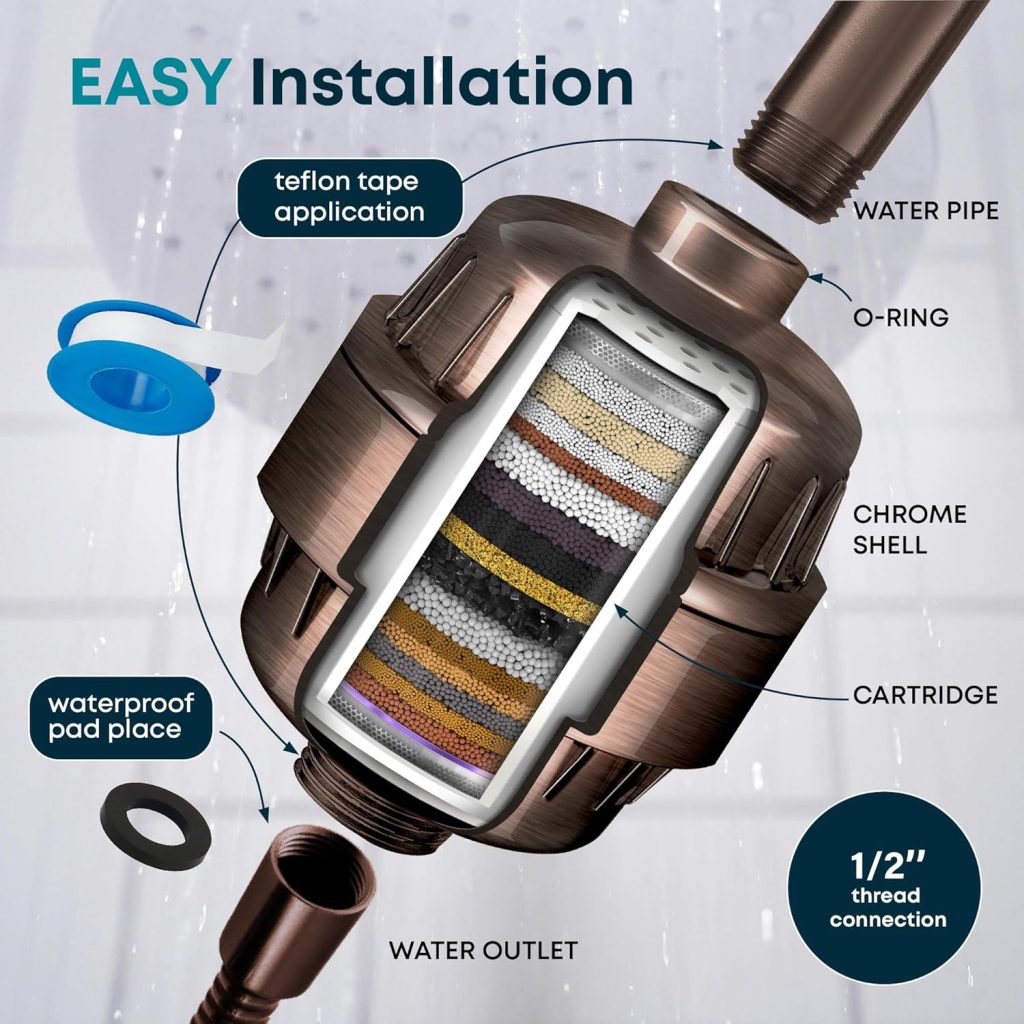
You’ll find that the filter is designed for user-friendly installation with universal fittings so you can attach it to most showers without special tools. The claim of compatibility with wall-mounted, handheld, and rainfall heads means you won’t usually need to replace your shower hardware.
Step-by-step installation overview
First, you’ll remove your existing showerhead or adapter, screw the filter into the shower arm, then attach your showerhead to the filter’s outlet. The second cartridge is ready as a spare, and swapping cartridges typically involves unscrewing the filter body and snapping or sliding the cartridge into place.
Performance in real use
In daily use, you should notice reductions in chlorine smell and possibly less mineral residue on tiles and glass after showers. People commonly report softer-feeling skin and easier hair manageability after switching to similar multi-stage filters.
Water pressure and flow considerations
The filter is marketed as a high-output unit intended to preserve consistent flow while filtering the water. If you have very low incoming pressure, any inline filter may reduce flow slightly, but this model is designed to minimize that impact in typical household setups.
How the filter addresses hard water issues
Hard water often leaves scale buildup, dulls hair and dries skin. The AquaHomeGroup filter claims to act as a softener and anti-scale agent in part by using mineral-balancing media and ion-exchange materials to reduce the effects of hardness at the point of contact.
Expectation management for hard water
You should expect improvement in scale buildup and surface film but not instant removal of existing scale that’s already deposited on pipes or fixtures. Continued use will help slow new deposits and make cleaning easier over time.
Skin, hair, and health benefits
If you have sensitive skin, eczema, or dandruff concerns, you may find showers more comfortable because the filter aims to reduce irritants like chlorine and heavy metals. The inclusion of vitamins is intended to neutralize chemicals and leave a milder feeling after showers.
Vitamins C, E and A — what they add
Vitamin C is commonly used in shower filtration to neutralize chlorine; vitamin E and A function as antioxidants and skin conditioners in topical products and are included here in the filtration media to deliver antioxidant-enriched water. You should view these additions as supplementary benefits that may reduce dryness and irritation when combined with reduced chlorine and improved water quality.
Maintenance and cartridge replacement
Routine maintenance mostly involves changing cartridges based on the manufacturer’s recommendations and your water usage. Having one spare cartridge included helps you maintain uninterrupted filtration when it’s time to swap.
When to replace cartridges
You’ll typically replace cartridges after a certain number of gallons or months; high mineral content or heavy usage shortens cartridge life. Look for signs like reduced water flow, return of chlorine odor, or visible discoloration in the cartridge as cues to replace it.
Longevity and cost of ownership
The initial package gives you two cartridges, which reduces the immediate cost after purchase, but you’ll want to budget for replacement cartridges down the line. Cartridge life varies; if you want longevity, consider pre-filtering very sediment-heavy water or following local water quality recommendations.
How to get the most out of your cartridges
To extend cartridge life, fit or clean any preceding filters/screens that trap large particulates and maintain good showerhead hygiene. You can also flush the filter after installation to remove any initial dust from the media.

Compatibility with different shower types and fittings
You can fit this filter to most standard US shower threads, whether your setup is a fixed wall-mounted head, a handheld setup, or a rainfall system. The design prioritizes universality so you don’t have to adapt your entire shower.
Handheld and combo setups
If you use a handheld or combo head, the filter’s inline placement still allows flexible use. Just ensure hose lengths and swivel joints are compatible with the extra length and weight the filter adds in-line.
A note on fluoride removal claims
Fluoride is more challenging to remove via typical shower filters compared to chlorine. The manufacturer claims fluoride reduction, but methods and effectiveness can differ widely across filter types. You should check third-party testing or certifications if fluoride removal is a primary requirement.
What you can reasonably expect for fluoride
While vitamin layers and some media may reduce trace levels, whole-home systems or specialized fluoride filters are often required for significant fluoride removal. If you need guaranteed fluoride reduction, look for lab-verified performance data.
Real-world test points you should use
When testing the unit yourself, pay attention to chlorine smell and taste when rinsing, water flow rate under peak usage, soap scum and scale buildup over weeks, and skin/hair feel after a 1–4 week trial. These practical checks will show whether the filter meets your daily needs.
Measuring performance at home
A simple at-home test is to smell the water, inspect for cloudiness, compare hair manageability over several washes, and notice how your skin feels a day after showering. For more precise measurement, TDS meters or chlorine test strips can help quantify changes.
Pros and cons
You’ll see clear advantages like multi-stage filtration, vitamin infusion, broad compatibility, and a spare cartridge included. Downsides include the lack of independent lab data in many listings, potential flow reduction on very low-pressure systems, and the routine cost of replacement cartridges.
Pros (quick list)
- Multi-stage filtration aimed at chlorine, heavy metals, and sediment reduction.
- Vitamin C, E, and A layers for potential skin and hair benefits.
- Universal compatibility and tool-free installation in most setups.
- One spare cartridge included out of the box for immediate replacement.
Cons (quick list)
- Performance claims (e.g., fluoride removal) may require third-party verification.
- Cartridge life varies with water quality and may increase ongoing costs.
- Slight weight and length added inline may affect some fixture setups.
Troubleshooting and tips
If you notice reduced flow, check for trapped debris in the screen or pre-filter area, and ensure the cartridge is installed correctly. If you experience leaks, verify all fittings are tightened and use the provided washers; do not overtighten plastic components.
Small fixes that save time
Flush the filter for a couple of minutes after installation to remove any packing dust from the media. If you have low pressure to begin with, try removing flow restrictors in your showerhead or adjusting the installation location.
Environmental considerations
Using a point-of-use filter reduces chemicals being rinsed down the drain and can lower the need for harsh cleaning chemicals due to reduced scale deposition. However, cartridges are consumable items, so recycling or proper disposal is a consideration.
Reducing waste impact
To minimize waste, check whether cartridges are recyclable or if the manufacturer has a take-back program. You can also extend cartridge life by pre-filtering very sediment-rich water or using a sediment pre-filter.
Comparison to typical competitors
Compared to basic single-stage filters, this 20-stage unit aims to combine several functions — chlorine removal, mineral balancing, antioxidant infusion, and anti-scale components — into one product. That makes it more feature-rich than entry-level carbon-only filters but still more convenient and less costly than whole-house systems.
When to choose this versus a whole-house system
If your main concern is shower water quality for skin and hair, you’ll likely find this filter a cost-effective solution. If you need comprehensive treatment for drinking water, fluoride removal throughout the house, or significant hardness correction for plumbing, then a whole-house or specialized system may be a better long-term solution.
Suggested use cases and who benefits most
You’ll appreciate this filter if you have sensitive skin, thin or brittle hair, kids or pets who bathe frequently, or if you live in an area with noticeable chlorine odor. It’s also useful if you want an affordable way to improve shower water quality without major plumbing changes.
Not the best fit if…
If your priority is to remove every trace of fluoride or to solve severe plumbing-scale problems, this point-of-use filter may not be sufficient alone. Also, if you have very low incoming pressure, test flow first to ensure it meets your needs.
Frequently asked questions (FAQ)
Q: Will this completely eliminate hard water problems?
A: It helps reduce the effects of hard water at the shower, such as scale and dryness, but it won’t reverse scale already built up in pipes or appliances.
Q: How often should cartridges be replaced?
A: Cartridge life depends on water quality and frequency of use; monitor odor, flow changes, and manufacturer guidance to decide replacement intervals.
Q: Does it require tools to install?
A: Most installations are tool-free or require only standard wrench tightening; the package generally includes the necessary washers and adapters.
Q: Will it slow my shower water?
A: It’s designed to retain consistent flow. In typical household systems you’ll likely notice little change, but very low-pressure systems could see some reduction.
Buying tips and what to check before purchase
Before you buy, consider your local water chemistry (hardness, chlorine levels, fluoride), your shower’s thread type and clearance, and how often you’re willing to change cartridges. Look for seller information about cartridge life and any available third-party test reports.
Questions to ask the seller or manufacturer
Ask for verified test results for chlorine and fluoride reduction if those are primary concerns, inquire about cartridge lifespan under average conditions, and confirm whether replacement cartridges are readily available where you live.
Final verdict and recommendation
If your goal is to improve shower water quality specifically for skin and hair while keeping installation and maintenance simple, this AquaHomeGroup 20-stage filter is a compelling option. You’ll get multi-layer filtration, vitamin-enriched media, and a spare cartridge included, which makes it beginner-friendly and convenient for families and people with sensitive skin.
When to buy and when to consider other options
Buy this if you want a point-of-use filter that balances performance and convenience for showering needs. Consider a specialized or whole-house treatment if you need tested fluoride removal across multiple fixtures or comprehensive plumbing-scale solutions.
Practical checklist before you install
- Check that the unit fits your shower arm and head style.
- Confirm your water pressure is adequate.
- Keep the second cartridge in a cool, dry place until needed.
- Flush the filter after installation for a few minutes to clear any packing dust.
Final tips for best results
Use the filter consistently for a few weeks to gauge improvements in hair and skin, and keep track of when you first notice diminished performance so you can plan cartridge replacements. If you have specific medical skin conditions, continue using any treatments recommended by your healthcare provider and consider this filter as a complementary measure to improve water-related irritants.
If you want, I can draft a short checklist you can print and take to the store or to your installer, or I can compare this model side-by-side with a couple of popular alternatives to help you decide. Which would you prefer?
Disclosure: As an Amazon Associate, I earn from qualifying purchases.