


Are you trying to decide if the Tier1 Whole House Water Softener System Compact 32,000 Grain High Efficiency with Sediment Pre-Filter | Pre-Filled Mineral Tank with 1 Cubic Foot of Cation Resin | Home Water Filtration System is the right choice for your home?

Overview
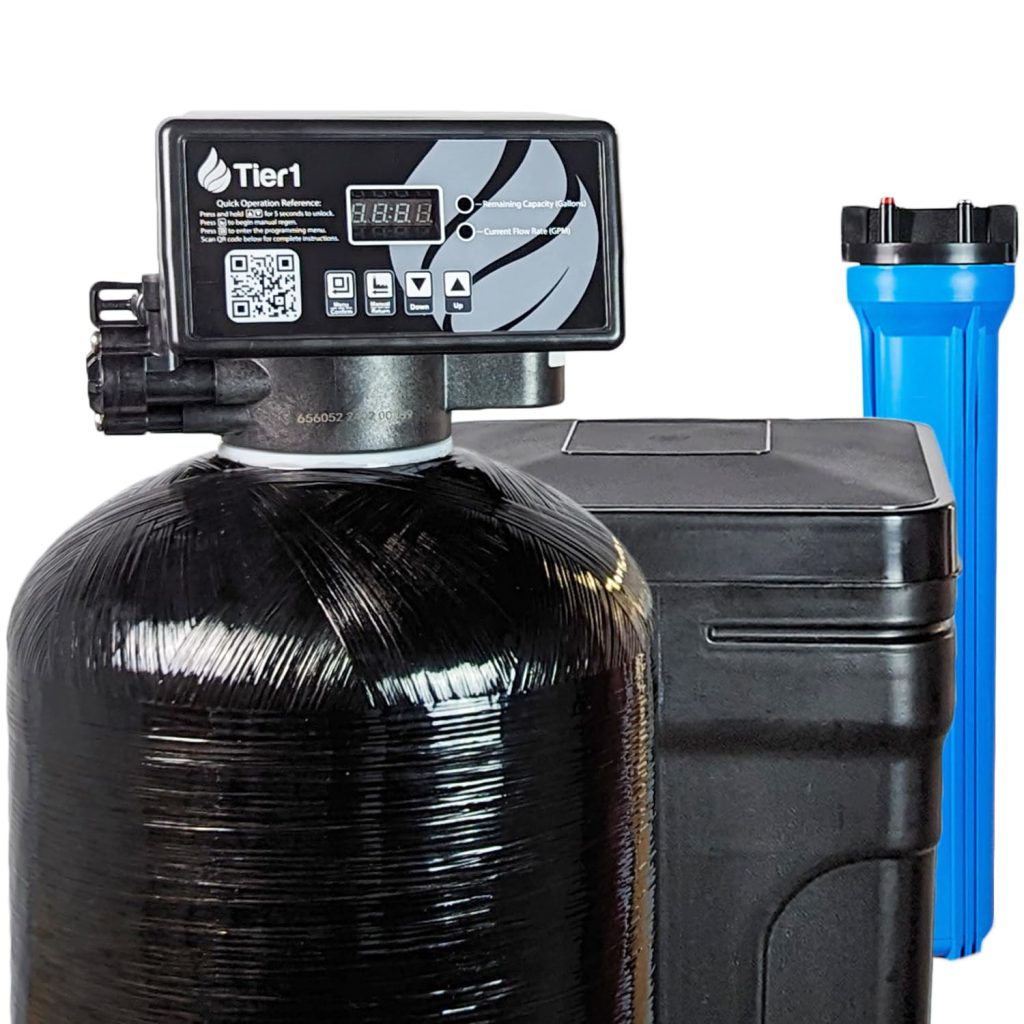
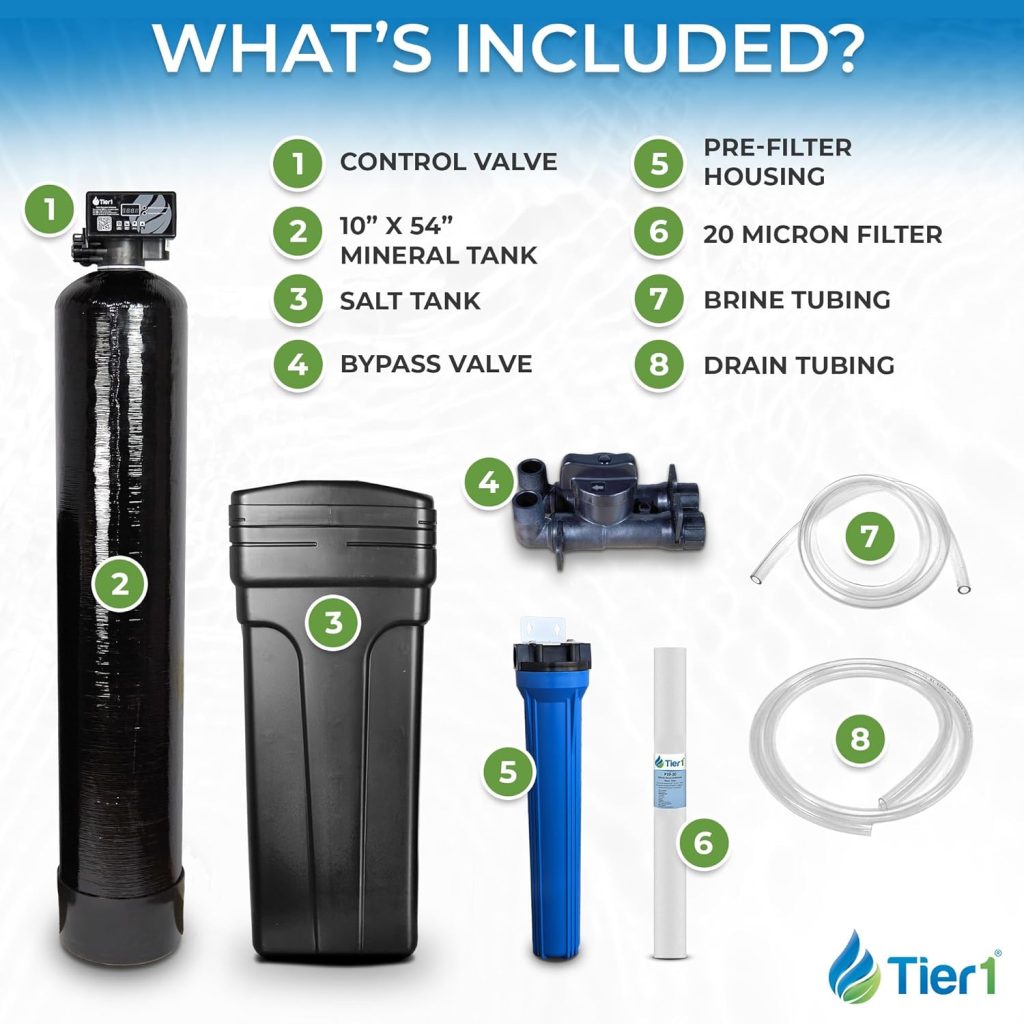
You’re looking at a compact, whole-house water softener designed for smaller spaces but still built to handle typical household hard water challenges. The system combines a patented ceramic disk valve, a sediment pre-filter, and a pre-filled mineral tank so you can get soft water with less fuss and fewer parts to service.
What this product is and who it’s for
This Tier1 system targets homeowners who want effective softening without the bulk of larger units, especially if you have limited space near your water entry point. If you want quieter automatic operation, reduced scale on appliances, and a simpler maintenance routine, this model has been designed with those priorities in mind.
Key Features
You’ll find several features meant to reduce upkeep and increase convenience, including a ceramic disk valve that resists wear, a metered regeneration control that only runs when needed, and a built-in sediment pre-filter. Those features work together so you can rely on consistent performance without constant attention.
No-Maintenance Ceramic Valve
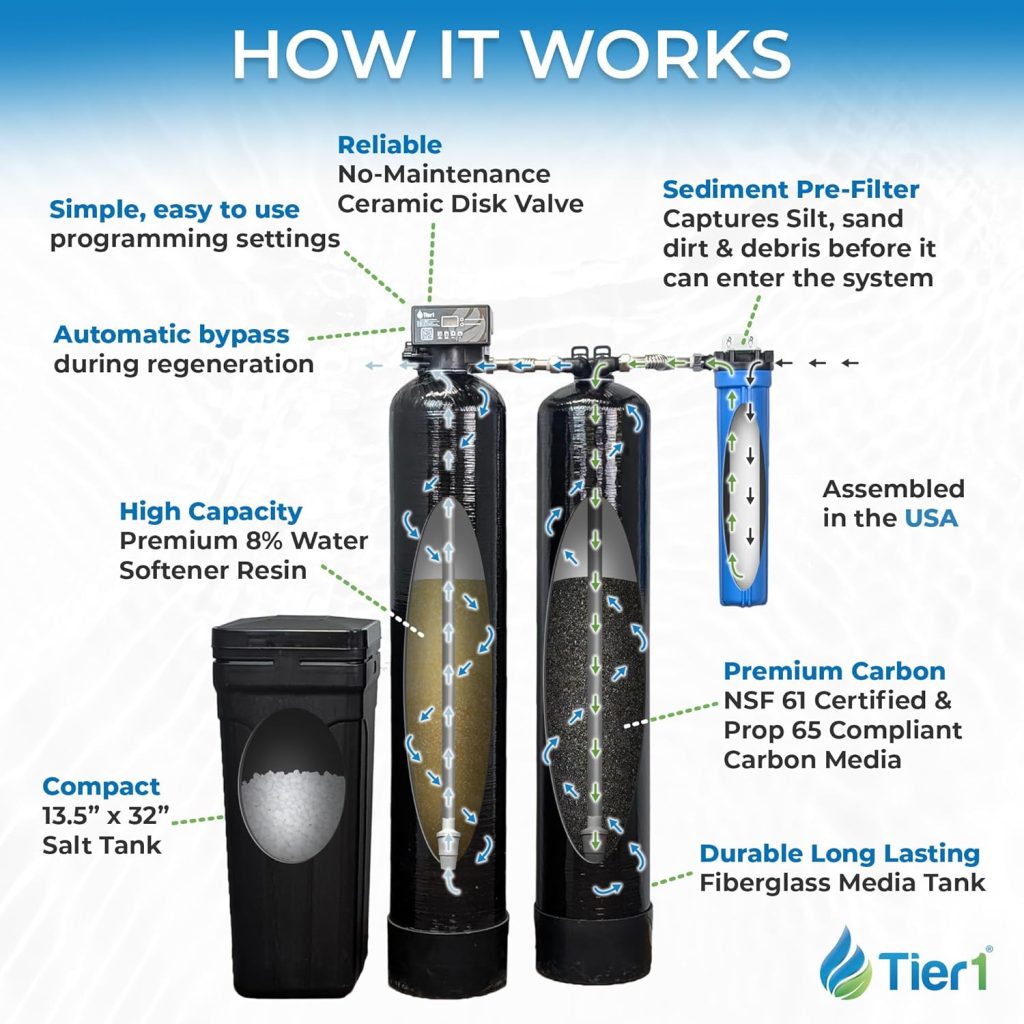
The control valve uses a patented ceramic disk that’s abrasion and corrosion resistant, which means you don’t need seals, spacers, or piston rebuild kits over time. For you this translates into fewer service parts and a valve that’s intended to last the life of the system.
Appliance Protection and Sediment Pre-Filter
A pre-filter is included to reduce sediment before water reaches the softener, which helps protect internal components and downstream appliances. The softener removes calcium and magnesium that cause scale, helping your water heater, washing machine, dishwasher, and fixtures last longer.
Automatic Metered Regeneration
This model measures your actual water usage and regenerates only when it’s necessary, not on a fixed schedule. You’ll save salt and water compared with time-clock systems, and the valve automatically bypasses the softener during regeneration so you still have water available.
Enhanced Cleaning and Everyday Benefits
Soft water improves how soaps and detergents perform, so you’ll notice cleaner laundry, less soap scum, softer skin, and smoother hair. You can also generally use less detergent and soap because they’ll lather and rinse better in soft water.
Specifications at a glance
Below is a quick breakdown of the main specifications so you can spot the key numbers at a glance before drilling into details.
| Specification | Detail |
|---|---|
| Product Name | Tier1 Whole House Water Softener System Compact 32,000 Grain High Efficiency with Sediment Pre-Filter | Pre-Filled Mineral Tank with 1 Cubic Foot of Cation Resin | Home Water Filtration System |
| Grain Capacity | 32,000 grains (compact rating) |
| Resin Volume | 1.0 cubic foot of 8% cation exchange resin |
| Valve Type | Patented ceramic disk control valve (abrasion & corrosion resistant) |
| Pre-Filter | Sediment pre-filter included |
| Regeneration | Metered (usage-based) regeneration |
| Main Softener Tank Dimensions | Approx. 10″ x 39″ (compact) |
| Salt Tank Dimensions | Approx. 13.5″ x 32″ (compact) |
| Maintenance | Low — pre-filled resin, no seals/piston rebuilds required |
| Ideal for | Tight spaces, small-to-medium households seeking whole-house softening |
| Warranty / Support | Manufacturer info not specified in product details (check seller listing) |
Installation and space requirements
You’ll appreciate that the compact tanks make installation possible where larger units won’t fit, such as narrow utility closets or crawlspace entry points. Plan for access to a drain, a cold feed water line with shutoff, and a nearby electrical outlet for the control valve so that the unit can operate and regenerate automatically.
Plumbing connections and setup
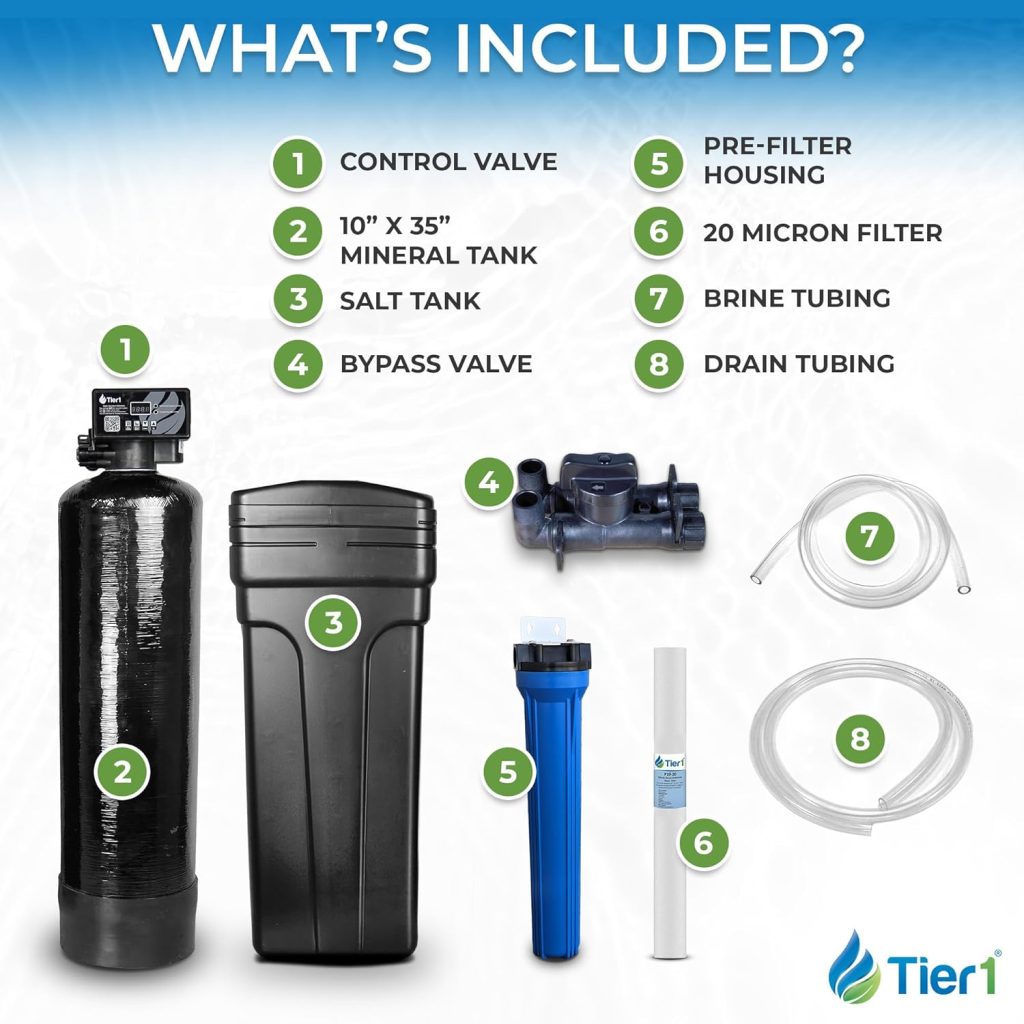
The system needs to be plumbed into your main cold water line typically at the point of entry to get whole-house protection. During setup you’ll connect the softener inlet and outlet, the bypass valve, the drain for regeneration waste, and a brine line to the salt tank.
Tools and time needed
If you’re handy, you’ll likely need basic plumbing tools and about a couple of hours for a straightforward swap-in installation; otherwise you should budget for a professional plumber for a neat job and proper code compliance. Using a pro ensures correct placement of the pre-filter and proper slope/drain connections for trouble-free operation.
What to expect during the first few weeks
When you first start the system, it may produce a small amount of cloudy water or sediment from the new resin and plumbing work — that’s normal and clears after initial backwash/regeneration cycles. You’ll also start noticing differences in soap performance and lack of scale in a matter of days, while appliance benefits accumulate over months.
Daily performance and household impact
You’ll see softer water at every tap after the softener is operating — that means fewer hard water deposits, brighter laundry, and easier cleaning. Because the control valve meters regeneration to your actual usage, you’ll get predictable performance without excessive salt or water consumption.
Flow rate and water pressure considerations
Compact softeners can have lower peak flow ratings than larger systems, so if your household runs multiple high-flow appliances simultaneously (e.g., showers plus dishwasher), you’ll want to confirm the system’s flow capacity matches your needs. In typical single-family use with staggered water draws, this Tier1 compact unit should provide adequate flow without noticeable pressure loss.
Salt and water usage
Because the unit regenerates only when needed, you’ll use salt and water more efficiently than with a timer-based system. Your salt consumption will depend on your water hardness and household water usage, but metered control generally leads to lower operating costs over time.
Estimating ongoing costs
To estimate salt usage, you’ll need your water hardness (grains per gallon) and daily water use; the system’s 32,000-grain capacity and 1 cubic foot resin give you a baseline for calculating monthly salt needs. Expect moderate salt usage in a small household; larger households or very hard water will need salt replenishment more frequently.
Maintenance and long-term care
You’ll spend relatively little time on routine maintenance: keep the salt tank filled, occasionally clean the brine well if recommended, and replace the sediment pre-filter as needed. Because the valve doesn’t require seals or piston rebuild kits, you’ll avoid some of the more common softener servicing tasks that other units demand.
Replacing the pre-filter
The included sediment pre-filter will need periodic replacement or cleaning depending on your incoming water quality and sediment load. Changing that filter helps extend the life of the resin and prevents sediment from clogging the softener inlet.
Resin and mineral tank notes
You receive a pre-filled mineral tank with 1 cubic foot of cation exchange resin (8% crosslink), which is standard for compact softeners and offers reliable softening performance. Pre-filled tanks remove the need for you to handle resin during installation and reduce setup time.
Resin lifespan and performance
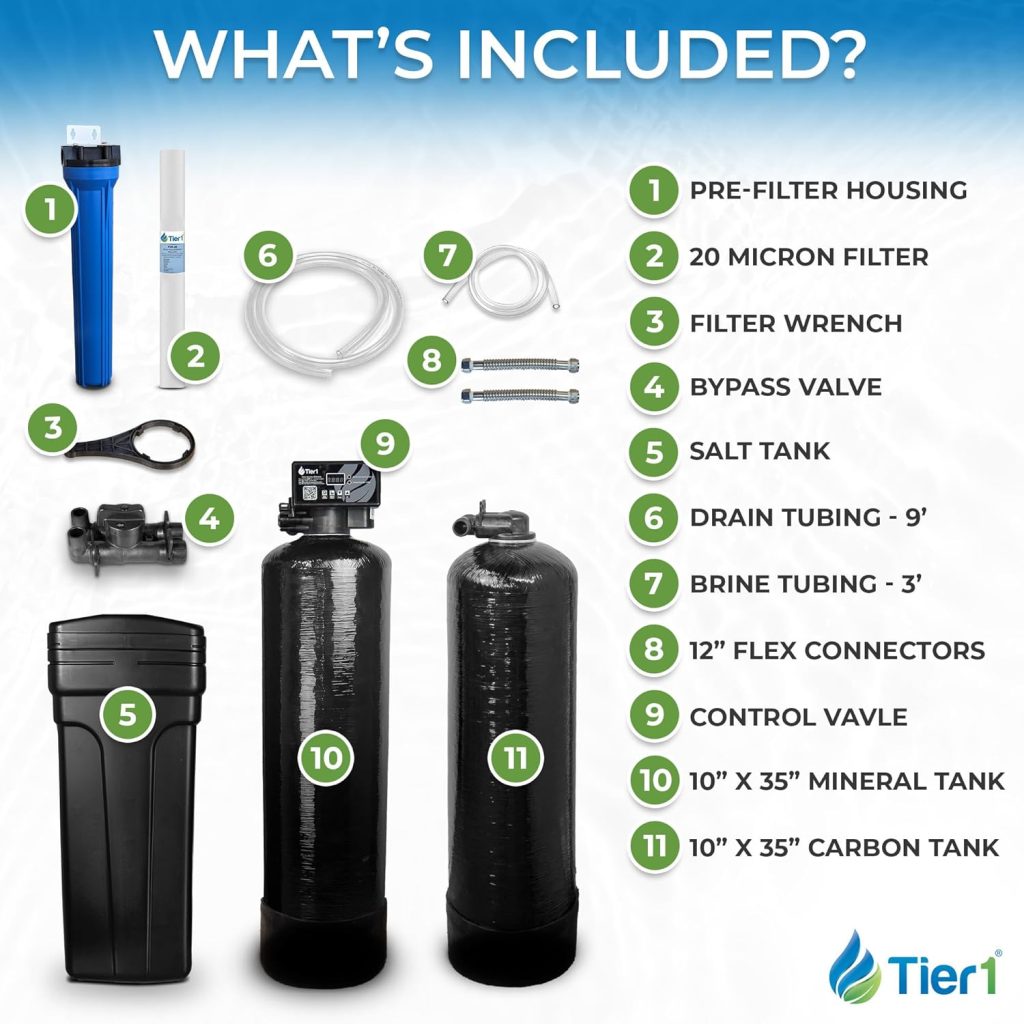
Resin typically lasts many years under normal conditions but will degrade if exposed to oxidizing agents like chlorine in high concentrations. If your municipal water contains high chlorine levels or iron, you may want an additional carbon filter or specialized resin to protect performance and extend resin life.
Effects on appliances and fixtures
You’ll notice less scale buildup on water heaters, faucets, showerheads, and in washing machines and dishwashers, which generally reduces maintenance and extends appliance life. This protective effect can translate to savings on repair and replacement costs over years.
Real-world anecdotal benefits
In households with moderate to severe hard water, customers often report improved dishwasher performance (less spotting), fewer clogged showerheads, and softer clothing after multiple wash cycles. Those everyday wins make living with soft water more comfortable and less time-consuming.
Laundry, skin, and hair benefits
Your laundry will likely come out brighter and cleaner using less detergent, while your skin and hair often feel softer because hard minerals no longer strip moisture or create residue. Many users say rinses feel more effective and shampoo lathers more easily in soft water.
Reducing detergent and soap use
With softened water you’ll typically need up to 50% less soap or detergent for the same cleaning power, though the exact reduction varies with soap type and personal preference. That reduction saves money and reduces residue buildup in laundry machines and pipes.
Comparison to similar systems
To help you weigh alternatives, here’s a compact comparison with a couple of hypothetical competitor models so you can see key differences quickly.
| Feature | Tier1 Compact 32k | Compact Competitor A | Compact Competitor B |
|---|---|---|---|
| Grain Capacity | 32,000 | 30,000 | 32,000 |
| Resin Volume | 1.0 cu ft (8%) | 0.9 cu ft | 1.0 cu ft |
| Valve Type | Patented ceramic disk | Plastic gear valve | Standard piston valve |
| Pre-Filter | Sediment included | Optional add-on | Sediment included |
| Regeneration | Metered | Time-clock or metered (model dependent) | Metered |
| Footprint | 10×39 softener; 13.5×32 salt tank | Slightly larger | Similar |
| Maintenance | Low (no seal kits) | Moderate | Moderate |
This quick comparison shows that the Tier1 unit emphasizes low-maintenance valve design and an included pre-filter, which can be decisive if you prefer fewer service parts and immediate filtration.
Pros and cons
You’ll want to weigh the major strengths and possible limitations to decide if this system matches your priorities.
Pros:
- Low-maintenance ceramic valve that eliminates many common service parts.
- Metered regeneration saves salt and water by running only when needed.
- Pre-filled mineral tank makes installation easier.
- Compact footprint fits tighter spaces.
- Included sediment pre-filter protects the system and downstream appliances.
Cons:
- Compact units may have lower peak flow than larger systems if you draw multiple appliances simultaneously.
- Resin volume is limited to 1 cu ft, so households with very high water usage or extreme hardness might need a larger system.
- Manufacturer warranty/support details are not specified in the product details and should be checked with the seller.
Who should choose this system
You should consider this Tier1 Compact 32,000 grain system if you have limited installation space, want a low-maintenance valve, and seek efficient metered regeneration to reduce operating costs. It’s a solid pick for small to medium homes with typical hardness levels.
Who might want something different
If you have a large household with very high simultaneous water demand, or extremely hard water that requires higher resin capacity, you may be better served by a larger model with more resin or a dual-tank setup. Also consider additional filtration if your water contains iron, heavy sediment, or high chlorine.
Troubleshooting common issues
If you encounter soft water that returns to being hard, check the salt level, regeneration frequency, and confirm proper bypass valve position. Low flow can come from clogged pre-filters, which you’ll resolve by replacing the sediment cartridge or flushing the lines.
When to call support or a plumber
If you see persistent pressure loss after checking filters, or the valve behaves erratically (stuck in bypass or won’t initiate regeneration), it’s sensible to contact product support or a plumber to avoid creating long-term damage.
Salt selection and tips
Using standard water softener salt (solar, evaporated, or rock) is fine, but evaporated salt typically dissolves cleanly and leaves fewer residues. Keep the salt tank at least half full to ensure consistent brine strength and to reduce bridging or mushing problems.
Avoiding salt bridging
Salt bridging happens when a hard crust forms over the brine solution and the system can’t draw salt properly. You can reduce the risk by not letting the salt level drop too low, using a consistent quality of salt, and periodically breaking up any crust if you notice bridging.
Environmental considerations
Because the system regenerates based on usage rather than fixed intervals, you’ll conserve water and salt compared with time-based units, reducing environmental impact. Still, softeners do release brine into the drain during regeneration; check local regulations if you live in an area with restrictions on salt discharge.
Reducing waste
To minimize brine discharge, ensure the system is tuned correctly for your water hardness and household usage. Proper sizing and a metered regeneration valve already help you reduce unnecessary cycles and waste.
Warranty, support, and parts availability
The product listing doesn’t specify warranty details; you’ll want to check the seller or manufacturer page for warranty length and what’s covered. Parts like the sediment pre-filter and any manufacturer-specific accessories should be available through Tier1 or authorized dealers.
What to ask the seller
When buying, ask about the valve warranty, availability of replacement filters, and the return policy in case the unit doesn’t match your home’s flow or hardness needs. Getting clarification up front helps avoid surprises after installation.
Cost considerations and value
You’ll pay for a compact, efficient system that reduces long-term maintenance and decreases the wear on your appliances — value that adds up over time through lower repairs and detergent costs. While the upfront cost may be higher than basic softeners, the low-maintenance valve and efficient regeneration improve the overall cost-benefit profile.
Long-term savings estimate
Consider savings from reduced appliance repairs, lower energy use on a scale-free water heater, and reduced soap and detergent purchases when estimating payback. For many households, these savings can help offset purchase and installation costs within a few years.
Final verdict
If you want a compact whole-house softener with a low-maintenance valve, metered regeneration, and an included sediment pre-filter, the Tier1 Whole House Water Softener System Compact 32,000 Grain High Efficiency with Sediment Pre-Filter | Pre-Filled Mineral Tank with 1 Cubic Foot of Cation Resin | Home Water Filtration System is a solid choice. It’s especially practical when space is at a premium and you want to minimize routine servicing.
Helpful tips before you buy
- Measure your available space precisely and confirm the unit’s dimensions fit comfortably with room for plumbing and servicing.
- Get a recent water hardness test so you can verify if the 32,000-grain capacity and 1 cu ft resin are adequate for your household.
- Ask the seller about warranty coverage and parts availability so you know where to turn if you need a sediment filter or other replacement items.
FAQ — quick answers to common questions
Q: Will this system remove chlorine and bad tastes?
A: No—this model is a water softener with a sediment pre-filter. It removes hardness minerals and sediment but won’t reliably remove chlorine or organic tastes; you’d add a carbon filter for that.
Q: How often will it regenerate?
A: Regeneration is usage-based, so it triggers only when your metered water use reaches the set capacity. Frequency depends on household water use and hardness.
Q: Can you install it yourself?
A: If you’re comfortable with basic plumbing and have the right tools, you can install it, but many buyers prefer a licensed plumber to ensure proper connections, drain setup, and code compliance.
Q: Is the resin replaceable?
A: Resin can be replaced if it degrades, but this unit comes with a pre-filled mineral tank to simplify the initial setup. Resin longevity depends on water chemistry and contaminants.
Q: What if my home has iron in the water?
A: Light iron can often be handled by ordinary resin, but moderate to high iron levels may require specialized resin or pretreatment. Consider testing and consulting the manufacturer for recommendations.
If you want, you can tell me your water hardness (grains per gallon) and household size, and I’ll help estimate how often this Tier1 Compact unit will regenerate and how much salt you’ll likely use each month.
Disclosure: As an Amazon Associate, I earn from qualifying purchases.