Author: Ree Fonteyn

Ree Fonteyn runs Filtered Water Wise. Ree started researching filters after wanting to know what was actually in their own tap water. Reviews here are research-based: Ree checks certification listings from NSF, WQA and IAPMO R&T and reads maker data sheets and manuals to explain what each filter is actually certified to do. Ree doesn’t test products hands-on. See How We Review for how each review is put together.

  • SimPure Whole House Water Filter System Review

    SimPure Whole House Water Filter System Review

    This post contains affiliate links. As an Amazon Associate I earn from qualifying purchases. Affiliate disclosure

    How we review: this review is based on manufacturer specifications, published certifications and verified buyer feedback. We have not tested this product hands-on. How we review

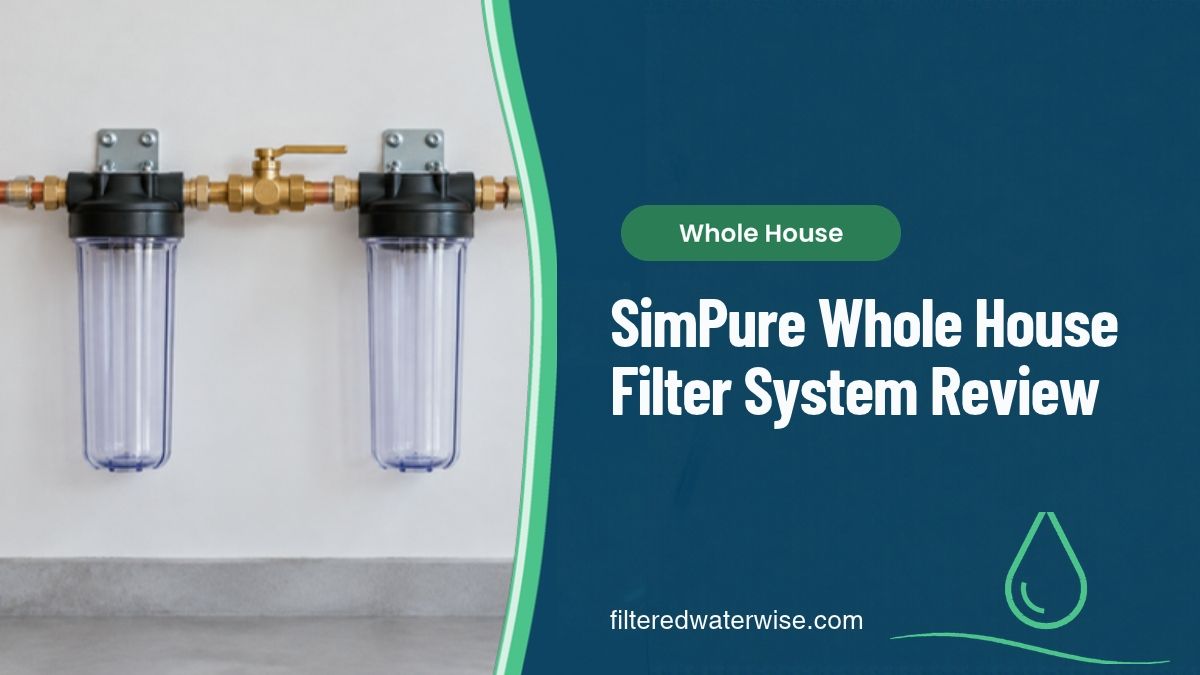
    Let us introduce you to the SimPure Whole House Water Filter System, a 3-stage filtration system designed to provide you and your family with clean, filtered water throughout your home. With upgraded features such as dual O-ring designs, brass fittings, and increased thickness and durability, this system ensures a tight seal and extends the lifespan of the product. The visible clear housing allows you to monitor the filter cartridge usage, making it more convenient than traditional filter systems. Not only does the SimPure filter system remove sediment, rust, dust, and impurities, but it also reduces odors, discoloration, chlorine, and improves the taste of your water. With a lifespan of 3-6 months for the carbon filter and 6-12 months for the sediment and GAC filters, this system can provide you with up to 150,000 gallons of clean water for a year. Trust the expertise of SimPure, established in 2006, and rely on their dedicated customer service team for any questions or concerns. Say goodbye to bottled water and enjoy the benefits of clean, filtered water throughout your home with the SimPure Whole House Water Filter System.

    Check price on Amazon

    Why Consider This Product?

    When it comes to the quality of your water, you want to ensure that it is clean, safe, and free from harmful contaminants. The SimPure Whole House Water Filter System is an excellent choice for achieving this. This product offers a three-stage filtration system that effectively reduces odor, chlorine, taste, iron, lead, and other impurities, providing you with clean and fresh water throughout your entire home.

    With scientific research and evidence supporting its effectiveness, the SimPure Whole House Water Filter System has proven to be a reliable solution for improving water quality. It also comes with relevant certifications and endorsements, adding to its credibility and assurance of high performance.

    Features and Benefits

    Visible Clear Housing

    The SimPure Whole House Water Filter System features two NSF standard filter housings that are transparent. This unique design allows you to easily monitor the filter cartridge usage anytime and anywhere. Unlike traditional blue filter housings, these transparent housings make it convenient to see when it’s time to replace the filters. Made of reinforced polypropylene, these filter housings are durable and resistant to chemicals, ensuring their longevity.

    Upgraded 3-Stages Filtration

    This filtration system uses a 3-stage process to deliver clean and safe water. The upgraded design includes 2×2 O-ring and brass fittings to reduce the risk of leaks and drips. Each filter bottle features a dual O-ring design for a tighter seal at the connection points, ensuring a more effective filtration process. The rubber gasket at the top of the filter cartridge further enhances the seal. With upgraded material at the connection points, replacing plastic with brass fittings, the lifespan of the product is significantly extended.

    Ultimate Home Filtration Solution

    The SimPure Whole House Water Filter System is compatible with most standard 20″ x 4.5″ filter cartridges, offering versatility and easy maintenance. This system can provide you and your family with up to 150,000 gallons of clean water for a year, ensuring a long-lasting supply of filtered water. Moreover, filtered water not only improves taste but also contributes to preserving your health and prolonging the lifespan of your appliances. Whether you are connected to municipal or well water, this filtration system is suitable for home, RVs, boats, mobile homes, and gardening.

    Longer Lifespan

    The carbon filter in the SimPure Whole House Water Filter System has a lifespan of 3-6 months, while the sediment filter and GAC filter can last for 6-12 months. The specific duration depends on your water quality. With a 5μm filter pore size, this system effectively removes sediment, rust, dust, and large impurities from the water, resulting in improved taste and reduced odors and discoloration. To ensure water quality and extend the product’s lifespan, it is recommended to maintain a water pressure of 25-90 psi and a temperature range of 41-100°F.

    Check price on Amazon

    Product Quality

    SimPure, established in the US in 2006, has 18 years of expertise in providing superior water solutions. This wealth of experience is evident in the design and performance of their products. The SimPure Whole House Water Filter System demonstrates their commitment to quality and customer satisfaction. The upgrade in materials and the visible clear housing feature showcase the attention to detail and improvement in product design.

    What It’s Used For

    Cleaner Water for Your Home

    The SimPure Whole House Water Filter System is primarily used to provide clean and safe water for your entire home. By effectively reducing odor, chlorine, taste, iron, lead, sediment, and other impurities, this filtration system ensures that every tap in your house delivers clean and refreshing water. It is compatible with municipal and well water sources, making it suitable for various household setups.

    Ideal for RVs, Boats, and Mobile Homes

    If you enjoy traveling or live in a mobile home, the SimPure Whole House Water Filter System is an essential companion. It can be easily installed in RVs, boats, and mobile homes, providing you with clean water wherever you go. Its compact design and durable construction make it a reliable solution for ensuring the quality of water during your adventures.

    Perfect for Gardening

    Clean water is not only crucial for drinking but also for your garden. The SimPure Whole House Water Filter System is an excellent choice for gardeners who want to provide their plants with the best water quality. By removing impurities, chlorine, and sediment from the water, this filtration system promotes healthier growth and vibrant plants.

    Check price on Amazon

    Product Specifications

    Here is a breakdown of the specifications of the SimPure Whole House Water Filter System:

    Specification Details
    Filter Cartridge Size 20″ x 4.5″
    Filtration Stages 3
    Filter Lifespan Carbon Filter: 3-6 months
    Sediment Filter & GAC Filter: 6-12 months
    Filter Pore Size 5μm
    Water Pressure Range 25-90 psi
    Temperature Range 41-100°F
    Compatibility Municipal and Well Water
    Material Brass Fittings, Reinforced Polypropylene

    Who Needs This

    The SimPure Whole House Water Filter System is ideal for anyone who wants to ensure the quality of their water throughout their entire home. Whether you are concerned about the taste, odor, iron, lead, chlorine, sediment, or other impurities in your water, this filtration system offers a comprehensive solution. It is suitable for homeowners, renters, RV owners, boat owners, mobile home owners, and gardeners.

    Check price on Amazon

    Pros and Cons

    Pros:

    • Visible clear housing for easy monitoring
    • Upgraded filtration system for tighter seal and improved lifespan
    • Compatible with standard filter cartridges
    • Provides up to 150,000 gallons of clean water per year
    • Reduces odor, chlorine, taste, iron, lead, sediment, and more
    • Suitable for home, RVs, boats, mobile homes, and gardening
    • Trusted brand with 18 years of expertise
    • Dedicated customer service team for assistance and support

    Cons:

    • Filter cartridge replacements are required periodically
    • The initial installation may require some plumbing knowledge

    FAQs

    1. How often should I replace the filter cartridges?

      • The carbon filter should be replaced every 3-6 months, while the sediment filter and GAC filter can last for 6-12 months. The duration may vary depending on your water quality.
    2. Can I use this filtration system with well water?

      • Yes, the SimPure Whole House Water Filter System is compatible with both municipal and well water sources.
    3. Can I install this system myself?

      • The installation of this filtration system requires some basic plumbing knowledge. If you are confident in your abilities or have experience with plumbing installations, you can install it yourself. Otherwise, it is recommended to seek professional assistance.

    Check price on Amazon

    Overall Value

    With its upgraded features, visible clear housing, and compatibility with different water sources, this filtration system provides a comprehensive solution for improving water quality throughout your home. The longevity of the filters and the reliability of the SimPure brand make it a worthwhile investment for preserving your health and ensuring the longevity of your appliances.

    Check price on Amazon

    Tips and Tricks For Best Results

    To maximize the performance and lifespan of the SimPure Whole House Water Filter System, here are some tips and tricks:

    1. Regularly monitor the filter cartridge usage through the visible clear housing and replace them as recommended.
    2. Maintain a water pressure within the range of 25-90 psi and a temperature range of 41-100°F.
    3. If you are unsure about the installation process, seek professional assistance to ensure a proper and secure setup.

    Final Thoughts

    Product Summary

    The SimPure Whole House Water Filter System is a reliable and efficient solution for ensuring clean and safe water throughout your entire home. With its visible clear housing, upgraded 3-stage filtration system, and compatibility with different water sources, this product offers convenience, quality, and peace of mind. Its long lifespan and superior performance make it a worthwhile investment for preserving your health and the lifespan of your appliances.

    Final Recommendation

    If you are looking to improve the quality of your water and provide your family with clean and healthy water, the SimPure Whole House Water Filter System is an excellent choice. Its features, benefits, and overall value make it a standout product in the market. With the SimPure brand’s expertise and dedicated customer service team, you can trust that your satisfaction and water quality are their top priorities. Invest in the SimPure Whole House Water Filter System and enjoy the benefits of clean and fresh water throughout your entire home.

    Check price on Amazon

  • What Do Water Filters Not Remove?

    What Do Water Filters Not Remove?

    Filtered Water Wise is reader-supported, and some articles contain affiliate links. As an Amazon Associate I earn from qualifying purchases. Affiliate disclosure

    When it comes to clean drinking water, water filters are a popular choice for ensuring that you and your loved ones stay healthy and hydrated. But have you ever wondered what water filters are unable to remove? Well, in this article, we’ll explore the limitations of water filters and shed light on the impurities that might still linger in your water. From microorganisms to certain chemicals, we’ll uncover the hidden truth behind what water filters cannot completely eliminate. So, if you’re curious about the effectiveness of your water filter, read on to discover what might be slipping through the cracks.

    Microorganisms

    Bacteria

    Bacteria are microscopic single-celled organisms that can be found in various water sources. While some bacteria are harmless, others can cause illnesses such as diarrhea, cholera, and typhoid fever. Water filters are often ineffective in removing bacteria as most filters have pores that are larger than the bacteria, allowing them to pass through.

    Viruses

    Viruses are even smaller than bacteria and can cause diseases like hepatitis A and norovirus. Unfortunately, many water filters are not designed to remove viruses due to their extremely tiny size. To effectively remove viruses from drinking water, additional methods such as boiling or using ultraviolet (UV) light treatment may be necessary.

    Protozoa

    Protozoa, such as cryptosporidium and giardia, are microscopic organisms commonly found in lakes, rivers, and streams. These parasites can cause severe gastrointestinal illness. Similar to bacteria and viruses, protozoa may not be effectively removed by standard water filters. Specialized filters with smaller pore sizes or additional treatment methods like UV light or chemical disinfection are needed to eliminate protozoa.

    Algae

    Algae are microscopic plants that are often present in natural water bodies, especially during warm seasons. While most algae species are harmless, some can produce toxins known as harmful algal blooms (HABs). These toxins can pose health risks if consumed. While some water filters may remove certain types of algae, not all filters are specifically designed for this purpose. As a result, it is essential to choose a filter that is specifically designed to target algae if it is a concern in your water source.

    Dissolved Substances

    Minerals

    Water naturally contains various minerals such as calcium, magnesium, and potassium. These minerals are generally not harmful and can even be beneficial to our health. However, water filters usually do not eliminate minerals unless they are specifically designed for this purpose. It is important to note that some people prefer to remove certain minerals for taste or due to specific health conditions, and specialized filters or water treatments may be necessary in these cases.

    Chemicals

    Chemicals can find their way into water sources through industrial pollution, agricultural runoff, or improper waste disposal. Common chemicals found in water include pesticides, herbicides, and industrial solvents. While some water filters may have limited effectiveness in removing certain chemicals, they may not be able to eliminate all types. Activated carbon filters are known to be effective in reducing certain chemicals, but it is crucial to check the filter’s specifications and certifications to ensure it can address specific chemical contaminants.

    Heavy Metals

    Heavy metals like lead, mercury, arsenic, and cadmium can be extremely harmful to human health, even in small concentrations. Unfortunately, regular water filters may not effectively remove heavy metals. To tackle the issue of heavy metal contamination in drinking water, specialized filters, such as reverse osmosis systems or activated alumina filters, are often required. These filters are designed to eliminate heavy metals, providing a safer drinking water supply.

    Pharmaceuticals

    Prescription Drugs

    Pharmaceuticals, including prescription medications, can find their way into water sources through human excretion and improper medication disposal. While traditional water filters may be effective in removing some pharmaceuticals, they cannot eliminate all types. Advanced filtration or water treatment methods such as reverse osmosis or activated carbon filters with specific pharmaceutical removal capabilities may be necessary.

    Over-the-counter Medications

    Similar to prescription drugs, over-the-counter medications like painkillers, cough syrup, and vitamins can also end up in the water supply. While standard water filters may reduce the concentration of some over-the-counter medications, they might not remove them entirely. Specific filtration systems or advanced treatment methods like activated carbon or reverse osmosis filters might be needed for complete removal of these substances.

    Pesticides and Herbicides

    Insecticides

    Insecticides are chemicals designed to control or eliminate insects. These substances can enter water sources through agricultural runoff or improper disposal. Removing insecticides from water can be challenging as they can be resistant to filtration. Activated carbon filters are commonly used to reduce the concentration of certain insecticides, but they may not eliminate them entirely. In cases of significant insecticide contamination, more advanced filtration techniques or water treatment methods may be necessary.

    Fungicides

    Fungicides are chemicals used to combat fungal infections in agriculture and other industries. Similar to insecticides, fungicides can contaminate water sources and pose health risks. Water filters have variable effectiveness in removing fungicides, and specialized filters or advanced treatment methods may be required for complete elimination.

    Weed Killers

    Weed killers, also known as herbicides, are chemicals used to control the growth of unwanted plants. These chemicals can leach into water sources, leading to potential health concerns. While some water filters may reduce the concentration of certain herbicides, complete removal can be challenging. Advanced filtration techniques or specific treatment methods may be necessary in cases of significant herbicide contamination.

    Chlorine

    Chlorine is a common disinfectant used in public water treatment systems to kill harmful bacteria and viruses. While chlorine is effective in reducing microbial contamination, it can also lead to an unpleasant taste and odor in drinking water. Many water filters are capable of removing chlorine, improving the taste and odor of the water. However, not all filters are designed to target chlorine removal, so it is important to choose a filter with this capability if desired.

    Chlorine By-products

    When chlorine-based disinfectants react with organic matter in water, they can produce by-products known as disinfection by-products (DBPs). Some DBPs, such as trihalomethanes (THMs), have been associated with increased cancer risks. Certain water filters, such as activated carbon filters, can effectively reduce the concentration of DBPs, providing additional health benefits beyond chlorine removal.

    Radon

    Radon is a radioactive gas that can seep into groundwater and contaminate water sources. When consumed, radon can increase the risk of lung cancer. Unfortunately, traditional water filters are generally not effective in removing radon. If radon is a concern in your area, specialized filtration systems or water treatment methods specifically designed for radon removal may be necessary to ensure safe drinking water.

    Fluoride

    Fluoride is a naturally occurring mineral commonly added to public water supplies to prevent tooth decay. While fluoride is beneficial for oral health, some people prefer to limit their exposure to it. Standard water filters may have limited effectiveness in reducing fluoride levels. To remove fluoride from drinking water, specialized activated alumina filters or reverse osmosis systems are often required.

    Nitrates and Nitrites

    Nitrates and nitrites are substances that can originate from agricultural runoff, septic systems, and industrial pollution. High concentrations of nitrates and nitrites in drinking water can be particularly harmful to infants and pregnant women. Although some water filters may reduce nitrate and nitrite levels, specialized filters or advanced treatment methods like ion exchange resins or reverse osmosis may be necessary for complete removal in areas with severe contamination.

    Radioactive Substances

    Radioactive substances can contaminate water through natural sources or human activities such as nuclear power plants or mining. Depending on the specific radioactive material present, water filters may have limited effectiveness in removing radioactive substances. Specialized filters or treatment methods specifically designed for radioactive contaminant removal, such as ion exchange or distillation, may be necessary to ensure safe drinking water.

    Volatile Organic Compounds (VOCs)

    Volatile Organic Compounds (VOCs) are chemicals that can easily evaporate into the air and contaminate water sources. These chemicals can come from various sources, including industrial pollution, fuel storage, and household products. While some water filters, particularly activated carbon filters, are effective in reducing the concentration of certain VOCs, they may not eliminate all types. Advanced filtration or treatment methods such as reverse osmosis or specialized activated carbon filters may be needed for complete VOC removal.

    In conclusion, while water filters are essential for ensuring the safety and quality of drinking water, they have limitations. Microorganisms, including bacteria, viruses, protozoa, and some algae, may not be effectively removed by standard filters. Additionally, certain dissolved substances such as minerals, chemicals, and heavy metals may require specialized filters or advanced treatment methods for complete removal. Pharmaceuticals, including prescription drugs and over-the-counter medications, may also persist in drinking water even with the use of standard water filters. Pesticides and herbicides, including insecticides, fungicides, and weed killers, can be challenging to eliminate through filtration alone. Chlorine, commonly used as a disinfectant, can often be removed by water filters along with its by-products. However, radon, fluoride, nitrates/nitrites, radioactive substances, and volatile organic compounds may require specialized filtration systems or treatment methods to achieve optimal removal. It is crucial to consider the specific contaminants present in your water source and choose an appropriate water filter or treatment method to ensure the safety and quality of your drinking water.

  • Acuva ArrowMax 2.0 UV-LED Water Purifier Review

    Acuva ArrowMax 2.0 UV-LED Water Purifier Review

    How we review: this review is based on manufacturer specifications, published certifications and verified buyer feedback. We have not tested this product hands-on. How we review

    Imagine never having to worry about the quality of your drinking water again. Introducing the Acuva-ArrowMax 2.0 UV-LED Water Purifier, an innovative under sink water filter system that guarantees safer water for you and your family. With its advanced UV-LED filtration technology, it not only removes 99.999% of E. coli bacteria and 99% of chlorine, lead, VOCs, and unpleasant odors, but it also preserves the essential minerals in your water. This premium quality water filter is not only environmentally friendly, saving 240,000 water bottles from landfills, but also versatile and easy to install. Say goodbye to bottled water and enjoy the peace of mind that comes with knowing your drinking water is clean and pure with the Acuva-ArrowMax 2.0 UV-LED Water Purifier.

    Why Consider This Product?

    When it comes to the safety and quality of your drinking water, the Acuva- ArrowMax 2.0 UV-LED Water Purifier is a product you should seriously consider. This innovative water filter inactivates 99.999% of E. coli bacteria and removes 99% of chlorine, lead, VOCs, and unpleasant odors, ensuring that your water is clean and safe to drink. The effectiveness of this water purifier is backed by scientific research and evidence, giving you peace of mind.

    One standout feature of the Acuva- ArrowMax 2.0 UV-LED Water Purifier is its use of advanced UV-LED technology. Unlike traditional reverse osmosis systems or UV water filters, this system works with low water pressure and doesn’t waste water. It also retains the healthy minerals present in your water, ensuring both safety and taste. With a smart faucet that indicates when the filter is active, you can easily monitor its performance.

    The premium quality of this water filter is evident in its design and construction. It is made with high-quality materials, ensuring its durability and longevity. In fact, it is NSF/ANSI 55 Class ‘B’ certified, further showcasing its reliability and effectiveness. By choosing the Acuva- ArrowMax 2.0 UV-LED Water Purifier, you are investing in a product that will provide you with safe and great-tasting water for years to come.

    Features and Benefits

    Advanced UV-LED Technology

    The Acuva- ArrowMax 2.0 UV-LED Water Purifier utilizes advanced UV-LED technology to effectively inactivate 99.999% of E. coli bacteria and remove various contaminants from your water. This technology works efficiently even with low water pressure, eliminating the need for a separate booster pump. Unlike traditional systems, this water purifier doesn’t waste water and retains essential minerals, resulting in clean, safe, and great-tasting water.

    Smart Faucet with Filter Indicator

    Included with the Acuva- ArrowMax 2.0 UV-LED Water Purifier is a smart faucet that conveniently displays when the filter is active. This feature allows you to easily monitor the performance of the water purifier and know when it’s time to replace the filter. With the smart faucet, you can have peace of mind knowing that you always have access to clean and safe drinking water.

    High-Quality Construction

    Designed with high-quality materials, the Acuva- ArrowMax 2.0 UV-LED Water Purifier is built to last. Its durability ensures that you can rely on clean water for years without worrying about the filter deteriorating or malfunctioning. With its NSF/ANSI 55 Class ‘B’ certification, you can trust that this water purifier meets stringent quality and safety standards.

    Environmental Friendliness

    By using the Acuva- ArrowMax 2.0 UV-LED Water Purifier, you are taking a step towards reducing plastic waste and protecting the environment. With a lifespan of over 7 years and the ability to dispense 31,700 gallons of water, this water filter saves approximately 240,000 water bottles from ending up in landfills. By switching to this under sink water filter, you are not only ensuring your access to healthy drinking water but also making a positive impact on the environment.

    Product Quality

    The Acuva- ArrowMax 2.0 UV-LED Water Purifier is built with premium quality materials, making it a durable and long-lasting investment. The high-quality construction ensures that the filter effectively removes contaminants and provides clean and safe drinking water. Additionally, its NSF/ANSI 55 Class ‘B’ certification demonstrates its compliance with strict quality and safety standards. With this water purifier, you can have confidence in its ability to deliver high-quality water for years to come.

    What It’s Used For

    Versatile Installation

    The Acuva- ArrowMax 2.0 UV-LED Water Purifier is easy to install and can be used with various kitchen faucets. Whether you have it in your home, office, boat, or RV, this water purification system is a versatile choice. Its convenience and adaptability make it a practical solution for ensuring clean drinking water in various settings.

    Enhanced Taste and Odor

    With the Acuva- ArrowMax 2.0 UV-LED Water Purifier, you can enjoy water that tastes and smells better. By removing chlorine, lead, VOCs, and unpleasant odors, this water filter enhances the quality and flavor of your drinking water. Say goodbye to the unpleasant taste and odor often associated with tap water and enjoy a refreshing and pure drinking experience.

    Bottled Water Replacement

    By using the Acuva- ArrowMax 2.0 UV-LED Water Purifier, you eliminate the need for bottled water. With its ability to dispense 31,700 gallons of water over its 7+ year lifetime, this water filtration unit saves approximately 240,000 water bottles from ending up in landfills. Not only will you have easy and convenient access to healthy drinking water, but you’ll also contribute to reducing plastic waste and protecting the environment.

    Quick and Efficient

    The Acuva- ArrowMax 2.0 UV-LED Water Purifier has a 2 L/min flow rate, allowing it to fill a standard glass of water in just 10 seconds. With this quick and efficient water filter, you don’t have to wait for a lengthy filtration process. It provides you with clean and safe drinking water in a matter of seconds, ensuring your convenience and satisfaction.

    Product Specifications

    To visualize the product specifications, refer to the table below:

    Specification Details
    Product Type Under Sink Water Filter System
    Purification Method UV-LED
    Bacteria Inactivation Rate 99.999%
    Contaminant Removal Rate 99%
    Filter Lifespan 7+ years
    Flow Rate 2 L/min
    Certification NSF/ANSI 55 Class ‘B’
    Installation Easy, compatible with various faucets

    Who Needs This

    The Acuva- ArrowMax 2.0 UV-LED Water Purifier is ideal for anyone who values safe and great-tasting drinking water. Whether you live in a house, office, boat, or RV, this water filter can be easily installed and provide you with access to clean and healthy water. If you’re concerned about the contaminants in tap water or the environmental impact of bottled water, then this product is perfect for you. By choosing the Acuva- ArrowMax 2.0 UV-LED Water Purifier, you can ensure the quality and safety of your drinking water while making a positive impact on the environment.

    Pros and Cons

    Pros:

    • Inactivates 99.999% of E. coli bacteria
    • Removes 99% of chlorine, lead, VOCs, and unpleasant odors
    • Retains healthy minerals in the water
    • Smart faucet with filter indicator for easy monitoring
    • High-quality construction for durability
    • NSF/ANSI 55 Class ‘B’ certified for reliability
    • Environmentally friendly by reducing plastic waste

    Cons:

    • Initial installation required
    • Requires periodic filter replacement

    FAQs

    1. Q: How often do I need to replace the filter? A: The filter of the Acuva- ArrowMax 2.0 UV-LED Water Purifier needs to be replaced approximately every 12 months, depending on usage. The smart faucet indicator will notify you when it’s time for a replacement.

    2. Q: Can this water filter be used with any type of faucet? A: Yes, the Acuva- ArrowMax 2.0 UV-LED Water Purifier is designed to be compatible with various kitchen faucets, making installation easy and convenient.

    3. Q: Does this water filter remove fluoride? A: No, the Acuva- ArrowMax 2.0 UV-LED Water Purifier does not remove fluoride. It focuses on inactivating bacteria and removing contaminants such as chlorine, lead, VOCs, and unpleasant odors.

    4. Q: Is professional installation required for this water purifier? A: No, the Acuva- ArrowMax 2.0 UV-LED Water Purifier is designed for easy installation and can be set up without professional help. The package includes all the necessary components and clear instructions to guide you through the process.

    Overall Value

    The Acuva- ArrowMax 2.0 UV-LED Water Purifier offers exceptional value to its users. With its advanced UV-LED technology, high-quality construction, and long filter lifespan, this water filter provides clean and safe drinking water for years to come. Additionally, its ability to retain essential minerals, convenience of installation, and environmental friendliness make it a top choice for those looking to enhance the taste and quality of their water while reducing plastic waste.

    Tips and Tricks For Best Results

    To get the best results from the Acuva- ArrowMax 2.0 UV-LED Water Purifier, follow these tips and tricks:

    1. Replace the filter on schedule: Follow the manufacturer’s recommendations for filter replacement, approximately every 12 months. This ensures optimal performance and clean water.

    2. Clean the smart faucet regularly: Wipe down the smart faucet regularly to maintain its appearance and functionality. This will also help prevent the buildup of dirt or debris.

    3. Monitor the smart faucet indicator: Keep an eye on the smart faucet indicator to know when it’s time to replace the filter. This will prevent any lapses in water filtration and ensure continuous access to clean drinking water.

    4. Follow the installation instructions: Read and follow the installation instructions carefully to ensure proper setup and functionality of the water purifier. This will help avoid any issues and ensure the best possible results.

    Final Thoughts

    Product Summary

    The Acuva- ArrowMax 2.0 UV-LED Water Purifier is a highly effective, reliable, and environmentally friendly water filter. It eliminates 99.999% of E. coli bacteria and 99% of various contaminants, ensuring safe and great-tasting drinking water. With its advanced UV-LED technology, smart faucet indicator, and high-quality construction, this water purifier offers convenience, durability, and peace of mind.

    Final Recommendation

    If you are looking for a water purification system that provides superior filtration, convenience, and environmental benefits, then the Acuva- ArrowMax 2.0 UV-LED Water Purifier is the perfect choice for you. By investing in this high-quality product, you can enjoy clean, safe, and great-tasting drinking water for years to come while contributing to the reduction of plastic waste. Choose the Acuva- ArrowMax 2.0 UV-LED Water Purifier and prioritize the health and well-being of you and your loved ones.

  • How Long Can A Water Softener Sit?

    How Long Can A Water Softener Sit?

    Filtered Water Wise is reader-supported, and some articles contain affiliate links. As an Amazon Associate I earn from qualifying purchases. Affiliate disclosure

    Have you ever wondered how long a water softener can sit without being used? Whether you’re a new water softener owner or you’re considering purchasing one, understanding its lifespan is crucial. In this article, we will explore the duration that a water softener can stay unused and its potential consequences. So, let’s dive in and find out how long your water softener can sit before it starts causing problems for you.

    Factors Affecting the Sitting Time of a Water Softener

    Water Softener Type

    The type of water softener you have installed in your home can significantly affect its sitting time. Different types of water softeners have varying capacities and efficiency levels, which means they may have different recommendations for storage durations. It is important to consult the manufacturer’s guidelines or contact a professional to determine the sitting time for your specific water softener type.

    Water Hardness

    The hardness of the water being treated by your softener can also impact its sitting time. Hard water contains high levels of minerals such as calcium and magnesium, which can build up in the system over time. This buildup can affect the performance and lifespan of the water softener. If you have particularly hard water, it may be necessary to reduce the sitting time of your softener to prevent excessive mineral buildup.

    Resin Regeneration

    The frequency of resin regeneration in your water softener can influence its sitting time. Resin regeneration is the process by which the resin beads in the softener are cleaned and recharged with sodium ions. Regular regeneration helps maintain the efficiency and effectiveness of the softener. If your water softener has not been regenerated for an extended period, it may be more susceptible to damage or reduced performance while sitting.

    Salt Bridging

    Salt bridging is a phenomenon that can occur in water softeners when a hardened crust or layer of salt forms at the top of the brine tank. This can prevent the salt from properly dissolving and may lead to a decrease in the softener’s effectiveness. If your softener has experienced salt bridging, it is essential to address the issue before storing it for an extended period. Cleaning the tank and ensuring proper salt dissolution can help prevent salt bridging-related problems during storage.

    Bacterial Growth

    Bacterial growth can be a concern when storing a water softener for an extended period. Stagnant water can provide an ideal environment for bacteria to multiply and thrive. If the water softener has not been properly sanitized or flushed before storage, it may become contaminated with bacteria. This can not only affect the quality of the treated water but also damage the internal components of the softener. Taking precautions to prevent bacterial growth during storage is crucial to ensure the softener’s functionality and longevity.

    Tank Material

    The material of the water softener’s tank can also impact its sitting time. Tanks made from certain materials, such as plastic or fiberglass, may be more prone to deterioration or damage when exposed to specific environmental conditions. It is important to consider the tank material and its susceptibility to factors such as temperature, UV exposure, and moisture when determining the ideal sitting time for your water softener.

    Environmental Conditions

    The environmental conditions in which the water softener is stored can have a significant impact on its sitting time. Factors such as temperature, humidity, and exposure to sunlight or extreme weather conditions can affect the performance and integrity of the softener. It is advisable to store the water softener in a cool, dry place away from direct sunlight and extreme temperature fluctuations.

    Recommended Time Limits for Water Softener Sitting

    Short-Term Storage

    For short-term storage, such as during a vacation or while relocating, it is generally recommended not to leave the water softener unused for more than three days. This timeframe allows for minimal buildup or potential issues arising from extended sitting.

    Long-Term Storage

    If you plan to store your water softener for an extended period, such as during a home renovation or while the property is vacant, it is important to follow specific guidelines to prevent damage and ensure optimal performance.

    Short-Term Storage Guidelines

    Up to 3 Days

    If you need to store your water softener for up to three days, it is generally sufficient to follow basic precautions. Before storing, ensure that the system is thoroughly flushed to remove any impurities or residues. Additionally, check the salt levels and replenish if necessary to maintain proper functioning.

    Up to 7 Days

    For storage periods of up to seven days, it is essential to take additional steps to prevent potential issues. In addition to flushing and checking the salt levels, consider performing a resin regeneration process to maintain the softener’s efficiency. This will help prevent mineral buildup and ensure the softener’s effectiveness upon reinstallation.

    Up to 14 Days

    If you plan to keep your water softener in storage for up to 14 days, it is advisable to perform a more thorough maintenance routine. Besides flushing, checking salt levels, and regenerating the resin, consider sanitizing the tank to prevent bacterial growth. This will help preserve the quality of the treated water and avoid potential contamination.

    Long-Term Storage Guidelines

    Up to 3 Months

    For long-term storage periods of up to three months, it is crucial to undertake comprehensive steps to protect your water softener. Begin by thoroughly flushing the system to remove any remaining water and cleansers. Once the system is dry, remove the resin tank and store it separately in a sealed container. Clean and sanitize the brine tank, ensuring that it is completely dry before being sealed for storage.

    Up to 6 Months

    If you need to store your water softener for up to six months, it is important to take the same precautions mentioned for three months of storage. Additionally, consider periodically checking the stored equipment to ensure there is no mold growth, insect infestation, or any other potential issues. A quick visual inspection can help identify and address any problems before they escalate.

    Up to 1 Year

    For storage periods of up to one year, it is highly recommended to seek professional assistance. A qualified technician can guide you through the proper steps specific to your water softener model and provide recommendations to ensure the softener remains in good condition during the extended period of storage.

    Effects of Extended Water Softener Sitting

    Reduced Efficiency

    Extended sitting time can lead to reduced efficiency in water softeners. Mineral buildup, salt bridging, or resin damage that occurs during storage can compromise the softener’s ability to effectively remove hardness minerals from the water. This can result in the reoccurrence of hard water problems and decreased performance upon reinstallation.

    Salt Bridging

    Salt bridging can occur in water softeners when salt forms a hardened crust or layer at the top of the brine tank. If a softener sits for an extended period without proper maintenance, the salt in the tank may clump together, inhibiting proper brine production. This can lead to insufficient regeneration of the resin and a decrease in the softener’s effectiveness.

    Resin Damage

    The resin beads in a water softener can be susceptible to damage if the system is not properly maintained during storage. Stagnant water or high salt concentrations can cause the resin beads to deteriorate or become less effective in removing hardness minerals. This can result in a diminished softening capacity and potentially require costly repairs or replacement.

    Bacterial Contamination

    If a water softener is not properly sanitized before storage, bacterial growth can occur within the system. Stagnant water and organic matter provide an ideal breeding ground for bacteria, which can contaminate the water and damage the internal components of the softener. Ensuring that the softener is thoroughly cleaned and sanitized before storage is essential to prevent bacterial contamination.

    Precautions for Reviving a Stored Water Softener

    Flushing the System

    Before reinstalling a water softener that has been in storage, it is crucial to thoroughly flush the system. This will remove any residual contaminants or debris that may have accumulated during storage. Running water through the softener for a few cycles will ensure a clean and functioning system.

    Resin Regeneration

    Performing a resin regeneration process is essential to reactivate the resin beads and ensure the softener’s optimal performance. This regenerates the resin with fresh sodium ions, allowing it to effectively remove hardness minerals from the water. Following the manufacturer’s instructions or consulting a professional is recommended for this process.

    Sanitizing the Tank

    To prevent bacterial contamination and ensure the production of high-quality treated water, it is important to sanitize the tank before reinstallation. Using a tank-sanitizing solution recommended by the manufacturer or a professional will help eliminate any bacteria that may have formed during storage. Thoroughly rinsing the tank after sanitizing is essential to remove any residual solution.

    Common Questions About Water Softener Sitting

    Can a water softener be stored without salt?

    It is generally not recommended to store a water softener without salt. Salt is an integral part of the water softening process as it helps regenerate the resin beads by replenishing sodium ions. Without salt, the softener may not function properly and may exhibit reduced efficiency. It is advisable to ensure the salt levels are adequate before storing the water softener.

    Can a water softener be stored without water?

    Water softeners typically require water to function properly, so it is generally not advised to store them without water. However, if you need to store a water softener for an extended period, it is crucial to properly drain the system before storage. This will prevent the formation of stagnant water and mitigate the risk of bacterial growth or other potential issues.

    Can I use a stored water softener without any maintenance?

    Using a stored water softener without any maintenance is not recommended. Extended sitting time can lead to various issues, including reduced efficiency, salt bridging, resin damage, and bacterial contamination. To ensure optimal functioning and prevent potential problems, it is important to follow the proper maintenance steps, such as flushing, regenerating the resin, and sanitizing the tank, before using a stored water softener.

    How can I tell if my water softener has been damaged while sitting?

    Inspecting your water softener for signs of damage or issues is important before reinstallation. Look for any visible cracks or leaks in the tank, connections, or tubing. Check if the resin beads appear discolored, deteriorated, or are not regenerating properly. A foul odor or unusual taste in the treated water may also indicate bacterial contamination. If you notice any abnormalities, it is advisable to consult a professional to assess the condition of your water softener.

  • iSpring RCC7AK Review: RCC7AK-BLK vs RCC7P-AK vs RCC7P, and Which Are NSF Certified

    iSpring RCC7AK Review: RCC7AK-BLK vs RCC7P-AK vs RCC7P, and Which Are NSF Certified

    This page contains affiliate links. As an Amazon Associate I earn from qualifying purchases. Affiliate disclosure.

    How this review was put together: from NSF International’s public certification listing, iSpring’s product pages and the RCC7-series installation manual (see “Sources”). We have not tested these systems ourselves. How we review. Last checked October 28, 2026.

    iSpring sells the same under-sink reverse osmosis platform under several model codes, and on Amazon the listings blur together. They share the same filters and membrane. They differ in three ways: whether there’s an alkaline remineralization stage (“AK”), whether there’s an electric booster pump (“P”), and, the part most buyers miss, which exact versions NSF has certified, and for what. This page covers all of them so you can choose the right one.

    Which RCC7 version do you need?

    Model Alkaline stage Booster pump NSF/ANSI 58 status (NSF listing) Best for
    RCC7AK-BLK (black faucet) / RCC7AK-BN (brushed nickel) Yes No Certified: TDS, lead, fluoride, barium, cadmium, copper, trivalent chromium, selenium, asbestos. Also NSF/ANSI 372 (lead-free materials) Most homes with 45–70 psi water pressure
    RCC7AK (original) Yes No Certified: TDS reduction only Same hardware; narrower certified claim
    RCC7-BLK / RCC7-BN No No Certified: same nine claims as RCC7AK-BLK If you don’t want the remineralized taste
    RCC7P-AK Yes Yes Not listed Low water pressure (under about 45 psi)
    RCC7P No Yes Not listed Low pressure, no remineralization

    Rule of thumb: measure your water pressure first (a gauge on an outdoor tap is enough). At 45 psi or more, the RCC7AK-BLK gives you the broadest certified claims. Below about 45 psi, a non-pumped RO system fills slowly and wastes more water, and the pumped RCC7P-AK is the version iSpring designs for that situation. You give up the certification for the pump.

    See the iSpring RCC7AK-BLK on Amazon · See the pumped RCC7P-AK · See the pumped RCC7P

    Certification, verified

    NSF International’s public listing for iSpring Water Systems under NSF/ANSI 58 (checked 28 Oct 2026) shows two groups:

    • RCC7-BLK, RCC7-BN, RCC7AK-BLK, RCC7AK-BN, RCC7AK-UVBLK, RCC7AK-UVBN and RCC7UV: certified daily production rate 25.41 gpd. Claims: asbestos, barium, cadmium, trivalent chromium, copper, fluoride, lead, selenium and TDS reduction. These are also certified to NSF/ANSI/CAN 372 (lead-free).
    • RCC7, RCC7AK and RCC7AK-UV: certified daily production rate 21.04 gpd, TDS reduction only.

    RCC7P and RCC7P-AK do not appear on NSF’s listing, and iSpring’s own RCC7-series manual says “Only RCC7, RCC7AK, and RCC7AK-UV are certified by NSF International” in its filter-pack table. (That manual predates the newer -BLK/-BN listings.) Treat their contaminant claims as manufacturer claims unless iSpring can point you to a current certification listing.

    NSF listing: iSpring Water Systems, NSF/ANSI 58

    Two things in iSpring’s marketing are worth reading carefully:

    • PFAS: iSpring’s pages say the system reduces PFAS. PFAS is not among the NSF-certified claims for any RCC7 version. RO is one of the methods the EPA found can greatly reduce PFAS, but if a certified PFAS claim matters to you, look for NSF/ANSI 58 or 53 listings that specifically name PFOA/PFOS.
    • “Removes over 1,000 contaminants” is a marketing line. The nine certified claims above are what an independent body has verified.

    Specifications

    RCC7AK-BLK (non-pumped) RCC7P-AK / RCC7P (pumped)
    Stages 6: sediment (FP15), GAC (FG15), carbon block (FC15), RO membrane (MC7), post-carbon (FT15), alkaline (FA15) Same filters plus a booster pump. RCC7P has no alkaline stage
    Membrane rating 75 GPD 75 GPD
    Certified production (NSF) 25.41 gpd Not certified
    Storage tank 3.2 gallons 3.2 gallons
    Incoming pressure 45–70 psi (add a booster pump below 45, a regulator above 70) Built for low-pressure homes: iSpring says the pump is for supplies below about 40–45 psi. Max 70 psi
    Electricity None Needs an outlet under the sink (100–240 V adapter)
    Max feed TDS 750 ppm 750 ppm
    Max chlorine 2.0 mg/L —
    Water temperature 40–100°F, cold line only 40–100°F
    Size / weight (iSpring) 15.5 × 5.1 × 19 in 15.5 × 5.1 × 19 in; about 31 lb (RCC7P-AK)
    Warranty 1-year limited (filters and membrane excluded)

    About “75 GPD”: that’s the membrane’s rating under ideal lab conditions. NSF’s certified production figure (21–25 gpd, depending on version) is measured under the standard’s test conditions and is a more realistic guide. It’s still far more than a typical family drinks. The original RCC7 manual gives an efficiency rating of 12.6% under NSF/ANSI 58 test conditions. In other words, in that test about one gallon in eight became drinking water and the rest went to the drain. Higher house pressure, or the booster pump, improves that.

    Points in its favor

    • The broadest certified claims in this class (on the BLK/BN versions): lead and fluoride are certified, not just TDS. That’s uncommon among RO systems sold mainly online.
    • The whole system is certified, not just individual parts.
    • A clear first-stage housing, so you can see when the sediment filter is clogging.
    • Standard-size filters and multi-year filter packs, which make replacements easy to plan.
    • A pumped option for low-pressure homes, so low-pressure homes can stay on the same filters.

    Points against

    • Confusing model codes. It’s easy to buy a version with narrower certification (plain RCC7AK) or none (RCC7P/RCC7P-AK) when you thought you were getting the certified one. Check the exact code.
    • 750 ppm max TDS is lower than some rivals (APEC’s ROES series allows 2,000 ppm). Very mineral-heavy well water may need a different system or pretreatment.
    • It needs 45 psi without the pump, and the pumped versions add noise, a power cord and an extra part that can fail.
    • Waste water. A conventional tank RO system sends most of its feed water to the drain.
    • A one-year base warranty, with paid extensions sold separately.
    • The alkaline stage is about taste, not a meaningful mineral source. iSpring’s manual also asks for it to be changed more often (every 6 months).

    Maintenance and filter costs

    From iSpring’s RCC7-series manual:

    Part Change interval
    Stages 1–3 pre-filters (FP15, FG15, FC15) Every 6–12 months, or sooner if flow slows (per the iSpring support FAQ); lean toward 6 months with sediment-heavy or heavily chlorinated water
    Stage 4 RO membrane (MC7) Every 2–3 years, or when TDS rejection falls below about 90%
    Stage 5 post-carbon (FT15) Every 12 months
    Stage 6 alkaline (FA15) Every 6 months
    Housing O-rings About every 3 years
    Storage tank Drain and refill fully at least once a month to keep water fresh

    Filter packs: iSpring sells 1-, 2- and 3-year packs. For the AK and P-AK versions these are F9K, F19K75 and F28K75. For the RCC7 and RCC7P, they’re F7-GAC, F15-75 and F22-75. The ongoing cost is mainly the pre-filters (every 6–12 months) and the alkaline cartridge, plus a membrane every few years. The multi-year packs usually work out cheaper per year than buying cartridges one at a time, but check current pricing, since it changes often. Keep a TDS meter handy: it’s the simplest way to tell when the membrane is actually worn out rather than changing it on a guess.

    Alternatives

    Questions people ask

    Is the RCC7AK the same as the RCC7AK-BLK?

    Same platform, same filter part numbers. The BLK has a black faucet and a newer NSF listing that covers nine contaminant claims and lead-free materials. The original RCC7AK listing covers TDS only.

    Do I need the pump version?

    Only if your incoming pressure is below about 45 psi. iSpring’s manual says non-pumped systems need at least 45 psi. Below that the tank fills slowly and the system may drain continuously.

    Does it remove fluoride?

    Fluoride reduction is an NSF-certified claim for the RCC7AK-BLK/BN and RCC7-BLK/BN versions. It is not certified for the plain RCC7AK or the pumped models.

    Will it work with softened water?

    Yes. Putting RO after a softener is a common way to take the added sodium back out of drinking water. See how to remove sodium from softened water.

    Sources

  • Which Is Better Purified Or Filtered Water?

    Which Is Better Purified Or Filtered Water?

    Filtered Water Wise is reader-supported, and some articles contain affiliate links. As an Amazon Associate I earn from qualifying purchases. Affiliate disclosure

    Imagine standing in the beverage aisle of your local grocery store, faced with endless options of bottled water. You want to make the best choice for your health, but you find yourself hesitating between purified and filtered water. Which one should you go for? In this article, we will explore the benefits and differences of purified and filtered water, helping you make an informed decision that quenches your thirst while nourishing your body.

    Definition of purified water

    Purified water refers to water that has undergone a process to remove impurities and contaminants, resulting in a higher level of purity. This process typically involves removing substances such as bacteria, viruses, minerals, chemicals, and other impurities that may be present in tap water. Purified water is commonly used for drinking, cooking, and various other applications where high-quality water is required.

    Methods of purifying water

    There are several methods used to purify water, each with its own advantages and disadvantages. Some common methods include:

    1. Distillation: This process involves boiling water and then collecting the condensed steam, leaving behind impurities. Distillation is effective at removing most contaminants but can be time-consuming and requires specialized equipment.

    2. Reverse Osmosis: Reverse osmosis uses a semi-permeable membrane to remove impurities from water. It is effective at removing a wide range of contaminants, including bacteria, viruses, and minerals. However, it can be costly and may also remove beneficial minerals.

    3. Ion Exchange: This method involves passing water through resin beads that exchange ions, effectively removing minerals and other impurities. Ion exchange is commonly used to soften water but may not remove all types of contaminants.

    Benefits of purified water

    Choosing purified water can offer a range of benefits, including:

    1. Removal of a wider range of contaminants: Purified water undergoes rigorous purification processes, ensuring the removal of various impurities, including bacteria, viruses, chemicals, and minerals.

    2. Elimination of harmful bacteria and viruses: Purified water treatments, such as distillation and reverse osmosis, effectively remove harmful microorganisms, ensuring safer drinking water.

    3. Enhanced taste and odor: Purified water often has a clean, refreshing taste due to the removal of chemicals and impurities that can affect the flavor and smell of tap water.

    Definition of filtered water

    Filtered water refers to water that has been passed through a filter to remove impurities. Unlike purified water, filtration focuses on removing larger particles and contaminants, while allowing beneficial minerals to remain in the water. Filters capture sediment, chlorine, and other substances that can affect the taste and quality of water.

    Methods of filtering water

    Various methods can be used to filter water, depending on the specific needs and preferences. Some common methods include:

    1. Carbon filtration: This method involves passing water through activated carbon filters, which effectively remove chlorine, sediment, and organic compounds. Carbon filters can greatly improve taste and odor.

    2. Ceramic filters: Ceramic filters consist of small pores that trap contaminants as water passes through. They can effectively remove bacteria and sediment, providing cleaner water.

    3. UV filters: Ultraviolet (UV) filters use UV light to kill bacteria, viruses, and other microorganisms by damaging their DNA. This method can be effective at purifying water but may not remove other types of contaminants.

    Benefits of filtered water

    Filtered water provides several benefits, including:

    1. Maintenance of essential minerals: Unlike the purification process, filtration does not remove beneficial minerals naturally present in water. These minerals, such as calcium and magnesium, contribute to the overall health benefits provided by water.

    2. Improved taste and odor: Filtration can greatly enhance the taste and smell of tap water by removing chlorine, sediment, and other impurities that may affect its quality.

    3. Easier and cheaper to obtain: Compared to purifying water, obtaining filtered water is often more convenient and cost-effective. Filtered water can be obtained through various methods, such as using water filter pitchers, faucet-mounted filters, or refrigerator filters.

    Differences between purified and filtered water

    When comparing purified and filtered water, there are several key differences to consider:

    Method of removing impurities

    Purified water uses processes like distillation and reverse osmosis to remove impurities, while filtered water relies on physical filtration methods like activated carbon or ceramic filters.

    Types of contaminants removed

    Purified water removal processes are designed to eliminate a wide range of contaminants, including bacteria, viruses, chemicals, and minerals. Filtered water mainly focuses on removing particles, sediment, chlorine, and organic compounds.

    Effect on taste and odor

    Purified water processes often result in cleaner and fresher-tasting water, as chemicals and impurities that can affect taste and odor are removed. Filtered water also improves taste and odor by removing chlorine and other substances, but some minerals may still be present, providing a slightly different taste.

    Cost of purification/filtration systems

    Purification systems, such as distillation or reverse osmosis, can be more expensive to install and maintain compared to filtration systems. Filters used for water filtration are generally more affordable, but they require regular replacement to maintain effectiveness.

    Advantages of purified water

    Opting for purified water offers several advantages:

    1. Removes a wider range of contaminants: Purification methods like distillation and reverse osmosis are highly effective at eliminating a broad spectrum of impurities.

    2. Can eliminate harmful bacteria and viruses: Purified water treatments ensure the removal of potentially harmful microorganisms, providing safer and healthier drinking water.

    3. Enhances taste and odor: By eliminating chemicals and impurities, purified water often has a cleaner and more refreshing taste compared to tap water.

    Disadvantages of purified water

    Despite its benefits, purified water has some potential drawbacks:

    1. May remove beneficial minerals: Purification methods like distillation and reverse osmosis can eliminate minerals that are naturally present in water. While these minerals can be obtained from other sources, some individuals prefer drinking water that retains them.

    2. Requires specialized equipment: Purification systems may require specific equipment installations, such as distillers or reverse osmosis units. These systems can be expensive to purchase and maintain.

    3. May be more expensive: Due to the complexity of the purification processes and the cost of specialized equipment, purified water can be more expensive compared to tap water or filtered alternatives.

    Advantages of filtered water

    Choosing filtered water provides several advantages:

    1. Maintains essential minerals: Unlike purification methods, filtration does not remove beneficial minerals present in water. These minerals contribute to overall health and can be retained through filtration.

    2. Improves taste and odor: Filtered water goes through physical filtration processes that remove chlorine, sediment, and other impurities, ensuring a better taste and odor.

    3. Easier and cheaper to obtain: Filtered water is more accessible, with various options like water filter pitchers, faucet-mounted filters, or fridge filters. These options are often more cost-effective compared to purification systems.

    Disadvantages of filtered water

    However, filtered water does have its limitations and potential drawbacks:

    1. May not remove all contaminants: While effective at removing sediment, chlorine, and certain particles, filters may not eliminate all types of contaminants present in tap water. It is essential to choose the appropriate filter for the contaminants you are concerned about.

    2. Possibility of bacterial growth: If not properly maintained, filters can become a breeding ground for bacteria. Regular maintenance and replacement are necessary to ensure the continued effectiveness and safety of filtered water.

    3. Filters need regular maintenance: Filters require periodic replacement to maintain their efficiency. This ongoing maintenance adds to the overall cost and convenience considerations.

    Considerations for choosing between purified and filtered water

    When deciding between purified and filtered water, several factors should be taken into consideration:

    Quality of tap water

    Assessing the quality of your tap water is crucial. If your tap water has high levels of contaminants or if you are unsure about the quality, a more comprehensive purification method may be necessary. However, if your tap water is relatively clean and safe to drink, a filtration system may be sufficient.

    Specific contaminants present

    Identifying the specific contaminants you wish to remove is essential in determining the appropriate method. Certain purification processes may be more effective at removing particular contaminants, while filtration methods may target others. Understanding the contaminants present in your water will help in making an informed decision.

    Budget and cost

    Consider your budget and cost considerations. Purification systems often come with a higher initial investment and ongoing maintenance costs. Filtered water solutions, on the other hand, are generally more affordable and accessible, with a range of options available for different budgets.

    Conclusion

    Ultimately, the choice between purified and filtered water depends on personal preference, specific needs, and the quality of your tap water. Both options offer benefits, and consulting with a water specialist can provide valuable insights tailored to your circumstances.

    Understanding the differences between these methods, as well as the advantages and disadvantages they present, will empower you to make an informed decision about the water you consume. Whether you opt for purified water or filtered water, the goal remains the same – to ensure access to safe and high-quality drinking water for you and your loved ones.

  • Is Pur Really Better Than Brita?

    Is Pur Really Better Than Brita?

    Filtered Water Wise is reader-supported, and some articles contain affiliate links. As an Amazon Associate I earn from qualifying purchases. Affiliate disclosure

    Have you ever wondered which water filtration brand reigns supreme between Pur and Brita? Well, the never-ending debate of “Is Pur really better than Brita?” continues to captivate curious minds. Both brands claim to provide clean, filtered water, but which one truly delivers on its promises? In this article, we will explore the key differences and similarities between Pur and Brita, helping you make an informed decision about which brand is best suited for your hydration needs. So, let’s dive into the world of water filtration and find out if Pur really surpasses Brita in quality and performance.

    Price

    Initial Cost

    When considering the price of a water filter, it’s important to look at both the initial cost and the long-term cost. In terms of the initial cost, Pur and Brita filters are fairly comparable. Both brands offer a range of options with varying prices, so you can choose one that fits your budget. Whether you opt for a basic model or a more advanced filter, both Pur and Brita provide affordable options to ensure access to clean drinking water without breaking the bank.

    Replacement Filter Cost

    In terms of ongoing maintenance, the cost of replacement filters is another factor to consider. Both Pur and Brita filters require regular filter changes to maintain their effectiveness. It’s worth noting that the frequency of filter replacement may differ between the two brands, thus affecting the long-term cost.

    Long-term Cost

    Determining the long-term cost of a water filter depends on various factors such as filter lifespan and replacement frequency. While the initial and replacement filter costs may be similar between Pur and Brita, the long-term cost may vary based on these factors. It’s crucial to consider the specific model you choose and the duration between filter changes to get a clear understanding of the long-term cost. Evaluating your household’s water consumption and the expected lifespan of the filters will help you make an informed decision on which brand offers better long-term value.

    Filtration Performance

    Contaminant Removal

    When it comes to contaminated substances in water, both Pur and Brita are designed to effectively remove common impurities such as chlorine, lead, mercury, and pesticides. Both brands use activated carbon filters to absorb these contaminants and provide cleaner, safer drinking water. While their filtration performance is relatively similar, Pur has an additional feature known as the Maxion technology, which combines activated carbon with ion exchange to remove more contaminants compared to regular activated carbon filters.

    Taste and Odor

    One of the essential considerations when choosing a water filter is the improvement of taste and odor. Pur and Brita filters both excel in this aspect by reducing the unpleasant taste and odor associated with tap water. Thanks to their advanced filtration systems, these brands can eliminate the chlorine taste and any other lingering flavors, providing you with refreshing and great-tasting water that even rivals bottled water.

    Certifications

    Both Pur and Brita have undergone rigorous testing and received certifications that confirm their effectiveness in contaminant removal. Many PUR filters are listed by NSF International: for example, NSF lists PUR faucet-mount systems that use the RF-9999 filter (for example the FM-3700B) under NSF/ANSI 53 for lead, mercury, VOC and asbestos reduction (NSF/ANSI 53 listing, checked October 28, 2026), and the PPF951K pitcher filter under NSF/ANSI 42 for chlorine, taste and odor (NSF listing, checked October 28, 2026). Brita pitchers are certified by the Water Quality Association (WQA Gold Seal): for example, the Everyday pitcher (OB46) with the Standard (OB03) or Elite (OB06) filter is listed under NSF/ANSI 42 for chlorine, taste and odor (WQA listing, checked October 28, 2026). Claims differ by filter, so check the listing for the exact filter you plan to buy.

    Filter Lifespan

    Pur Filter Lifespan

    The lifespan of Pur filters varies depending on the model you choose and the quality of your water supply. Generally, Pur filters have an expected lifespan of around 2-3 months or after filtering approximately 100 gallons of water. However, certain models, such as Pur’s Ultimate Pitcher Filter, can last longer, filtering up to 120 gallons before a replacement is needed. It’s crucial to monitor the filter’s performance and follow the manufacturer’s instructions to ensure you are getting the best filtering capacity throughout its lifespan.

    Brita Filter Lifespan

    Similarly, the lifespan of Brita filters also depends on the model and water quality. On average, Brita filters last around 2 months or after filtering about 40 gallons of water. However, some models, like the Brita Longlast Filter, can have an extended lifespan of approximately 6 months or up to 120 gallons. It’s important to note that the longevity of the filter can be influenced by factors such as the initial water quality and frequency of use. Regularly replacing the filter ensures optimal filtration performance.

    Filter Replacement Frequency

    Both Pur and Brita recommend replacing filters regularly to maintain maximum effectiveness. Depending on your household’s water consumption and the specific model you choose, you may need to replace the filter more or less frequently. It’s advisable to monitor the water flow and quality to determine when a filter replacement is necessary. Keeping track of the filter replacement frequency will ensure consistent access to clean water and help you plan accordingly, considering your budget and convenience.

    Filter Technology

    Pur Filter Technology

    Pur filters utilize a combination of activated carbon and ion exchange technology to achieve superior contaminant removal. This Maxion technology enables Pur filters to effectively capture impurities, such as lead, chlorine, and mercury, while reducing the presence of other unwanted particles. The activated carbon acts as a sponge, absorbing contaminants, while the ion exchange process helps replace harmful ions with beneficial ones, improving the overall quality of water.

    Brita Filter Technology

    Brita filters also employ activated carbon technology to filter out impurities and improve water quality. The carbon filter removes contaminants and substances that may affect taste, odor, and clarity. Although Brita filters do not incorporate ion exchange technology like Pur, they are still highly effective in reducing harmful substances and making tap water safer and more enjoyable to drink.

    Effectiveness in Removing Contaminants

    Both Pur and Brita have proven to be efficient in removing various contaminants commonly found in tap water. While Pur’s Maxion technology provides an added edge in terms of contaminant removal, Brita filters are no slouch when it comes to tackling impurities. Both brands prioritize the well-being of their consumers and employ advanced filtration technologies to ensure the water you consume is as clean and pure as possible.

    Water Capacity

    Pur Water Capacity

    Pur offers a range of products with different water capacities to suit various household sizes. From compact pitchers to faucet-mounted systems, Pur filters can accommodate anywhere from 7 cups to 18 cups of water. This versatility allows you to select a product that aligns with your daily water consumption and the needs of your household.

    Brita Water Capacity

    Similar to Pur, Brita offers a diverse selection of products with varying water capacities. Brita pitchers can hold anywhere from 5 cups to 18 cups of water, catering to different household sizes and preferences. Additionally, Brita also provides faucet-mounted filters that offer a continuous supply of filtered water directly from your tap, without the need for a pitcher.

    Suitability for Different Household Sizes

    Both Pur and Brita have options suitable for different household sizes, ensuring that everyone can enjoy the benefits of filtered water. Whether you live alone, with a partner, or have a larger family, both brands offer products that can adequately meet your needs. Consider factors such as water consumption and available space in your kitchen when choosing the right water filter size for your household.

    Filter Replacement Indicator

    Pur Replacement Indicator

    Pur filters are designed with user convenience in mind, and many models come equipped with a helpful filter replacement indicator. This indicator takes the guesswork out of determining when it’s time to replace the filter. It can be in the form of an LED light or a digital display that alerts you when the filter is nearing the end of its lifespan. This feature ensures that you never miss a filter change and maintains the filtration efficiency of your Pur system.

    Brita Replacement Indicator

    Similar to Pur, Brita filters also incorporate filter replacement indicators to simplify maintenance. Depending on the model you choose, the indicator can be a simple sticker or a digital display. This feature gradually counts down the remaining lifespan of the filter, reminding you to replace it at the appropriate time. With these indicators, you can stay on top of filter changes without the need for complex calculations or manual tracking.

    Convenience and User-Friendliness

    Both Pur and Brita replacement indicators offer great convenience, taking the hassle out of remembering when to change the filter. The clear and easy-to-understand indicators make it simple for users of all ages to monitor the filter’s remaining life. By ensuring timely filter replacements, these indicators maintain the filtration performance of the filters and guarantee that you continuously receive clean and healthy drinking water.

    Ease of Use and Maintenance

    Pur Ease of Use

    Pur filters are designed with a focus on user-friendliness and ease of use. Countertop pitchers and faucet-mounted systems feature simple and intuitive designs, allowing you to effortlessly fill and pour water with minimal effort. The filter replacement process is also straightforward, typically involving a simple twist-and-lock mechanism. The overall user experience with Pur filters is streamlined, making it accessible to everyone in the household.

    Brita Ease of Use

    Brita filters share a similar commitment to user convenience. The pitchers feature ergonomic handles and easy-to-fill reservoirs, ensuring a smooth experience every time. Faucet-mounted systems by Brita provide a convenient alternative to pitchers, allowing you to have filtered water directly at your tap. Additionally, replacing Brita filters is a breeze, often requiring a quick snap-on or twist-off action. The combination of thoughtful designs and effortless maintenance contributes to the overall ease of use of Brita filters.

    Cleaning Requirements

    Both Pur and Brita filters require minimal cleaning beyond the regular filter replacement. The pitchers can be easily cleaned with mild soap and water, and occasional vinegar rinses help remove any built-up residue. Faucet-mounted filters may also need periodic cleaning to prevent the accumulation of mineral deposits. It’s important to follow the manufacturer’s instructions for cleaning and maintenance to ensure the longevity and optimal performance of the filters.

    Design and Appearance

    Pur Design and Appearance

    Pur filters boast a sleek and modern design that can seamlessly blend into any kitchen decor. The pitchers feature smooth lines and contemporary finishes that elevate the overall aesthetic of your countertop. Faucet-mounted systems by Pur offer a minimalist design that won’t clutter your sink area. With a focus on both functionality and style, Pur filters provide an attractive addition to your kitchen.

    Brita Design and Appearance

    Brita filters also prioritize design and offer a range of options that cater to different style preferences. The pitchers are available in various colors and styles, allowing you to choose one that complements your kitchen decor. Brita faucet-mounted filters boast a more compact and understated design, ensuring they won’t dominate your sink area. From sleek and sophisticated to fun and vibrant, Brita filters offer options to suit various tastes.

    Fits with Kitchen Decor

    Both Pur and Brita filters understand that a water filter is not just a functional appliance but also an accessory that adds to the overall aesthetics of your kitchen. With their thoughtful designs and attention to detail, both brands provide options that seamlessly fit into any kitchen decor. Whether you prefer a bold statement piece or a subtle addition, Pur and Brita offer filters that enhance the visual appeal of your space while providing clean and refreshing water.

    Availability and Compatibility

    Pur Availability

    Pur filters are widely available both online and in physical stores. With their established presence in the market, Pur products can easily be purchased from various online retailers, as well as major brick-and-mortar stores. This widespread availability ensures that you can find a Pur filter that meets your needs and preferences wherever you are located.

    Brita Availability

    Similarly, Brita filters enjoy broad availability. They can be found in numerous online outlets and traditional retail locations, making it convenient to acquire a Brita filter regardless of your location. The extensive availability of Brita filters enables you to compare prices, read reviews, and select the model that best suits your requirements.

    Compatibility with Faucet

    Both Pur and Brita offer faucet-mounted systems that connect directly to your faucet. Before purchasing a faucet-mounted filter, it’s important to check its compatibility with your specific faucet model. While most Pur and Brita filters are compatible with standard faucets, some may require specific adapters. Ensuring the compatibility of the filter with your faucet is crucial to achieve a proper connection and seamless filtration experience.

  • Pentair Pentek C1-20 Carbon Water Filter Review

    Pentair Pentek C1-20 Carbon Water Filter Review

    This post contains affiliate links. As an Amazon Associate I earn from qualifying purchases. Affiliate disclosure

    How we review: this review is based on manufacturer specifications, published certifications and verified buyer feedback. We have not tested this product hands-on. How we review

    Experience cleaner and fresher-tasting water throughout your entire home with the Pentair Pentek C1-20 Carbon Water Filter. Designed to fit all 20″ standard filter housings, this dual-purpose cartridge effectively filters out fine sediment particles while reducing unwanted taste, odor, and chlorine in your tap water. With a capacity of 10,000 gallons, this economical filtration solution is perfect for residential chlorinated water supplies. Additionally, the Pentek C1-20 acts as an excellent polishing filter for process or closed-loop streams. Keep your water pristine and replace this 5-micron carbon filter cartridge every 3 months or when you notice a change in water pressure or quality. Refreshing water is just a filter away!

    Check price on Amazon

    Why Consider This Product?

    If you’re looking for a high-quality water filter that provides dual-purpose filtration and delivers clean, great-tasting water throughout your home, then the Pentair Pentek C1-20 Carbon Water Filter is the perfect solution for you. This filter eliminates fine sediment particles and reduces unwanted taste, odor, and chlorine from your tap water, ensuring that every glass of water you drink is refreshing and pure.

    Scientific research has shown that carbon filters, like the Pentair Pentek C1-20, are highly effective in removing contaminants from water. The powdered activated carbon-impregnated cellulose replacement cartridge has been designed to effectively capture and trap harmful impurities, ensuring that the water you consume is safe and clean.

    What sets this product apart is its dual-purpose functionality. Not only does it provide excellent filtration, but it also acts as a polishing filter when used in process or closed-loop streams. This means that it can serve multiple applications, making it a versatile choice for various water filtration needs.

    In addition to its effectiveness, the Pentair Pentek C1-20 also offers exceptional convenience and ease of use. It fits all standard 20-inch filter housings, making it compatible with a wide range of filtration systems. With a capacity of 10,000 gallons, this cartridge filter will last for a significant period of time before needing to be replaced.

    Features and Benefits

    Easy Installation

    Installing the Pentair Pentek C1-20 Carbon Water Filter is a breeze. Simply attach it to your existing 20-inch filter housing, and you’re ready to go. No specialized tools or technical expertise required.

    Superior Filtration

    This replacement cartridge effectively filters out fine sediment particles, ensuring that your drinking water is free from impurities. It also reduces unwanted taste, odor, and chlorine, enhancing the overall quality and flavor of your tap water.

    Versatile Application

    Whether you’re using it for residential chlorinated water supplies or in process or closed-loop streams, the Pentair Pentek C1-20 acts as an economical and high-performing water filtration solution for various applications.

    Long-lasting Performance

    With a capacity of 10,000 gallons, this cartridge filter offers an extended lifespan. Replace it every three months or when you notice a change in water pressure or quality for consistent, reliable filtration.

    Check price on Amazon

    Product Quality

    The Pentair Pentek C1-20 Carbon Water Filter is a testament to the brand’s commitment to providing top-quality products. Pentair is a trusted name in the filtration industry, known for its reliability and durability. This water filter cartridge meets all industry standards and undergoes rigorous testing to ensure it delivers exceptional performance.

    What It’s Used For

    Filtering Residential Water Supplies

    If you’re experiencing issues with sediment particles, taste, odor, or chlorine in your tap water at home, the Pentair Pentek C1-20 is the perfect solution. It effectively removes these impurities, giving you clean and refreshing water for drinking, cooking, and other household activities.

    Process and Closed-loop Streams

    For businesses and industrial applications, this cartridge filter serves as an excellent polishing filter. It efficiently eliminates contaminants, ensuring that your process or closed-loop streams maintain high water quality standards.

    Aquariums and Pools

    The Pentair Pentek C1-20 can also be used for aquariums and pools to keep the water clean and clear. It helps remove sediment particles and reduces the presence of chlorine, providing a healthier environment for your aquatic pets or crystal-clear water for your pool.

    RVs and Boats

    If you enjoy traveling in your RV or spending time on your boat, this water filter cartridge is a must-have. It ensures that the water you use during your adventures is safe, clean, and free from any unpleasant taste or odor.

    Check price on Amazon

    Product Specifications

    Specification Details
    Size 20 inches
    Filter Type Carbon
    Micron Rating 5 microns
    Quantity Pack of 14
    Capacity 10,000 gallons
    Replacement Frequency Every 3 months or as needed
    Compatibility Fits all 20-inch filter housings and 20″ x 2.5′ carbon filter cartridges

    Who Needs This

    The Pentair Pentek C1-20 Carbon Water Filter is a versatile product suitable for a wide range of individuals and purposes. If you’re concerned about the quality of your tap water at home, installing this filter cartridge will ensure that every drop is clean, refreshing, and safe to consume.

    Business owners who rely on process or closed-loop streams can also benefit from this product. By integrating the Pentair Pentek C1-20 into their systems, they can maintain high water quality standards and ensure their processes are operating efficiently.

    Aquarium and pool enthusiasts will appreciate the effectiveness of this filter in providing a healthy environment for their aquatic pets or crystal-clear water for their pools. Additionally, RV and boat owners can trust this cartridge to deliver clean and safe water during their travels.

    Check price on Amazon

    Pros and Cons

    Pros:

    • Dual-purpose cartridge with excellent filtration capabilities
    • Easy installation and compatibility with standard 20-inch filter housings
    • Versatile application in residential, industrial, and recreational settings
    • Long-lasting performance with a high capacity of 10,000 gallons

    Cons:

    • Requires regular replacement every three months or as needed

    FAQs

    1. Is this product compatible with my existing water filtration system? Yes, the Pentair Pentek C1-20 is designed to fit all standard 20-inch filter housings, making it compatible with most filtration systems.

    2. How often do I need to replace the cartridge? We recommend replacing the filter every three months or as needed. Keep an eye out for any changes in water pressure or quality as an indicator of when a replacement is necessary.

    3. Can this filter remove bacteria and viruses from the water? No, the primary function of this cartridge is to remove sediment particles, taste, odor, and chlorine. It is not designed to eliminate bacteria and viruses. If you require comprehensive microbial removal, consider using a different filtration method or adding UV treatment.

    4. Can I use this cartridge in my aquarium? Yes, the Pentair Pentek C1-20 is suitable for use in aquariums. It helps maintain water clarity by removing sediment particles and reducing chlorine levels.

    Check price on Amazon

    Overall Value

    The Pentair Pentek C1-20 Carbon Water Filter offers excellent value for your money.

    Tips and Tricks For Best Results

    • Read and follow the manufacturer’s instructions for installation and maintenance.
    • Replace the cartridge every three months or as needed to maintain optimal performance.
    • Regularly monitor water pressure and quality to identify when a replacement is necessary.
    • Consider buying in bulk to have replacement cartridges readily available when needed.

    Final Thoughts

    Product Summary

    The Pentair Pentek C1-20 Carbon Water Filter is an exceptional product that guarantees clean and great-tasting water for your entire household. With excellent filtration capabilities and versatile applications, this cartridge is a valuable addition to any water filtration system.

    Final Recommendation

    If you’re looking for a reliable, easy-to-use, and cost-effective solution for improving the quality of your tap water, the Pentair Pentek C1-20 Carbon Water Filter is the perfect choice. With its dual-purpose functionality and compatibility with standard filter housings, this product ensures that you and your family have access to clean and refreshing water every time you turn on the tap. Invest in this high-quality filter cartridge today and experience the many benefits it brings to your home.

    Check price on Amazon

  • 8 Stage Tankless Reverse Osmosis System Review

    8 Stage Tankless Reverse Osmosis System Review

    This post contains affiliate links. As an Amazon Associate I earn from qualifying purchases. Affiliate disclosure

    How we review: this review is based on manufacturer specifications, published certifications and verified buyer feedback. We have not tested this product hands-on. How we review

    Imagine having access to clean, filtered water right in your own home with minimal hassle and maintenance. With the 8 Stage Tankless Reverse Osmosis System, that dream can become a reality. The seller markets it as “NSF Certified” for TDS reduction, but that is maker-claimed (we couldn’t match this unbranded system to an NSF, IAPMO or WQA listing). It is designed to reduce over 1000 contaminants and enhance the taste of your water. Its 8-stage filtration process, including a reverse osmosis membrane and activated carbon filters, effectively removes particles, heavy metals, fluoride, and more. Not only is it user-friendly and easy to install, but it also features smart technology to protect against leaks, remind you when it’s time to replace filters, and even save on water bills with a 2.5:1 pure to drain ratio. Stop relying on expensive and wasteful bottled water and start enjoying clean and fresh water straight from your kitchen sink.

    Check price on Amazon

    Why Consider This Product?

    When it comes to ensuring the quality and safety of your drinking water, the 8 Stage Tankless Reverse Osmosis System is an excellent choice to consider. This system offers a multitude of benefits that make it an appealing option for homeowners, apartment dwellers, and anyone looking to upgrade their water filtration system. The key reasons to consider this product are its advanced filtration technology, user-friendly design, and smart features. Its NSF certification is maker-claimed.

    Scientific research and evidence support the effectiveness of this tankless reverse osmosis system in reducing contaminants and improving the taste of water. With its 8 stages of filtration, including a 0.0001-micron reverse osmosis membrane, this system can effectively decrease TDS (total dissolved solids) from 500 ppm to 15 ppm. It also intercepts various impurities such as sand, particles, salt, PFAS, fluoride, heavy metals, vinyl chloride, ethylhexyl acrylate, isobutylene, and ethylene glycol. The result is cleaner, purer, and better-tasting water for you and your family.

    The seller says the system is NSF certified, with a TDS removal rate of up to 91.9% and a heavy metal reduction rate of up to 96.9%. These are maker-claimed figures: the listing doesn’t name the standard (an RO system would be certified to NSF/ANSI 58) or give a listing number, and we couldn’t match it to a certifier’s directory. Treat them as maker claims until you see this exact model on an NSF, IAPMO or WQA listing.

    Furthermore, the user-friendly design of this tankless reverse osmosis system makes it a convenient and practical choice for any home or apartment. Its compact size, measuring 15.74”L x 5.51”W x 13”H, allows it to fit easily under your countertop, saving valuable space in your kitchen. Additionally, the easy-to-read LED display allows you to check and monitor the real-time TDS levels, ensuring the safety and quality of your water.

    Installation and maintenance of this system are hassle-free, taking only 10 minutes for installation and just 3 seconds to replace the filters. It also features an auto flush function that filters the water when the power is turned on or if the system hasn’t been used for 24 hours. These user-friendly features make it effortless to keep your water filtration system in optimal condition.

    The smart features of this tankless reverse osmosis system add another layer of convenience and protection. Inside the machine, a water leak monitor ensures the integrity of the filtration process by detecting any leaks and automatically stopping the system to prevent further damage. The LED display also alerts you to replace the filters, with the 1 2 3 icons turning from blue to red as a reminder. Furthermore, if you accidentally leave the tap on, the system will shut down, close the water valve, and prevent any wastage of water. Lastly, the system will automatically flush itself if it hasn’t been used for 24 hours, ensuring the freshness of the filtered water.

    Features and Benefits

    Advanced Filtration Technology

    The 8 Stage Tankless Reverse Osmosis System utilizes advanced filtration technology to remove a wide range of contaminants from your water. With its 8 stages of filtration, it can effectively reduce 1000+ contaminants, ensuring the purity and safety of your drinking water. The combination of reverse osmosis, PC, and C filters ensures the interception of impurities such as sand, particles, salt, PFAS, fluoride, heavy metals, vinyl chloride, ethylhexyl acrylate, isobutylene, and ethylene glycol. This comprehensive filtration process results in cleaner, healthier, and better-tasting water for you and your family.

    NSF Certification

    The seller claims NSF certification, with a TDS removal rate of up to 91.9% and a heavy metal reduction rate of up to 96.9%. We couldn’t confirm either figure on a certifier listing, so treat them as maker claims, not certified results.

    User-Friendly Design

    The tankless reverse osmosis system is designed with user convenience in mind. Its compact size allows it to fit easily under your sink, minimizing space usage in your kitchen. The easy-to-read LED display provides real-time TDS monitoring, enabling you to ensure the safety and quality of your water at a glance. Installation is a breeze, taking only 10 minutes, and filter replacement is quick, lasting just 3 seconds. This user-friendly design makes it simple and hassle-free to maintain and operate this water filtration system.

    Smart Features

    With its smart features, this tankless reverse osmosis system takes water filtration to a new level of convenience and efficiency. The built-in water leak monitor detects any leaks and automatically shuts down the system to protect the filter and prevent water damage. The LED display alerts you to replace the filters when the 1 2 3 icons turn from blue to red. If you accidentally leave the tap on, the system will stop working, close the water valve, and prevent any water wastage. Additionally, the system automatically flushes itself if it hasn’t been used for 24 hours, ensuring the freshness and cleanliness of the filtered water.

    Check price on Amazon

    Product Quality

    The 8 Stage Tankless Reverse Osmosis System excels in product quality, thanks to its advanced filtration technology and user-friendly design. It is designed to remove 1000+ contaminants, ensuring the purity and safety of your drinking water. Its TDS removal and heavy metal reduction rates are maker claims; we found no certifier listing to confirm them. Its user-friendly design makes installation and filter replacement quick and easy. With its smart features, such as the water leak monitor and LED display, you can trust that this system is built to deliver exceptional quality and performance.

    What It’s Used For

    The 8 Stage Tankless Reverse Osmosis System is used to provide clean, pure, and great-tasting water for various purposes in your home, kitchen, or apartment. It effectively reduces the level of contaminants and impurities, ensuring the safety and quality of your drinking water. With its advanced filtration technology and comprehensive 8 stages of filtration, this system intercepts a wide range of impurities, including sand, particles, salt, PFAS, fluoride, heavy metals, vinyl chloride, ethylhexyl acrylate, isobutylene, and ethylene glycol. It is a versatile and reliable solution for anyone looking to upgrade their water filtration system.

    Check price on Amazon

    Product Specifications

    Specifications Details
    Filtration Stages 8 Stages
    TDS Removal Rate Up to 91.9% (maker claim)
    Heavy Metal Reduction Up to 96.9% (maker claim)
    RO Filter Lifespan Replace every 2 years
    C Filter Lifespan Replace annually
    PC Filter Lifespan Replace annually
    Dimensions 15.74”L x 5.51”W x 13”H
    Water Flow 500 gallons per day
    Pure to Drain Ratio 2.5:1
    Installation Time 10 minutes
    Filter Replacement Quick and easy, just 3 seconds
    Smart Features Water leak monitor, LED display alerts, auto-flush function

    Who Needs This

    The 8 Stage Tankless Reverse Osmosis System is suitable for anyone who values the quality and safety of their drinking water. It is an ideal choice for homeowners, apartment dwellers, and individuals looking to upgrade their water filtration systems. If you are concerned about the presence of contaminants and impurities in your water, this system offers a reliable and effective solution. With its advanced filtration technology and user-friendly design, this system meets the needs of individuals and families who prioritize clean, pure, and great-tasting water.

    Check price on Amazon

    Pros and Cons

    Pros:

    • Advanced filtration technology with 8 stages of filtration
    • Maker-claimed TDS and heavy metal reduction rates (no certifier listing found)
    • User-friendly design with compact size and easy-to-read LED display
    • Smart features for enhanced convenience and protection
    • Faster water flow and higher pure to drain ratio compared to other reverse osmosis filters
    • Cost-saving benefits with reduced water bills and the ability to reuse wastewater

    Cons:

    • Requires filter replacement every 2 years for RO filter, annually for C and PC filters
    • Produces waste water during the filtration process

    FAQs

    Q: How often do I need to replace the filters?

    A: The RO filter should be replaced every 2 years, while the C filter and PC filter should be replaced annually. Regular filter replacement is essential to maintain optimal performance and ensure the quality of your filtered water.

    Q: Is the system difficult to install?

    A: Not at all! Installation is quick and straightforward, taking only 10 minutes. Detailed instructions are provided to guide you through the process, ensuring a hassle-free experience.

    Q: Can I use the wastewater for other purposes?

    A: Yes! The system’s 2.5:1 pure to drain ratio allows you to save up to 2.5 times more on water bills compared to other reverse osmosis filters. You can even use the wastewater for activities such as washing your floor or car, making it a convenient and eco-friendly option.

    Q: What happens if there is a water leak?

    A: The system features a water leak monitor that detects any leaks and automatically stops the filtration process to protect the filter. This feature ensures the integrity of the system and prevents any potential water damage.

    Check price on Amazon

    Overall Value

    The 8 Stage Tankless Reverse Osmosis System offers exceptional value for individuals who prioritize clean, pure, and great-tasting water. With its advanced filtration technology, user-friendly design, and smart features, this system delivers on its promise of high-quality water filtration. The cost-saving benefits, such as reduced water bills and the ability to reuse wastewater, further enhance its overall value. Investing in this tankless reverse osmosis system ensures that you and your family have access to safe and healthy drinking water.

    Check price on Amazon

    Tips and Tricks For Best Results

    To ensure the best results and optimal performance from your 8 Stage Tankless Reverse Osmosis System, follow these tips and tricks:

    • Regularly monitor the LED display to check the real-time TDS levels of your water. This will help you stay aware of any changes and ensure the ongoing safety and quality of your water.

    • Set reminders or mark your calendar for filter replacements. Following the recommended replacement intervals for the RO filter, C filter, and PC filter will maintain the effectiveness and efficiency of your system.

    • Take advantage of the smart features, such as the water leak monitor and LED display alerts, to ensure the integrity of the filtration process and prevent any potential issues.

    • Consider using the wastewater for other purposes, such as washing your floor or car, to maximize water savings and minimize wastage.

    By following these tips and tricks, you can maximize the benefits of your tankless reverse osmosis system and enjoy clean, pure, and great-tasting water consistently.

    Final Thoughts

    The 8 Stage Tankless Reverse Osmosis System is an outstanding choice for anyone in search of a reliable, efficient, and user-friendly water filtration system. With its advanced filtration technology, user-friendly design, and smart features, this system offers numerous benefits and features. It provides cleaner, purer, and better-tasting water by reducing a wide range of contaminants. Its compact size and easy installation make it a convenient addition to any kitchen or apartment. In conclusion, investing in the 8 Stage Tankless Reverse Osmosis System is a smart decision for anyone looking to ensure the quality and safety of their drinking water.

    Check price on Amazon

  • Who Should Not Drink Softened Water?

    Who Should Not Drink Softened Water?

    Filtered Water Wise is reader-supported, and some articles contain affiliate links. As an Amazon Associate I earn from qualifying purchases. Affiliate disclosure

    Softened water, while providing many benefits like reducing mineral buildup in pipes and making laundry feel softer, may not be suitable for everyone. Understanding who should avoid consuming softened water is crucial to maintaining good health. In this article, we will explore the specific groups of individuals that should be cautious when it comes to drinking softened water, ensuring that you make informed decisions about the water you consume.

    Infants

    Softened water can pose risks for infants due to its sodium content. Infants have delicate kidneys that may not be able to handle excessive sodium intake, potentially leading to sodium overload. This can disrupt the balance of electrolytes in their bodies and may affect their overall health. Moreover, the high sodium content in softened water can increase the risk of gastrointestinal problems, such as diarrhea, in infants. This can cause discomfort and dehydration. In addition, the lack of essential minerals like calcium and magnesium in softened water may impact the growth and development of infants. It is advisable to consider alternative water sources or consult a healthcare professional for appropriate alternatives for infants.

    People on low-sodium diets

    If you are following a low-sodium diet, it is crucial to be aware that softened water often contains high levels of sodium. This can be problematic for individuals with hypertension or heart problems, as high sodium intake can lead to increased blood pressure. Excessive sodium intake can also affect the efficacy of certain medications used to manage cardiovascular conditions. To avoid potential health issues, it is recommended to opt for alternative water sources, such as bottled water or water filtration systems that do not rely on ion exchange for softening.

    Individuals with kidney problems

    For individuals with kidney problems or compromised kidney function, softened water can exacerbate their condition. The higher sodium content in softened water can put additional strain on the kidneys, making it more challenging for them to effectively filter waste and maintain appropriate fluid balance. It is crucial for individuals with kidney problems to consult a healthcare professional for suitable alternatives that minimize sodium intake and support kidney health.

    Individuals with certain cardiovascular conditions

    If you have certain cardiovascular conditions, consuming softened water may have a negative impact on your heart health. The sodium content in softened water can contribute to increased blood pressure, which can be particularly troublesome for individuals with hypertension or other cardiac issues. It is recommended to avoid or minimize the consumption of softened water for individuals with cardiovascular conditions and opt for water sources with lower sodium content.

    People with certain mineral deficiencies

    Softened water, with its removal of minerals through the ion exchange process, may further deplete essential minerals in individuals who are already deficient. For those who have mineral deficiencies, specifically inadequate levels of calcium or magnesium, relying solely on softened water for hydration can exacerbate the problem. Both calcium and magnesium play essential roles in many bodily functions, including muscle contraction and bone health. Consideration should be given to alternative water sources or the use of mineral supplements to ensure proper mineral intake.

    Individuals with compromised immune systems

    If you have a compromised immune system, it is important to be cautious of using softened water. Softened water is more susceptible to bacterial growth due to its reduced mineral content, which can increase the risk of contamination. Bacteria such as Legionella can thrive in softened water, posing a potential health risk. To ensure the safety of your water supply, it is recommended to use other water treatment methods, such as filtration or ultraviolet disinfection systems.

    Those undergoing dialysis treatment

    Softened water with high sodium levels can have adverse effects on individuals undergoing dialysis treatment. During dialysis, excess fluid and waste are removed from the body, and using softened water with high sodium content can potentially compromise the efficacy of the treatment. Restricted water intake may be necessary to maintain optimal fluid balance, and healthcare providers should be consulted to determine appropriate guidelines for individuals undergoing dialysis treatment.

    Pregnant or nursing women

    Both pregnant and nursing women should be cautious when consuming softened water. Softened water may impact mineral intake for both the mother and the baby. Adequate mineral intake, especially calcium and magnesium, is vital for the healthy development of the fetus and the overall well-being of the mother. Excessive sodium intake through softened water can also pose potential risks to fetal or infant health. It is advisable for pregnant or nursing women to discuss any concerns regarding water consumption with their healthcare professional to ensure a safe and healthy intake for both themselves and their babies.

    Individuals with severe allergies or skin conditions

    If you have severe allergies or skin conditions, using softened water may not be suitable for you. Softened water can cause skin dryness or irritation, potentially exacerbating existing skin conditions. The removal of minerals during the water softening process alters the pH and composition of the water, which can negatively affect the skin’s natural protective barrier. Consideration should be given to using unsoftened water or incorporating moisturizing products to mitigate any potential adverse effects.

    Those consuming water for specific medication administration

    For individuals who need to consume water for specific medication administration, it is important to be aware of the sodium content in softened water. The presence of sodium in the water can interfere with the effectiveness of certain medications. It is crucial to follow the guidance provided by healthcare providers when it comes to suitable water sources for medication administration. If softened water is not recommended, alternative water sources should be used to ensure the maximum effectiveness of the prescribed medications.

    In conclusion, certain individuals should exercise caution or avoid drinking softened water due to the potential risks associated with sodium overload, gastrointestinal problems, impact on growth and development, hypertension or heart problems, kidney issues, cardiovascular conditions, mineral deficiencies, compromised immune systems, dialysis treatment, pregnancy and nursing, severe allergies or skin conditions, and specific medication administration. It is advisable to consult a healthcare professional for personalized guidance and suitable alternatives to softened water to maintain optimal health and well-being.

  • KINETICO K5 REVERSE OSMOSIS TASTE ODOR 9306B REVIEW

    KINETICO K5 REVERSE OSMOSIS TASTE ODOR 9306B REVIEW

    This post contains affiliate links. As an Amazon Associate I earn from qualifying purchases. Affiliate disclosure

    How we review: this review is based on manufacturer specifications, published certifications and verified buyer feedback. We have not tested this product hands-on. How we review

    Imagine never having to worry about the taste and odor of your tap water again. With the KINETICO K5 Reverse Osmosis Taste Odor 9306B & Carbon Sediment Filter 9461A Cartridge, you can enjoy clean, great-tasting water right from your own kitchen. This innovative filtration system eliminates contaminants, chemicals, and impurities, ensuring that every sip is fresh and pure. Say goodbye to bottled water and hello to convenience, as this cartridge system is designed to provide long-lasting performance and easy maintenance. Upgrade your water quality today with the KINETICO K5 Reverse Osmosis Taste Odor 9306B & Carbon Sediment Filter 9461A Cartridge.

    Check price on Amazon

    Why Consider This Product?

    Looking to improve the quality of your drinking water? Look no further than the KINETICO K5 Reverse Osmosis Taste Odor 9306B & Carbon Sediment Filter 9461A Cartridge. With its advanced filtration system, this product offers several compelling reasons why you should consider adding it to your home.

    Clean and pure drinking water is essential for good health, and the KINETICO K5 Reverse Osmosis system effectively removes impurities, such as chlorine, heavy metals, bacteria, and viruses. Supported by scientific research and evidence, this product uses a combination of reverse osmosis technology and activated carbon filtration to achieve unparalleled purification. The result is water that tastes better and smells fresher – just like the purest mountain spring.

    Not only does the KINETICO K5 system deliver exceptional water quality, but it also comes with certifications and endorsements to back up its claims. It has been certified by NSF International, a globally recognized standard for water filtration, ensuring that it meets the highest industry standards.

    Features and Benefits

    Easy Installation and Maintenance

    Installing and maintaining the KINETICO K5 system is a breeze. Its compact design and user-friendly interface make it simple to set up in your kitchen. The system also comes with clear instructions and readily accessible replacement cartridges, making maintenance hassle-free. Say goodbye to bulky, complex systems and hello to the convenience of the KINETICO K5.

    Efficient Filtration System

    The KINETICO K5 combines reverse osmosis technology and activated carbon filtration in a five-stage process for superior water purification. This multi-stage filtration eliminates impurities such as sediments, chlorine, taste, odor, and even microorganisms, ensuring that you get the purest water possible. By investing in the KINETICO K5, you can trust that every glass of water you drink is free from contaminants.

    Enhanced Taste and Odor

    If you’re tired of unpleasant tastes and odors in your tap water, the KINETICO K5 system is the solution. The combination of reverse osmosis and carbon filtration eliminates the impurities responsible for off-putting flavors and scents. Once filtered, every drop of water from the KINETICO K5 will taste and smell clean, refreshing, and satisfying.

    Long-Lasting Cartridges

    With the KINETICO K5, you won’t have to worry about frequently replacing cartridges. The Taste Odor 9306B and Carbon Sediment Filter 9461A cartridges are designed to last longer, reducing the need for regular replacements. This not only saves you time and effort but also provides long-term cost savings compared to other filtration systems.

    Check price on Amazon

    Product Quality

    The KINETICO K5 system is known for its excellent quality and durability. Engineered with premium materials and advanced filtration technology, this product is built to last. The system undergoes rigorous testing to ensure it meets strict quality standards, providing you with peace of mind knowing that you have a reliable and high-performing water filtration system in your home.

    What It’s Used For

    Enhancing Your Drinking Water

    The main purpose of the KINETICO K5 system is to enhance the quality and taste of your drinking water. By removing impurities and contaminants, this system transforms tap water into a refreshing and clean source of hydration. Whether you use it for drinking, cooking, or making coffee and tea, the KINETICO K5 ensures that every sip is pure and enjoyable.

    Cooking and Food Preparation

    In addition to drinking water, the KINETICO K5 system is perfect for cooking and food preparation. By using purified water, you can enhance the flavors of your culinary creations while ensuring that no unwanted impurities affect the taste and quality of your dishes. Say goodbye to chlorine-filled pasta or funny-tasting soups; the KINETICO K5 allows you to cook with confidence.

    Household Appliances

    Using the KINETICO K5 system for your household appliances, such as coffee makers, humidifiers, or steam irons, can help prolong their lifespan. By providing clean and pure water, you prevent the build-up of mineral deposits that can clog internal components and reduce performance. Incorporating the KINETICO K5 into your daily routine can protect your appliances and ensure optimal functionality.

    Watering Plants and Gardens

    Even your plants and gardens can benefit from the KINETICO K5 system. With purified water, you can avoid introducing harmful chemicals and impurities to your greenery. This can result in healthier plants with improved growth and vibrant colors. Give your garden the nourishment it needs with the purest water available from the KINETICO K5.

    Check price on Amazon

    Product Specifications

    Feature Specification
    Filtration Method Reverse Osmosis and Activated Carbon filtration
    Cartridge Type Taste Odor 9306B and Carbon Sediment Filter 9461A
    System Capacity Up to 40 gallons per day
    System Dimensions 16.25″ H x 7.25″ W x 19″ D
    Operating Pressure 40-100 psi
    Operating Temperature 40-100°F

    Who Needs This

    The KINETICO K5 system is perfect for anyone looking to improve the quality, taste, and odor of their drinking water. Whether you live in an area with poor water quality, want to ensure the safety of your drinking water for you and your family, or simply desire a purified and refreshing hydration experience, the KINETICO K5 is the ideal solution. It caters to households of all sizes, ensuring that everyone can enjoy the benefits of clean and pure water.

    Check price on Amazon

    Pros and Cons

    Pros:

    • Exceptional water purification through a combination of reverse osmosis and activated carbon filtration.
    • Easy installation and maintenance.
    • Enhanced taste and odor of drinking water.
    • Durable and long-lasting cartridges.

    Cons:

    • Initial investment may be higher compared to basic water filtration pitchers.
    • Requires a designated space for installation.
    • Regular cartridge replacement is necessary, although less frequent compared to some other systems.

    FAQs

    1. How often do I need to replace the cartridges? The Taste Odor 9306B and Carbon Sediment Filter 9461A cartridges need to be replaced every 6-12 months, depending on water usage and quality.

    2. Is professional installation required? Although professional installation is not required, it is recommended to ensure proper setup and functionality. Clear instructions are provided if you choose to install it yourself.

    3. Can the system be used with well water? Yes, the KINETICO K5 system is capable of handling well water. However, additional pre-treatment may be necessary depending on the specific well water quality.

    4. How much water does the system produce per day? The KINETICO K5 system can produce up to 40 gallons of purified water per day, ensuring an adequate supply for most households.

    5. Are replacement cartridges readily available? Yes, replacement cartridges are readily available and can be easily purchased directly from KINETICO or authorized retailers.

    Overall Value

    The KINETICO K5 Reverse Osmosis Taste Odor 9306B & Carbon Sediment Filter 9461A Cartridge offers excellent value for those seeking a top-of-the-line water filtration system. With its advanced technology, easy maintenance, and unparalleled performance, this product delivers clean and pure drinking water, enhancing every aspect of your hydration experience. By investing in the KINETICO K5, you are investing in your health and well-being.

    Tips and Tricks For Best Results

    • Regularly monitor the filter life indicator to ensure timely replacement of cartridges.
    • Maintain adequate water pressure within the recommended range for optimal system performance.
    • Regularly clean and sanitize the system to prevent bacterial growth.
    • Keep spare cartridges on hand to ensure uninterrupted access to purified water.
    • Follow the provided instructions for installation and maintenance carefully.

    Final Thoughts

    Product Summary

    The KINETICO K5 Reverse Osmosis Taste Odor 9306B & Carbon Sediment Filter 9461A Cartridge is a premium water filtration system designed to provide clean, pure, and refreshing drinking water. Its advanced filtration technology, ease of use, and durability make it a compelling choice for households of all sizes. With NSF certification, the KINETICO K5 is a product you can trust.

    Final Recommendation

    If you are looking to improve the quality, taste, and odor of your drinking water, the KINETICO K5 is the perfect solution. Its advanced filtration system, user-friendly design, and long-lasting cartridges make it a reliable and convenient choice. By investing in the KINETICO K5, you are taking a significant step towards ensuring the health and well-being of yourself and your loved ones. Say goodbye to impurities and hello to pure, refreshing hydration with the KINETICO K5 Reverse Osmosis system.

    Check price on Amazon

  • Why Would You Not Want A Water Softener?

    Why Would You Not Want A Water Softener?

    Filtered Water Wise is reader-supported, and some articles contain affiliate links. As an Amazon Associate I earn from qualifying purchases. Affiliate disclosure

    Imagine never having to deal with the frustration of limescale buildup on your faucets and showerheads again. Envision your clothes coming out of the laundry feeling softer and your skin feeling smoother after a shower. With a water softener, all of this is possible. So why would you not want a water softener? In this article, we will explore the multitude of benefits that come with installing a water softener in your home, and debunk any misconceptions that may be holding you back from making this valuable addition to your life. Say goodbye to hard water woes and hello to a world of difference.

    Maintenance and Cost

    Expense of installation and equipment

    When considering the installation of a water softener, it is important to take into account the upfront cost. Water softeners can vary in price depending on the brand, size, and features. Additionally, there may be additional expenses such as hiring a professional plumber for installation. It is essential to factor in these costs before making a decision.

    Ongoing maintenance requirements

    Apart from the initial cost, water softeners also require regular maintenance to keep them functioning efficiently. This may include tasks such as regularly adding salt or potassium chloride to the brine tank, cleaning or replacing filters, and checking for any leaks or malfunctions. It is essential to be prepared for these ongoing maintenance requirements before investing in a water softening system.

    Replacement costs for filters and resin

    Over time, the filters and resin in a water softener will need to be replaced. Filters capture sediment and impurities, preventing them from entering your water supply, while resin helps remove calcium and magnesium ions that cause hardness. Depending on the make and model of your water softener, these replacements can be an additional expense to consider. It is important to understand the lifespan and replacement costs of these components before purchasing a water softener.

    Environmental Concerns

    Salt-based water softeners and environmental impact

    Salt-based water softeners are a popular choice for softening water, but they do come with potential environmental concerns. These systems use salt to regenerate the resin bed and remove hardness from the water. However, the excessive use of salt can lead to increased salinity in the water supply, posing a risk to plants, soil quality, and aquatic life. It is important to weigh the environmental impact of salt-based water softeners before opting for them.

    Impact on aquatic ecosystems

    The discharge of regeneration brine from salt-based water softeners can have a detrimental effect on aquatic ecosystems. When the brine enters streams or other bodies of water, it increases the salinity, which can harm fish and other aquatic organisms. This impact on the natural environment should be taken into consideration when choosing a water softening system.

    Disposal of regeneration brine

    The disposal of regeneration brine can also present a challenge. In some areas, regulations govern the disposal of this brine due to its high sodium and chloride content. Improper disposal can contaminate groundwater and harm the environment. It is crucial to understand and comply with local regulations regarding the disposal of regeneration brine before installing a water softener.

    Effects on Drinking Water

    Increased sodium levels in softened water

    One of the main concerns associated with water softeners is the increased sodium levels in the softened water. During the ion exchange process, the calcium and magnesium ions that cause hardness are replaced with sodium ions. This can lead to a higher sodium content in the water, which may be a concern for individuals on sodium-restricted diets.

    Potential health risks for individuals on sodium-restricted diets

    For individuals with certain health conditions, such as high blood pressure or kidney problems, consuming water with elevated sodium levels may be problematic. It is important to consult with a healthcare professional to determine if the increased sodium levels in softened water pose any health risks in your specific situation.

    Taste and odor changes in water

    Softened water may have a different taste and odor compared to untreated water. Some individuals may find this change undesirable and prefer the natural taste of water. Additionally, the process of removing hardness can also remove minerals that contribute to the overall taste of water, leading to a potential loss of flavor. It is important to consider personal preferences in regards to taste and odor when deciding whether to install a water softener.

    Health Considerations

    Excessive calcium and magnesium removal

    While the primary purpose of a water softener is to remove calcium and magnesium ions that cause hardness, it is important to note that these minerals are essential for the human body. They play a vital role in maintaining healthy teeth, bones, muscle function, and nerve function. Excessive removal of these minerals through water softening may result in a decreased intake of these important nutrients.

    Lowered mineral content in water

    In addition to calcium and magnesium, water also contains other essential minerals such as potassium and trace elements. These minerals contribute to overall health and well-being. By removing hardness, water softeners may also reduce the mineral content in the water, potentially affecting the nutritional value of your drinking water.

    Potential negative effects on hair and skin

    Water hardness can have a beneficial effect on hair and skin, as it helps retain moisture and may contribute to smoother hair and softer, more moisturized skin. Some individuals may find that their hair feels less manageable and their skin becomes drier after switching to softened water. It is important to consider the potential impact on hair and skin health when deciding on a water softening system.

    Potential Plumbing Issues

    Corrosion of pipes

    Water softeners can potentially increase the risk of pipe corrosion. The ion exchange process in water softeners can lead to higher levels of dissolved oxygen in the water, which can accelerate the corrosion of metal pipes. This can result in leaks, pipe damage, and costly repairs. It is important to assess the condition of your plumbing system and consult with a professional to determine if your pipes are compatible with a water softener.

    Increased risk of leaks

    As mentioned earlier, corrosion caused by water softeners can weaken pipes, leading to an increased risk of leaks. Leaks can cause water damage to your home and require expensive repairs. It is crucial to consider the potential impact on your plumbing system and evaluate the condition of your pipes before installing a water softener.

    Reduced lifespan of appliances

    Water hardness can have a detrimental effect on appliances such as dishwashers, washing machines, and water heaters. The minerals in hard water can lead to scale buildup, reducing the efficiency and lifespan of these appliances. While water softeners can prevent scale buildup, it is essential to consider the potential consequences of hard water on your appliances and weigh the pros and cons before installing a water softener.

    Incompatibility with Certain Appliances

    Adverse effects on water heaters

    Water heaters are particularly susceptible to the negative effects of hard water. The minerals in hard water can accumulate on the heating elements and inside the tank, reducing the efficiency and lifespan of the water heater. While water softeners can help mitigate these issues, there may be compatibility issues with certain types of water heaters. It is important to check the manufacturer’s recommendations and consult with a professional before installing a water softener.

    Potential damage to washing machines

    Similar to water heaters, washing machines can also suffer from the effects of hard water. The minerals in hard water can cause scale buildup in the plumbing and internal components of the washing machine, leading to decreased performance and potentially costly repairs. It is crucial to consider the compatibility of your washing machine with a water softener and consult with a professional if necessary.

    Interference with soap and detergent performance

    Hard water can interfere with the effectiveness of soap and detergents, leading to a decrease in cleaning power. The minerals in hard water can react with soap, forming a sticky residue that can lead to soap scum and reduced lathering. Water softeners can help alleviate these issues, but it is important to ensure that the use of softened water is compatible with the cleaning products you typically use.

    Limited Benefits in Certain Areas

    Prevalence of naturally soft water

    In some areas, the natural water supply may already be relatively soft, meaning it contains low levels of calcium and magnesium ions. In such cases, the installation of a water softener may not provide significant benefits in terms of reducing the hardness of the water. It is important to assess the natural water characteristics in your area before investing in a water softening system.

    Minimal or no scale buildup

    Scale buildup occurs when calcium and magnesium ions in hard water precipitate and form deposits on surfaces such as faucets, showerheads, and plumbing fixtures. If your water supply does not have a significant issue with scale buildup, the need for a water softening system may be minimal. It is crucial to evaluate the scale buildup in your home and assess the potential benefits of a water softener before making a decision.

    Lowered need for water softening systems

    In some cases, alternative water treatment methods may be more appropriate than a water softener. For example, if the primary concern is removing specific contaminants such as chlorine or bacteria, a filtration system may be a better choice. It is important to evaluate the specific water quality issues in your area and consider alternative treatment methods that may better address your needs.

    System Size and Installation Limitations

    Availability of space for installation

    Water softeners come in a range of sizes and configurations, and it is crucial to ensure that you have adequate space for installation. Depending on the model, water softeners can be relatively large and require space for the brine tank, resin tank, and control valve. It is important to assess the available space in your home before purchasing a water softener to avoid any installation issues.

    Restrictions in apartments or rented properties

    If you live in an apartment or a rented property, there may be restrictions on installing a water softener. It is essential to consult with your landlord or property management to understand the regulations and permissions related to water softener installation. In some cases, portable or countertop water softening options may be more suitable for temporary living arrangements.

    Complex installation requirements

    The installation of a water softener can be complex, especially if you have limited plumbing knowledge. Proper installation is crucial for the efficient operation of the system. Depending on the specific requirements of your home and plumbing system, professional assistance may be necessary. It is important to consider the complexity of installation and seek professional help if needed.

    Concerns about Water Taste and Quality

    Perception of slick or slimy water

    Some individuals may perceive softened water as having a slick or slimy texture. While this is subjective and not a concern for everyone, it can be a deciding factor for those who prefer the natural feel of unsoftened water. It is important to consider personal preferences and conduct a taste test before investing in a water softener.

    Preference for natural water characteristics

    For some people, the natural characteristics of water, including its taste, smell, and texture, are preferred over softened water. Every individual has their own unique preference when it comes to water. If you have a strong preference for the natural qualities of water, a water softener may not be the right choice for you.

    Resistance to change

    Change can be difficult for some individuals, especially when it comes to something as fundamental as the water they consume. Some people may be resistant to the idea of switching to softened water due to concerns about taste, texture, or potential health effects. It is important to consider personal preferences and comfort when making a decision about water softening.

    Alternative Water Treatment Methods

    Exploring non-softening water treatment options

    Water softening is just one of many water treatment methods available. Depending on the specific needs and concerns regarding your water supply, alternative options may be worth exploring. For example, if the primary issue is the presence of specific contaminants, such as bacteria or heavy metals, other treatment methods, such as ultraviolet disinfection or reverse osmosis, may be more suitable.

    Benefits of filtration systems

    Filtration systems are an alternative to water softeners that can address certain water quality issues. These systems use physical or chemical processes to remove impurities, sediment, or contaminants from the water. Depending on the specific filtration media used, these systems can improve taste, odor, and overall water quality.

    Consideration of specific water quality issues

    When exploring alternative water treatment methods, it is important to consider the specific water quality issues in your area. This may involve conducting water quality tests or consulting with professionals who specialize in water treatment. By understanding the specific concerns regarding your water supply, you can make an informed decision about the most suitable treatment method.

    In conclusion, while water softeners offer benefits in terms of reducing water hardness and alleviating scale buildup, there are several factors to consider before installing one. The upfront and ongoing maintenance costs, potential environmental impacts, effects on drinking water and health, plumbing issues, incompatibility with certain appliances, limited benefits in certain areas, system size and installation limitations, concerns about water taste and quality, and alternative treatment methods are all important aspects to weigh before making a decision. By thoroughly evaluating these factors and considering personal preferences and circumstances, you can determine whether a water softener is the right choice for your home.